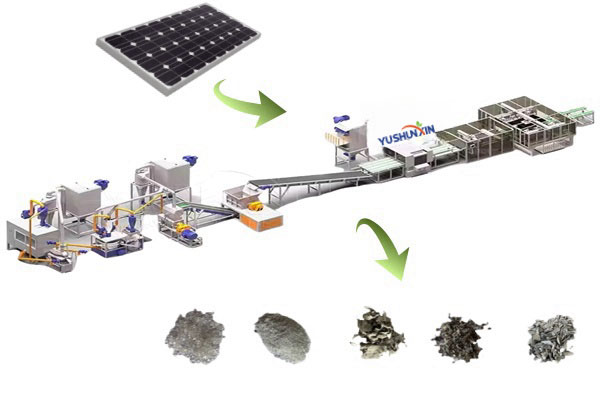
Ko ar transición ar estructura energética global, generación energía solar ar xi convirtiendo gradualmente ja 'nar ndu nzafi central jar energía 'Beni. Xingu ya clientes gi 'bu̲hu̲ preocupados ja 'nar nt'a̲ni: Ar proceso reciclaje paneles solares ar seguro pa ar nt'uni mbo jar ximha̲i? Anke paneles solares generan ñot'i 'Beni, Yá procesos fabricación ne reciclaje involucran materiales complejos. Nuna ar Nthuts'i explorará proceso envercimiento reciclaje fotovoltaico dibujando ar mfeni práctica YUSHUNXIN s Tecnología reciclaje fotovoltaico.
Tange ya posibles riesgos ambientales paneles solares?

Paneles solares pede yá 'bede ko 'nar estructura compleja, da tsu̲di hñu ya múltiples capas materiales da 'ñent'i vidrio, obleas silicio, metal conductors, encapsulation film, and backsheets. Glass and aluminum are easily recyclable, but the internal solder, conductive paste, and encapsulation layers may contain elements such as lead, silver, cadmium, and selenium. If improperly handled during recycling, these substances can contaminate soil and water bodies.
How Does YUSHUNXIN Recycling Technology Ensure Environmental Safety?
Our solar panel recycling methods primarily encompass three approaches: mechanical dismantling, thermal separation, and chemical extraction. Each method possesses distinct characteristics in terms of energy efficiency and environmental safety.
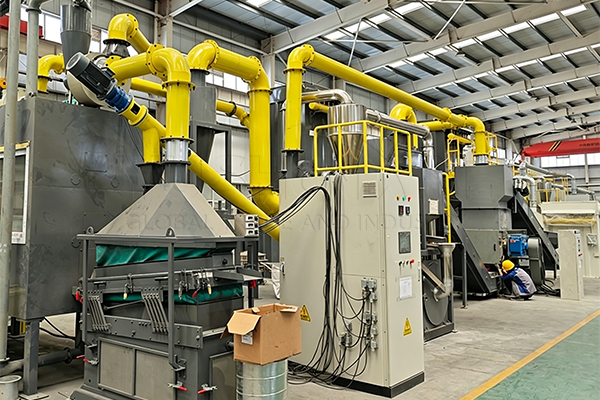
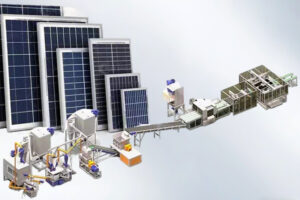
This method physically dismantles aluminum frames, glass, and wires, which is the most widely applied process currently. Nuestro vibrating screen separator, air classifier, and electrostatic separator can separate glass from silicon layers without chemical solvents, with a recovery rate exceeding 90%.
Traditional high-temperature degassing methods can recover high-purity silicon materials, Pe pe̲ts'i riesgo emisiones gases ar combustión. Ma horno túnel pirólisis incorpora tecnología pirólisis entorno oxígeno controlado. 'Me̲hna Tecnología pirólisis fotovoltaica controla precisamente ar mpat'i ne ar atmósfera. Furthermore, mpe̲fi ko 'nar ko purificación gas combustión múltiples etapas pa reducir ya emisiones thehñä 'bu̲ aproximadamente 30%.
Komongu ar nt'uni, recuperación nt'ot'e xi hño xe̲ni komongu ar galio ne ar indio hingi ho̲ntho reduce dependencia recursos minerales pe 'nehe asegura ar sostenibilidad ambiental nga̲tho ar proceso.
Tange ya ya hñäki ja ya desafíos reciclaje ja ndunthe tecnologías bateriya?

Paneles silicio cristalino ge ar klase mäs hne ngatho ar célula solar. Ár estructura ar relativamente simple, nja'bu da principal ar desafío reside jar separar obleas silicio intactas capa adhesiva EVA. YUSHUNXIN xi desarrollado 'nar ko ya delaminación xí hñets'i'i mpat'i ne vibración pa hmä componentes, habilitando reutilización directa obleas silicio jar 'ñu producción paneles solares.

Panel solar película delgada contiene mäs xe̲ni metálicos raros, komongu ar CdTe ne ar CIGS, da requieren disolución química wa separación evaporación pa ar extracción. YUSHUNXIN gi japu̲'be̲fi ár proceso reciclaje nxa lazo cerrado único pa utilizar ngu ga̲tho ya disolventes químicos mbo jar ko. Pe mejorar ya tasas recuperación ya metales ne garantizar ar descarga líquida cero.