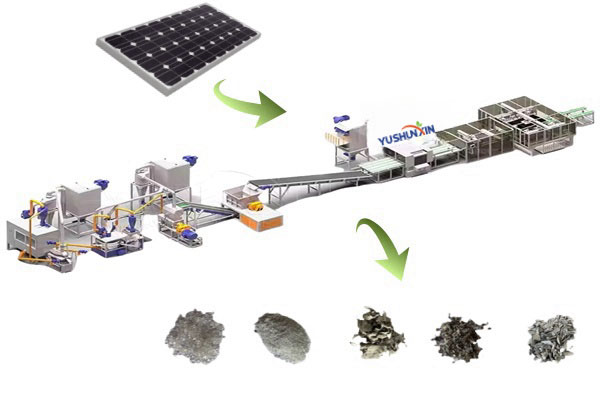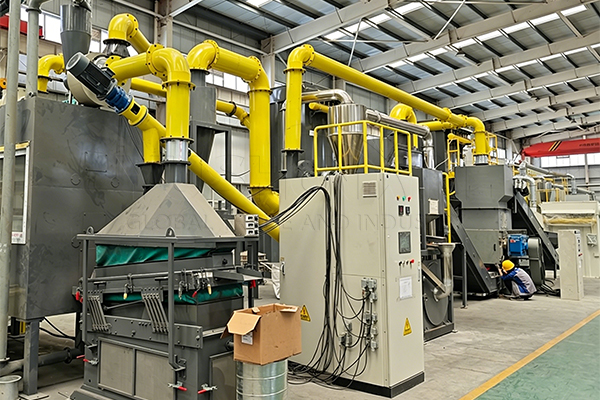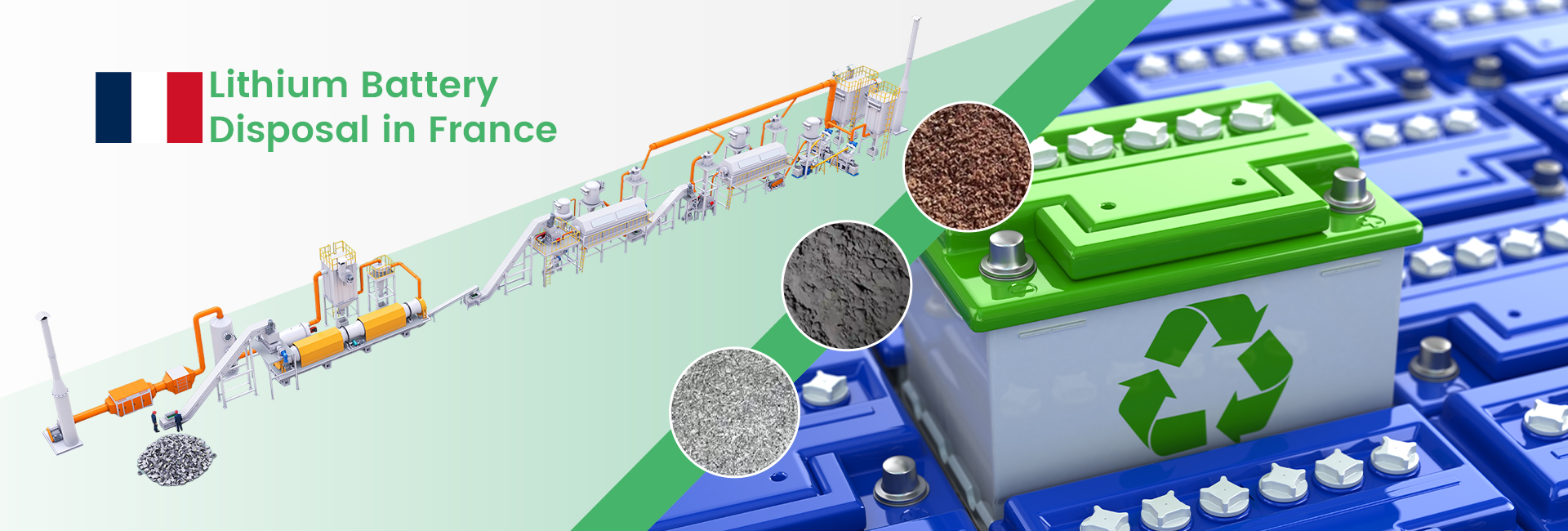
En xaneiro 2025, un cliente de Francia púxose en contacto connosco para iniciar un proxecto de reciclaxe de baterías de litio. Presentaremos un verdadeiro caso práctico de eliminación de baterías de litio en Francia, como referencia para as empresas que estean interesadas en entrar no sector da reciclaxe de materiais de enerxías renovables en Francia e Europa.
What Are the EPR Compliance Policies for Lithium Battery Disposal in France?
Segundo o de Francia 2020 Lei Anti-Residuos e Economía Circular (Lei Anti-Residuos para unha Economía Circular) e o último Regulamento da UE sobre pilas e pilas de residuos (Regulamento da UE 2023/1542), Os fabricantes e importadores de baterías deben cumprir coa Responsabilidade Estendida do Produtor (EPR) para garantir a reciclaxe segura e ecolóxica das baterías de litio ao final da súa vida útil.
Cales son as principais demandas dos clientes sobre a eliminación de baterías de litio en Francia?
O cliente é unha empresa integral de reciclaxe de residuos no leste de Francia, especializada na reciclaxe e procesado de novos equipos e baterías enerxéticas. En resposta á aplicación do Regulamento da UE 2023/1542 e a Loi AGEC de Francia, os clientes teñen os seguintes requisitos para a eliminación da batería de litio.


Cal é o deseño dunha liña de produción de reciclaxe de baterías de litio de 1 t/h?
To help our French client recycle waste lithium batteries in compliance with EU regulations, we designed an automatic recycling line with an annual processing capacity of approximately 8,000 toneladas.

| Zone | Key Equipment | Floor Space (m²) | Personnel Required |
|---|---|---|---|
| Pretratamento | Single‑shaft shredder, discharge system (saltwater or discharge equipment) | ~150 m² |
1 operator |
| Tratamento térmico | Pyrolysis furnace, water-cooled conveyor screw | ~200 m² |
1 operator |
| Crushing & separación | Hammer crusher, drum powder removal machine, magnetic separator | ~250 m² | 1–2 operators |
| Sorting & purificación | Air separator, dust collector, exhaust gas purification unit | ~200 m² |
1 operator |
Where to Sell Recycled Materials from Lithium Battery Disposal in France?
How Much Does a 1000kg/h Lithium Battery Disposal Line Cost in France?
For a standard 1000kg/h lithium battery disposal line, o Prezo da máquina de reciclaxe de baterías de litio typically ranges from $530,000 a $580,000, excluding civil works and infrastructure. This covers the core systems: shredding, pyrolysis, trituración, magnetic separation, air sorting, dust collection, and exhaust gas purification.
Discharge System
The discharge system is optional. There are two methods to choose from. One is saltwater discharge, which typically ranges from $12,000 a $18,000 depending on tank size and automation level. The other is professional lithium battery discharge machine, which is available from $30,000 a $40,000. The lithium battery discharge equipment offers faster processing, better temperature control, and reduced manual handling, making it more suitable for larger throughput or higher safety requirements.


Shredding And Crushing System
This includes the single-shaft shredder, hammer crusher, drum powder removal machine, magnetic separator, and air sorter. Pricing for this package typically ranges from $250,000 a $290,000, depending on configuration, material handling features, and control system integration.
To help clients estimate potential revenue, below is the current market reference price for the main recyclable output — black powder (cathode powder).
Since black powder contains valuable metals such as lithium, cobalto, e níquel, efficient recovery technology plays an important role in determining profits from recycling black mass from lithium battery materials.
| Material | Purity | Market Price (USD/ton) |
|---|---|---|
| Black Mass (containing Li, Co, Ni, Mn) | >98% |
$4,500 – $6,500 |
Note: Prices are for reference only and not a fixed quotation. Final pricing depends on metal content and market conditions at the time of sale.
How does the operation perform after production starts?
After system commissioning, continuous operation efficiency reached 92%, with carbon black purity exceeding 97%. The facility processes approximately 7,000 tons of waste batteries annually. The customer particularly emphasized the importance of after-sales service and praised the supplier for the remote technical support during the installation and commissioning period.

“This plant complies with EU EPR system requirements, operates stably with low noise, and it is easy to maintain. Through the smart data platform, we can monitor recovery rates and energy consumption in real time.”