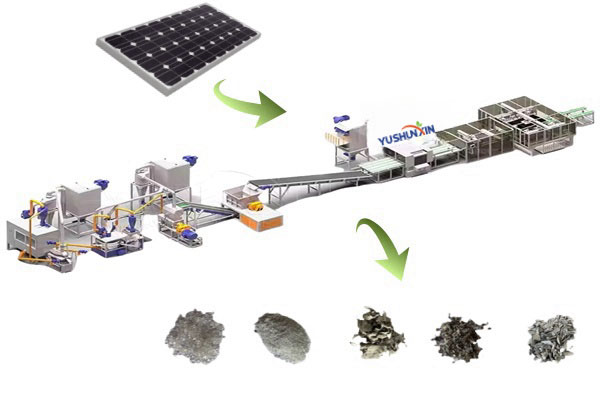
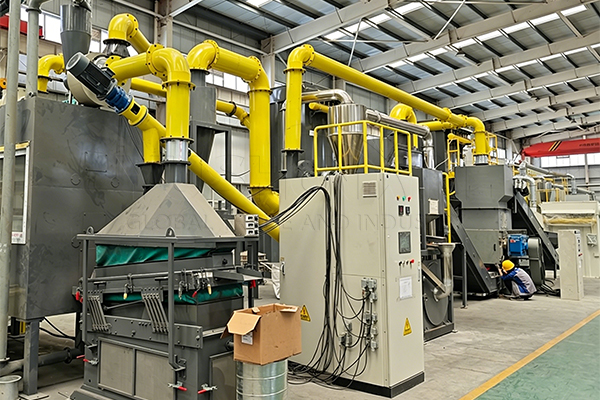
For investors planning to build or expand a photovoltaic panel recycling plant, “ What is the required space for a plant recycling 4,000 PV panels daily?” This issue is particularly critical. This is because the factory floor space not only determines production efficiency but also impacts equipment layout, warehouse management, and operational costs.
What processing capacity does recycling 4,000 photovoltaic panels per day mean?

Processing 4,000 solar panels daily equates to recycling approximately 160 რომ 170 solar panels per hour, which is already in the level of a large-scale solar panel recycling production line. Based on a standard photovoltaic panel weighing approximately 20 kilograms, a daily processing capacity of 4,000 panels equates to roughly 80 tons of waste modules. The annual processing capacity can reach 20,000 რომ 25,000 ტონა. This capacity demands that your entire production line maintain continuous and stable output.
What is the required space for a plant recycling 4,000 PV panels daily?
Solar panel recycling management for 4,000 photovoltaic panels per day should include the following key areas:

It needs to accommodate at least 2–3 days of waste photovoltaic panels for treatment and there are also pre-processing equipment such as frame removal machines and glass separation machines. The area is approximately 1,500–2,000 square meters.

This section includes primary and secondary crushing equipment along with conveying systems, and has sorting equipment such as air classification, magnetic separation, eddy current separation, and electrostatic separation. It occupies an area of approximately 1,200 რომ 1,500 კვადრატული მეტრი.

The pyrolysis workshop includes pyrolysis furnaces and waste gas treatment systems, while the hydrometallurgical zone encompasses leaching, extraction, and electrolysis equipment which occupies about 1,000–1,200 square meters.

Different finished products such as metal, მინა, და სილიკონი require classification and storage. This area includes a final product packaging line and loading platform, covering approximately 800-1000 კვადრატული მეტრი.
Includes wastewater treatment, waste disposal units, and hazardous material storage areas, with an area covering 800–1000㎡.
Includes equipment maintenance, testing laboratories, warehouses, and administrative offices, approximately 1,000–1,500 square meters.
How to scientifically plan to enhance space utilization?
Our company has long specialized in the recycling of waste photovoltaic, და დაგროვდა დიდი გამოცდილება მრავალი პროექტის განხორციელების გზით, როგორიცაა მზის პანელების გადამუშავება ინდოეთში და 1000კგ/სთ ფოტოელექტრული პანელების გადამუშავების პროექტი გერმანიაში.