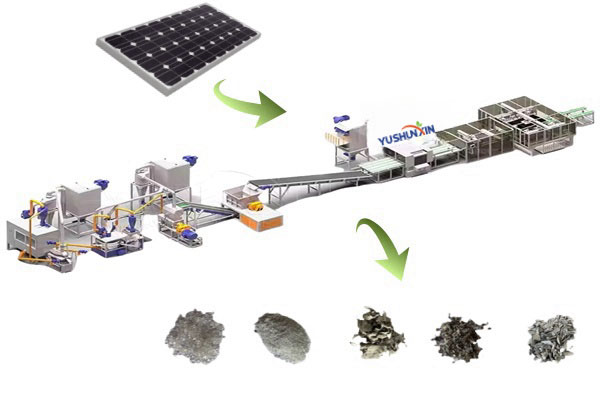
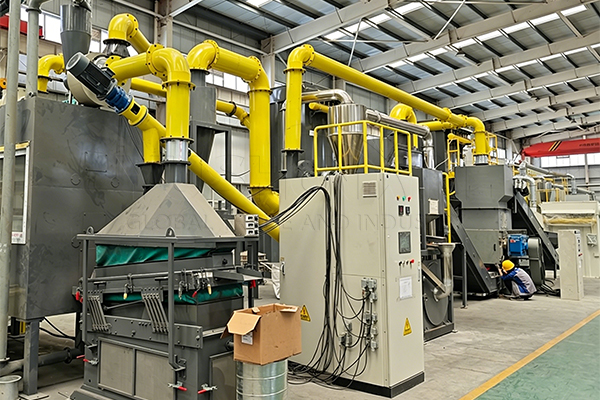
With the complexity of waste lithium batteries, the industry faces a critical decision: Which method is suitable for recycling lithium batteries? Which recycling approach best meets current market demands? How do different technical approaches balance recovery rates, environmental sustainability, and economic viability? This article will analyze these factors step by step along with YUSHUNXIN’s Lithium Batterie Recycling Léisungen.
Battery Type Determines Recycling Method
There are numerous types of waste lithium batteries, such as ternary lithium batteries, lithium iron phosphate batteries, lithium cobalt oxide batteries, and lithium manganese oxide batteries. Their different structures require distinct recycling methods.

What is your target production capacity?
Whether lithium battery recycling can achieve scale production is a key factor determining the lithium battery recycling technology.

Small and Medium-Sized Recycling Enterprises
For small and medium-sized enterprises with limited recycling volumes, investing in a complete pyrolysis system is too expensive. At this point, YUSHUNXIN’s modular mechanical recycling method offers low energy consumption, low investment, and high adaptability. It can rapidly adjust processes for different battery types, which helps you enter large-scale recycling operations at a lower cost.
Large-scale recycling centers
The larger the industrial scale, the higher the demands on process capacity and environmental control. YUSHUNXIN pyrolysis technology with automatic feeding and exhaust gas purification systems can process several tons of waste battery modules within hours. It efficiently removes organic adhesives while minimizing secondary pollution through a closed-loop reaction system.

Product Positioning Determines the Technical Approach: Environmental Protection First or High-Value Resource Recovery?
Product Positioning Determines the Technical Approach: Environmental Protection First or High-Value Resource Recovery?