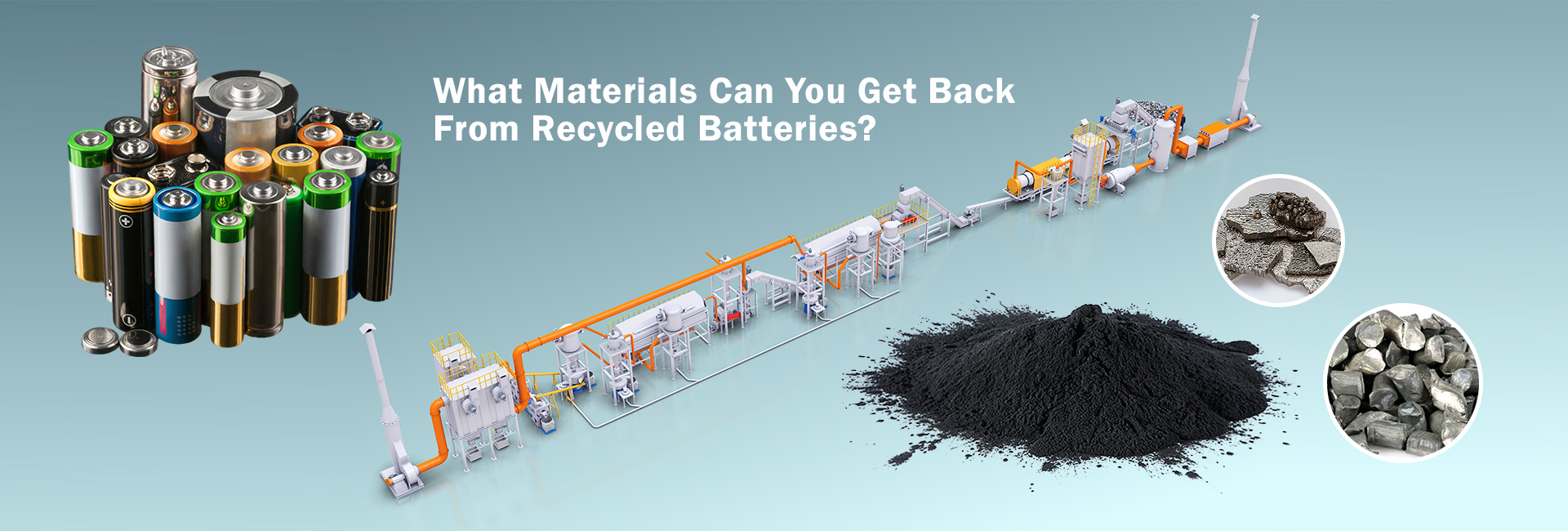
When evaluating lithium battery recycling projects, many clients ask the same core question: What materials can I get back from recycled batteries? Do these materials hold stable value? If the recovered materials lack consistent quality, even a functioning system may struggle to support long-term investment. Before investing, it is essential to understand not only what materials can be recovered, but also whether their quality and market value can support long-term profitability.
Which Recovered Battery Materials Create the Most Project Value?
The commercial value of materials from recycled batteries usually comes from a combination of outputs, not from one single fraction. Each recovered material plays a different role in the recycling business model.

Black Powder: The Core Value Carrier
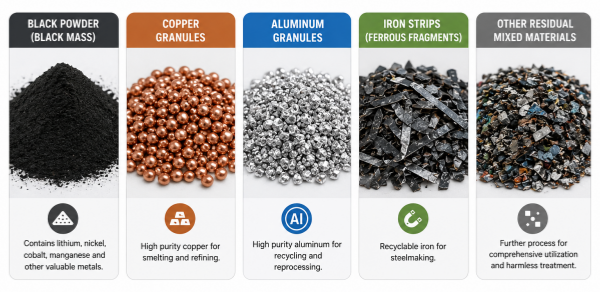
Black powder, also called black mass, is one of the most important outputs in lithium battery recycling. It is the powder-rich fraction formed from positive and negative electrode materials after crushing, screening, and separation.
However, a mechanical battery recycling line typically concentrates these materials into black powder rather than producing refined metal salts directly. Further chemical or metallurgical treatment is usually needed if customers want to recover higher-purity lithium, cobalt, nickel, or manganese compounds.
Copper Granules: A Stable Recyclable Fraction
Copper mainly comes from current collector materials and related conductive structures inside lithium batteries. After suitable crushing and separation, it can appear as copper granules or copper-rich fractions.
Copper has a well-established recycled metal market, which means it can support the commercial value of a waste lithium battery recycling project. If copper is mixed too heavily with aluminum, plastics, or powder residues, its selling value and downstream handling may be affected. Therefore, physical separation accuracy remains important.


Aluminum Granules: An Important Secondary Output
Aluminum is another significant material among the materials from recycled batteries. It may come from battery components such as aluminum foil or shell-related fractions, depending on the battery type.
Recovered aluminum granules can enter recycled metal channels after suitable classification. Although many investors focus first on black mass, stable aluminum separation also helps improve overall resource utilization and reduces the amount of low-value mixed residue.
Iron Strips and Ferrous Fractions: Lower Value but Still Useful
Iron strips or ferrous fractions are usually not the main profit source, but they remain recyclable. Separating them reduces contamination in other material streams and supports a cleaner overall output structure.
For a practical lithium battery recycling plant, the more clearly each material stream is separated, the easier it becomes to organize storage, sale, or further treatment.

Why Do Different Battery Recycling Processes Produce Different Outputs?
Even when two plants process similar batteries, the recovered material quality may differ. This happens because battery recycling materials are strongly affected by the process design.
A typical mechanical processing route for lithium battery recycling solutions include: Discharging → Shredding → Drying or Carbonization → Screening → Secondary Crushing → Secondary Screening → Grinding → Circular Vibrating Screening.
What Happens to Each Material After Battery Recycling?
Understanding the downstream route of each output helps investors judge whether a lithium battery recycling project is commercially sensible.
How Does Lithium Battery Recycling Support Cleaner Resource Recovery?
For many recycling investors, material recovery is only one part of the decision. They also want to know whether the production line can operate in a cleaner and more manageable way. During battery shredding, drying, crushing, grinding, and screening, fine dust and process exhaust may be generated. If these by-products are not handled properly, they can increase site management difficulty and create extra pressure for long-term operation.