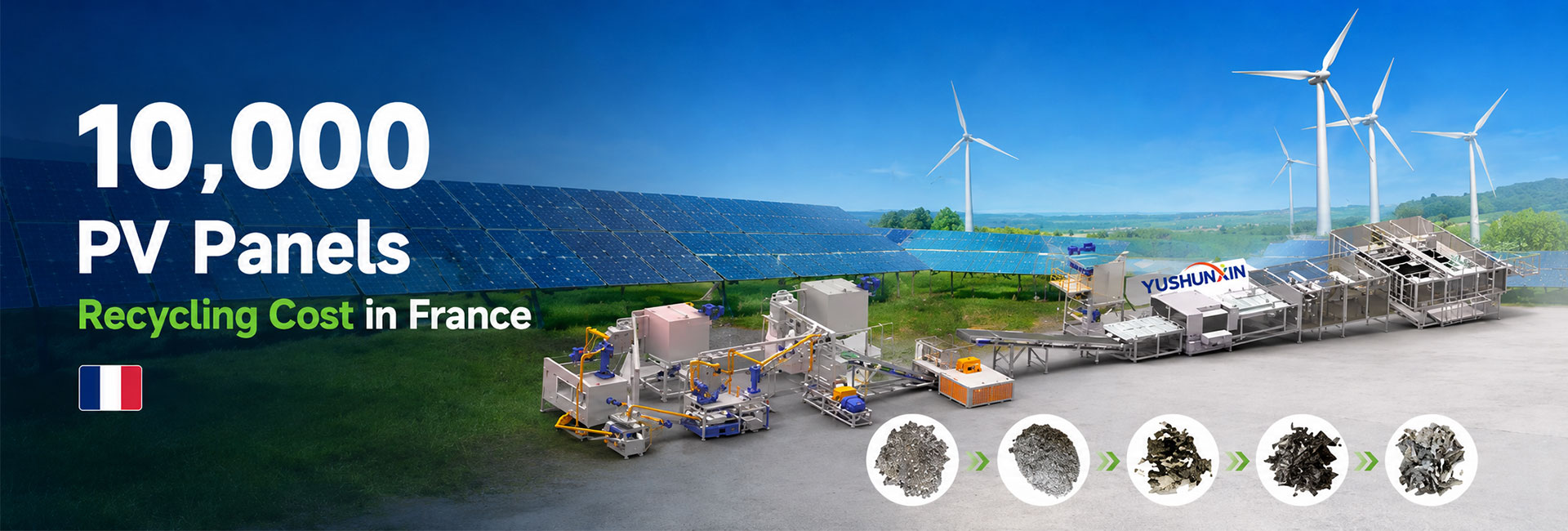
As large-scale photovoltaic systems across Europe continue to reach the end of their operational life, France is experiencing a growing demand for industrial solar panel recycling solutions. Hins vegar, for recycling companies, solar farm operators, and waste management investors, one of the biggest concerns is no longer whether photovoltaic panels can be recycled, but how much it actually costs to recycle 10,000 PV panels under European environmental and labor standards.
Why Did the French Customer Need to Recycle 10,000 PV Panels?
The customer was a regional industrial recycling company located in southern France that had previously focused on construction waste and metal recovery. As several nearby photovoltaic power stations installed between 2008 og 2012 entered the decommissioning stage, the company identified a growing opportunity in photovoltaic waste recycling.

Why Is Mechanical Recycling More Cost-Effective for 10,000 PV Panels in France?
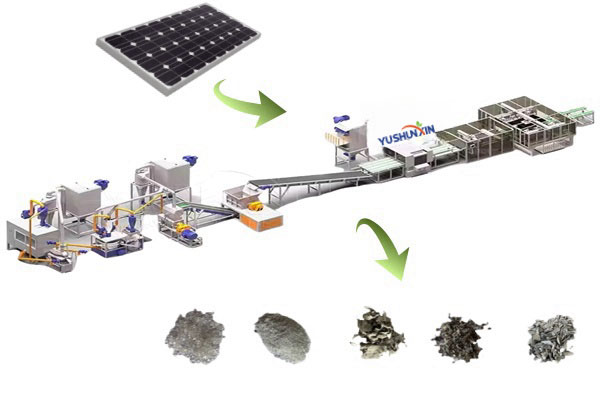
After evaluating thermal treatment and mechanical recycling methods, the customer ultimately selected a fully automatic mechanical solar panel recycling solution supplied by YUSHUNXIN.
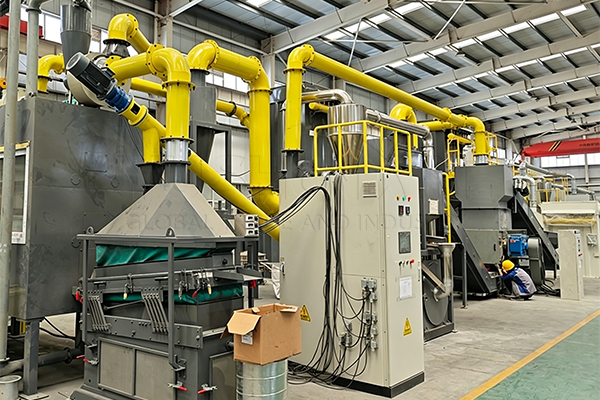
The final configuration adopted a YUSHUNXIN 1000kg/klst endurvinnslustöð fyrir sólarplötur capable of processing approximately 280 tons of photovoltaic waste within a 35-45 day operating cycle.
The solar panel recycling production line was designed to process mixed-condition photovoltaic panels, including cracked and partially damaged modules, while maintaining stable feeding and continuous crushing performance. Compared with traditional manual dismantling operations, the mechanical recycling system significantly reduced labor intensity and improved overall operational efficiency.
| Equipment | Fyrirmynd | Kraftur | Getu | Floor Space |
|---|---|---|---|---|
| Aluminum Frame Removing Machine | YSX-FR-1000 | 7.5 kW | 800–1000 panels/hour | ~25–35 m² |
| Glass Separation Machine | YSX-GS-1000 | 15 kW | 800–1000 kg/h | ~40–60 m² |
| Dual-Shaft Shredder | YSX-DS-1000 | 75 kW | 800–1000 kg/h | ~60–80 m² |
| Hammer Crusher Unit | YSX-HC-1000 | 110 kW | 800–1000 kg/h | ~70–90 m² |
| Airflow Gravity Separator | YSX-AGS-1000 | 11 kW | ≥99% metal separation efficiency | ~50–70 m² |
| Pulse Dust Collection System | YSX-DC-1200 | 15 kW | Industrial dust filtration (negative pressure system) | ~30–50 m² |
| PLC Intelligent Control Cabinet | YSX-PLC-S | 3 kW | Full-line automation control (Siemens/Schneider system) | ~5–10 m² |
Aluminum Frame Removing Machine
Glass Separation Machine
Dual-Shaft Shredder
Hammer Crusher Unit
Airflow Gravity Separator
Pulse Dust Collection System
What Factors Have the Biggest Impact on PV Panel Recycling Cost in France?
In many industrial projects, the actual kostnaður við endurvinnsluvél fyrir sólarplötur is only one part of the total investment, while transportation, vinnuafl, and environmental compliance often account for a much larger percentage of long-term operating expenses.
Cost Item Estimated Cost
| Transportation and logistics | $35,000–$68,000 |
|---|---|
| Equipment investment | $450,000–$850,000 |
| Installation and commissioning | $40,000–$90,000 |
| Environmental compliance systems | $20,000–$50,000 |
| Labor and operating costs | $25,000–$55,000 |
How Can Pre-Sorting 10,000 PV Panels Lower The Final Recycling Cost?
One of the most valuable operational improvements during the project came from introducing a pretreatment and pre-sorting process before crushing. Initially, intact panels, broken modules, and severely damaged photovoltaic waste were mixed together during feeding. This caused unstable crushing efficiency, excessive dust generation, and increased conveyor wear.

How Much Space Is Really Needed to Recycle 10,000 Solar Panels in France?
Before installing the recycling line, the customer underestimated the amount of factory space required for industrial photovoltaic recycling operations. Unlike small recycling systems, industrial solar panel recycling requires multiple functional areas, including raw material storage, pretreatment zones, crushing sections, airflow separation systems, dust collection infrastructure, and recovered material storage.

Is It More Profitable to Recycle Solar Panels in France or Export Them Overseas?
At the early planning stage, the customer also evaluated whether exporting photovoltaic waste outside France would be more economical than domestic recycling.