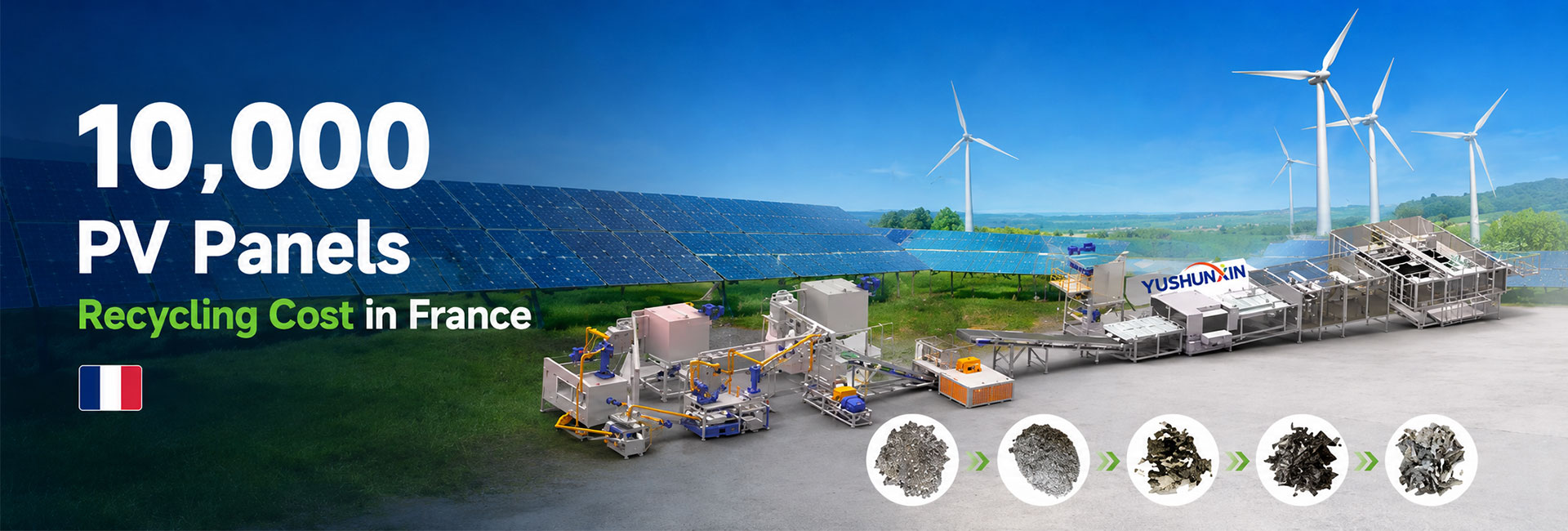
Оскільки великомасштабні фотоелектричні системи по всій Європі продовжують досягати кінця свого експлуатаційного терміну, Франція відчуває зростаючий попит на промислові рішення для переробки сонячних панелей. Проте, для переробних компаній, оператори сонячних ферм, та інвесторів у сфері управління відходами, одна з найбільших проблем більше не полягає в тому, чи можна переробляти фотоелектричні панелі, але скільки насправді коштує переробка 10,000 Фотоелектричні панелі за європейськими екологічними та трудовими стандартами.
Чому французькому клієнту знадобилося переробляти 10,000 Фотоелектричні панелі?
The customer was a regional industrial recycling company located in southern France that had previously focused on construction waste and metal recovery. As several nearby photovoltaic power stations installed between 2008 і 2012 entered the decommissioning stage, the company identified a growing opportunity in photovoltaic waste recycling.

Why Is Mechanical Recycling More Cost-Effective for 10,000 PV Panels in France?
After evaluating thermal treatment and mechanical recycling methods, the customer ultimately selected a fully automatic mechanical solar panel recycling solution supplied by YUSHUNXIN.
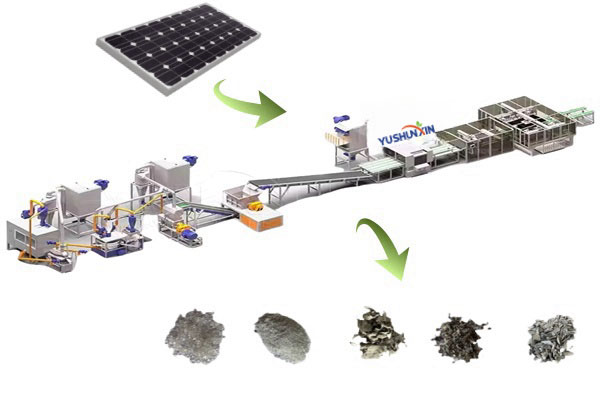
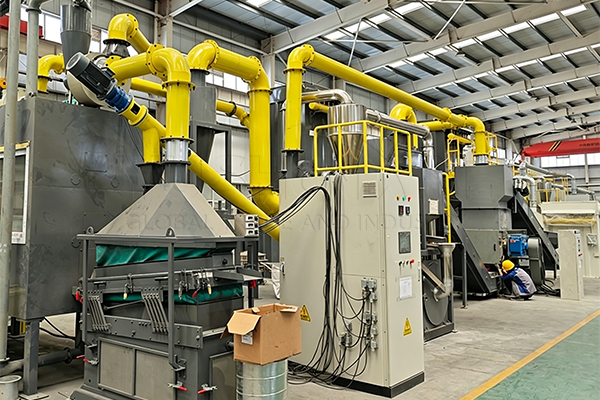
The final configuration adopted a YUSHUNXIN 1000завод з переробки сонячних панелей кг/год capable of processing approximately 280 tons of photovoltaic waste within a 35-45 day operating cycle.
The solar panel recycling production line was designed to process mixed-condition photovoltaic panels, including cracked and partially damaged modules, while maintaining stable feeding and continuous crushing performance. Compared with traditional manual dismantling operations, механічна система переробки значно зменшила трудомісткість і підвищила загальну ефективність роботи.
| Обладнання | Модель | потужність | Ємність | Площа |
|---|---|---|---|---|
| Машина для зняття алюмінієвої рами | YSX-FR-1000 | 7.5 кВт | 800–1000 панелей/год | ~25–35 м² |
| Машина для розділення скла | YSX-GS-1000 | 15 кВт | 800–1000 кг/год | ~40–60 м² |
| Подвійний шредер | YSX-DS-1000 | 75 кВт | 800–1000 кг/год | ~60–80 м² |
| Молоткова дробарка | YSX-HC-1000 | 110 кВт | 800–1000 кг/год | ~70–90 м² |
| Гравітаційний сепаратор повітряного потоку | YSX-AGS-1000 | 11 кВт | Ефективність відділення металу ≥99%. | ~50–70 м² |
| Імпульсна система пиловловлення | YSX-DC-1200 | 15 кВт | Промислова фільтрація пилу (система негативного тиску) | ~30–50 м² |
| Інтелектуальна шафа керування ПЛК | YSX-PLC-S | 3 кВт | Повноцінний контроль автоматизації (Система Siemens/Schneider) | ~5–10 м² |
Машина для зняття алюмінієвої рами
Машина для розділення скла
Подвійний шредер
Молоткова дробарка
Гравітаційний сепаратор повітряного потоку
Імпульсна система пиловловлення
Які фактори мають найбільший вплив на вартість переробки фотоелектричних панелей у Франції?
У багатьох промислових проектах, фактичний Вартість машини для переробки сонячних панелей є лише частиною загальної суми інвестицій, while transportation, labor, and environmental compliance often account for a much larger percentage of long-term operating expenses.
Стаття витрат Орієнтовна вартість
| Транспорт і логістика | $35,000– 68 000 доларів США |
|---|---|
| Інвестиції в обладнання | $450,000– 850 000 доларів США |
| Монтаж і налагодження | $40,000– 90 000 доларів США |
| Системи екологічної відповідності | $20,000– 50 000 доларів США |
| Трудові та експлуатаційні витрати | $25,000– 55 000 доларів США |
Як можна попередньо сортувати 10,000 Фотоелектричні панелі знижують кінцеву вартість переробки?
Одним із найцінніших операційних удосконалень під час проекту стало запровадження процесу попередньої обробки та попереднього сортування перед дробленням. Спочатку, непошкоджені панелі, зламані модулі, і сильно пошкоджені фотоелектричні відходи були змішані разом під час годування. Це викликало нестабільну ефективність дроблення, надмірне утворення пилу, і підвищений знос конвеєра.

How Much Space Is Really Needed to Recycle 10,000 Solar Panels in France?
Before installing the recycling line, the customer underestimated the amount of factory space required for industrial photovoltaic recycling operations. Unlike small recycling systems, industrial solar panel recycling requires multiple functional areas, including raw material storage, pretreatment zones, crushing sections, airflow separation systems, dust collection infrastructure, and recovered material storage.

Is It More Profitable to Recycle Solar Panels in France or Export Them Overseas?
At the early planning stage, the customer also evaluated whether exporting photovoltaic waste outside France would be more economical than domestic recycling.