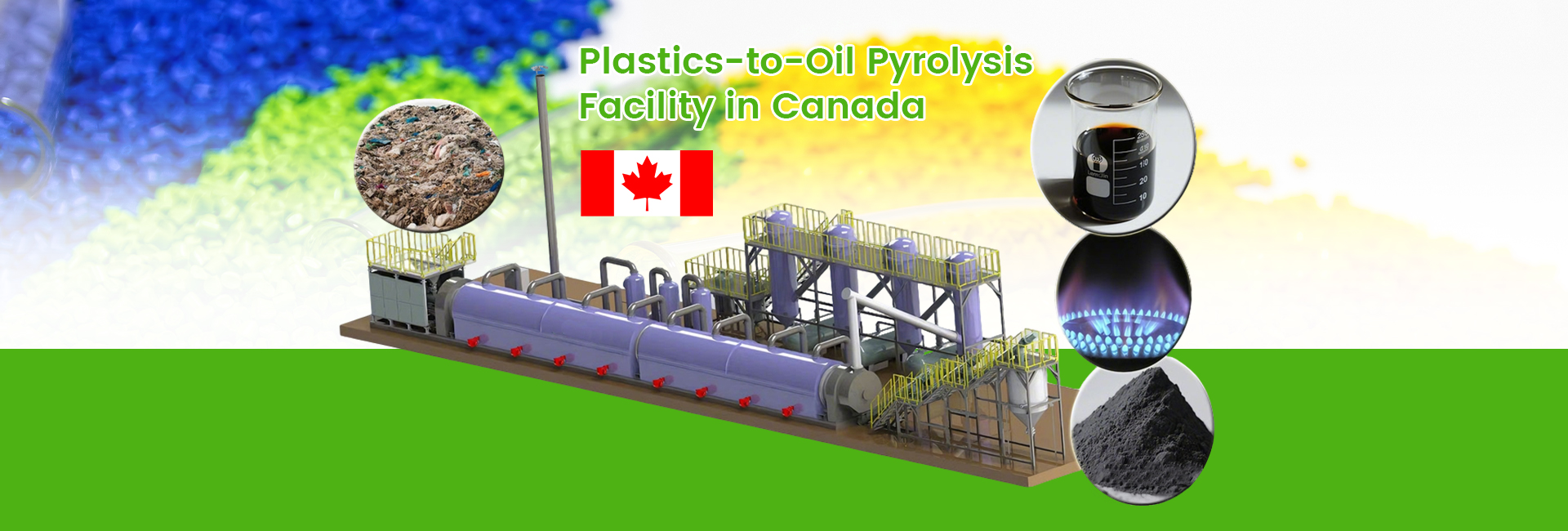
En la printempo de 2023, ni ricevis enketon de ekologia energikompanio el Ontario, Kanado. Ĉi tiu kliento estis en la urba solida rubo reciklada komerco dum multaj jaroj. Fronte al ĉiam pli striktaj politikoj pri mastrumado de plastaj rubaĵoj, ili urĝe bezonis teknologian trarompon. La kanada registaro starigis nacian celon atingi “Nula Plasta Malŝparo” de 2030 en 2020. Plue, ĝi efektivigis malpermesojn de unu-uzaj plastoj kaj cirkulekonomiaj instigmekanismoj en ĉiuj provincoj. Tial, ĉi tiu kliento serĉas la pirolizinstalaĵon de plasto-al-oleo en Cananda.
Kio estas la plej granda zorgo de la kliento?
La kliento demandis nin, "Ĉu vere eblas laŭleĝe efektivigi ĉi tiun plastan pirolizan teknologion en Kanado?”Ni plene komprenas la zorgojn de la kliento. La media reguliga kadro de Kanado estas strikta, precipe por projektoj implikantaj rubforigon kaj energian reakiron.

What Final Products Can a Plastic Pyrolysis Plant Produce?

Another important product is syngas, also called non-condensable combustible gas. This gas is usually not the main product for external sale. Instead, it can be purified and returned to the furnace as heating fuel for the pyrolysis reactor. This helps the plant reduce external fuel consumption and lower daily operating costs. For large-scale or continuous plastic pyrolysis projects, syngas reuse is an important part of the overall energy-saving design.
The third product is char residue. The quantity and quality of char residue depend on the plastic composition, ash content, additives, and contamination level. In some projects, it can be used as a low-grade solid fuel or sent to cement plants or brick factories for co-processing after testing. If the residue contains unsuitable impurities, it should be handled according to local environmental regulations. Tial, YUSHUNXIN usually recommends raw material sorting before feeding, especially removing metals, sand, stones, PVC, PET, and high-moisture contaminants.
Ĉu la oleo el pirolizo vere povas generi ekonomian valoron?
"Ĉu ĉi tiu teknologio de plasto-al-oleo vere povas fari profiton en la kanada merkato?” Ĉi tio estas demando, kiun multaj klientoj ofte demandas. Although syngas and char residue also have reuse potential, pyrolysis oil is usually the main product that customers care about most. For a plastic pyrolysis project, the economic value of oil depends on three factors: local fuel demand, oil quality after condensation, and whether the customer has stable downstream buyers.

What Technical Details Make a Plastic Pyrolysis Facility More Reliable?
Reliable pyrolysis technology is key to daŭrigeblaj solvoj de plasto al brulaĵo. These technical details directly affect oil yield, operacia kosto, equipment safety, and long-term project profitability.
1. Feedstock Sorting Before Pyrolysis
The quality of waste plastics directly affects oil yield, oil quality, equipment stability, and emission pressure. Before feeding, metals, stones, sand, vitro, PVC, PET, and excessive moisture should be removed as much as possible. PVC may increase acid gas treatment pressure, while PET and high-ash materials usually reduce oil yield. For mixed municipal plastic waste, YUSHUNXIN can recommend a sorting and pretreatment system before the pyrolysis reactor to improve continuous operation stability.


2. Oxygen-Limited Pyrolysis Reactor Design
Plastic pyrolysis must be carried out under an oxygen-limited or oxygen-free condition. If too much air enters the reactor, the plastic may burn instead of cracking into oil gas. Tial, the reactor should have good sealing performance, stable feeding control, pressure monitoring, and temperature control. In a larger project, automatic feeding and discharging systems can also reduce air leakage and improve production continuity.
3. Wax and Heavy Oil Fraction Management
When processing PE, PP, or mixed plastic waste, wax generation is a common technical issue. If wax condenses too early inside the oil gas pipeline, it may cause blockage, reduce condensation efficiency, and increase maintenance frequency. To solve this problem, YUSHUNXIN can equip the system with an oil-gas separator, heavy oil collection section, insulated pipelines, and a dewaxing tank. The separated wax can be collected, reheated, returned for secondary cracking.


4. Multi-Stage Cooling and Condensation System
The oil yield of 50%–80% is tested under a matched cooling and condensation system, so the condenser design is very important. A simple condenser may not fully collect the oil gas, especially when the gas contains both light fractions and heavy wax fractions. YUSHUNXIN can use multi-stage condensation to separate heavy oil, light oil, and non-condensable gas more effectively. This helps improve liquid oil recovery and makes the final oil collection process more stable.
5. Tail Gas Treatment and Emission Control
Plastic pyrolysis projects must consider odor, dust, acid gas, VOCs, and other possible emissions. According to the raw material type and local environmental requirements, the system can be equipped with spray tower, deacidification unit, activated carbon adsorption, forigo de polvo, and other exhaust gas treatment devices. This part is especially important for overseas projects because environmental approval often focuses not only on the reactor, but also on the full emission control process.

Plastic pyrolysis plant cost: machine price vs complete green solution cost
When customers ask about plastic pyrolysis machine price, they usually want to know the machine price first. Tamen, for a real plastics-to-oil project, the total budget includes two major parts: equipment cost and extra project cost.


| Solution type | Suitable capacity | Main equipment | Equipment cost reference | Extra project cost reference |
|---|---|---|---|---|
| Batch plastic pyrolysis plant | 5–10 t/d | Batch pyrolysis reactor, feeding system, kondensilo, petrolujo, water seal, gas recovery system, basic emission treatment | USD 120,000–300,000 | USD 30,000–120,000 |
| Semi-continuous plastic pyrolysis plant | 15–25 t/d | Automatic feeder, pyrolysis reactor, automatic discharging system, dewaxing tank, multi-stage condenser, syngas reuse system, tail gas treatment, PLC control | USD 320,000–850,000 | USD 100,000–350,000 |
| Continuous plastic pyrolysis plant | 30–80+ t/d | Pretreatment system, continuous feeding system, continuous reactor, automatic slag discharge, oil-gas separator, dewaxing unit, plurŝtupa kondensado, syngas purification, kontrolo de emisio, storage system, automatic control system | USD 900,000–3,200,000+ | USD 300,000–1,500,000+ |
These ranges are only for early project evaluation. The final quotation depends on capacity, raw material type, nivelo de aŭtomatigo, emission standard, local installation conditions, and whether the customer needs pretreatment, distillation, storage, or civil engineering support.
Kiel fine ekfunkciis la piroliza instalaĵo de plasto-al-oleo en Kanado?