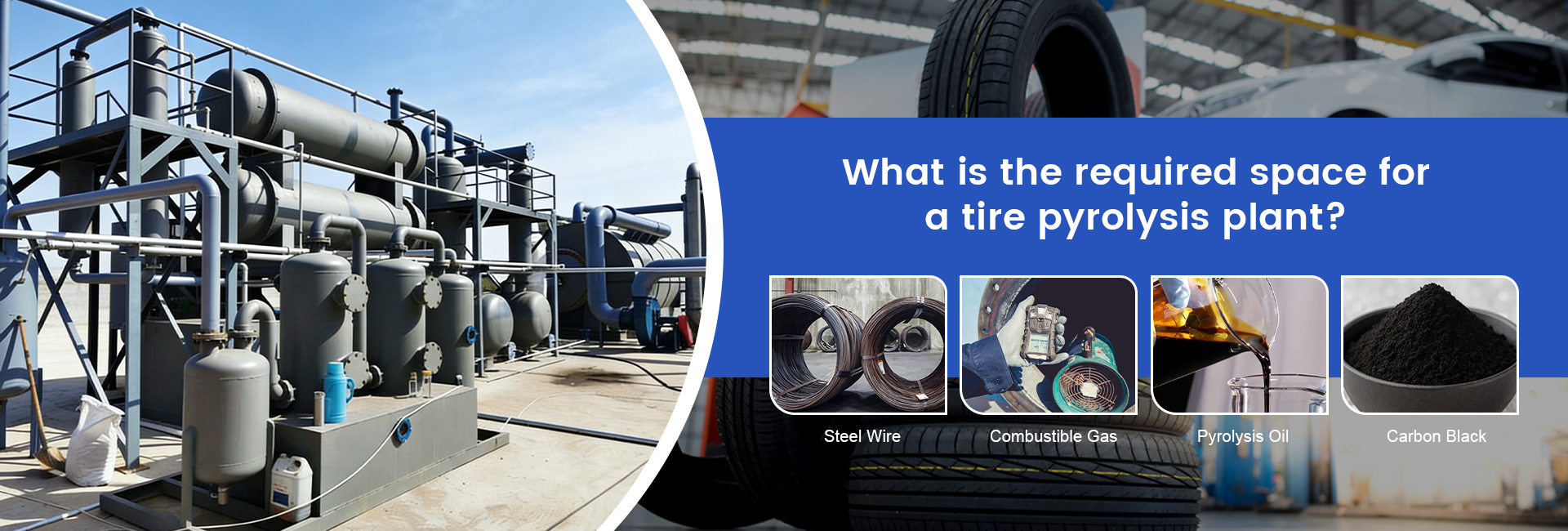
عند التشاور حول مصانع الانحلال الحراري للإطارات, السؤال الأول الذي يطرحه العديد من العملاء لا يتعلق بتسعير المعدات, بل بالأحرى: "هل يمكن لموقعي الحالي استيعاب وحدة الانحلال الحراري للإطارات?”بسبب المساحة الأرضية المحدودة للمصنع, ارتفاع تكاليف الأراضي, واللوائح البيئية الصارمة بشكل متزايد, تواجه العديد من المشاريع قيودًا صارمة منذ البداية. نتيجة ل, غالبًا ما تؤدي التقييمات المكانية الأولية غير الكافية إلى مشكلات في المراحل النهائية, مثل تعارضات التثبيت, تعديلات التخطيط القسري, أو حتى تأخير المشروع. في الحقيقة, there is no fixed answer to how much space a tire pyrolysis production line requires. ما يحدد البصمة حقًا هو ما إذا كان تكوين المعدات معقولًا وما إذا كان تصميم النظام احترافيًا.


Batch vs Continuous Tire Pyrolysis: Which Takes Less Space?
Many investors assume that tire batch pyrolysis systems always save space, because they use fewer core units. لذلك, initial footprint appears smaller. لكن, auxiliary equipment and material handling often occupy additional space over time. Continuous systems require more equipment; meanwhile, they integrate feeding, reaction, التكثيف, and discharge into a streamlined process.
| Type | سعة (per day) |
Typical Area | Main Equipment | Automation Level | Environmental Configuration | Long-Term Economic Benefits |
|---|---|---|---|---|---|---|
| Batch Tire Pyrolysis Unit | 10–15 tons | 800–1500 m² | Batch pyrolysis reactor, مكثف, خزان النفط, basic flue gas system | Low | Basic | Lower |
| Continuous Tire Pyrolysis System | 15–30 tons | 3000–5000 m² | Continuous pyrolysis reactor, التغذية التلقائية, multi-stage condenser, carbon discharge system, full environmental units | High | Comprehensive | Higher |
Although continuous tire pyrolysis plants require more planned space, they deliver significantly higher efficiency and stability.
لذلك, for medium and large-scale projects, continuous tire pyrolysis systems offer better long-term land-use efficiency and return on investment.
Why Do Tire Pyrolysis Plants with the Same Capacity Require Different Space?
في المشاريع الفعلية, غالبًا ما يلاحظ العملاء ظاهرة ما: يمكن أن تختلف وحدات الانحلال الحراري للإطارات ذات قدرات المعالجة المماثلة بشكل كبير من حيث البصمة. والسبب لا يكمن في القدرة الإنتاجية نفسها, ولكن على مستوى الخبرة في تصميم النظام.
Case Study: How We Helped a Malaysian Customer Save Space?
في أ مصنع الانحلال الحراري لإطارات النفايات في ماليزيا, the customer had limited site space but required a daily processing capacity of 20 طن.
YUSHUNXIN customized a continuous tire pyrolysis production line for them, featuring the following key equipment:

Space-Saving Design Strategies
| Strategy Implementation | Implementation | Result |
|---|---|---|
| Modular Layout | Integrated pyrolysis, التكثيف, and environmental treatment units into a cohesive system | Reduced connection space by 30% |
| Vertical Design | Utilized vertical space for material handling and storage | Minimized horizontal footprint |
| Precise Path Planning | Optimized material flow and personnel movement | Eliminated redundant pathways |
| Future-Ready Interfaces | Reserved connections for future expansion | Original layout supports seamless upgrades |
How YUSHUNXIN’s Design Philosophy Ensures Space Efficiency?
في حلول الانحلال الحراري للإطارات من YUSHUNXIN, يشكل التخطيط المكاني جزءًا أساسيًا من تصميم النظام منذ البداية. نحن نذهب إلى ما هو أبعد من مجرد توفير آلات فردية، وبدلاً من ذلك نساعد العملاء على تحقيق التشغيل المستقر ضمن مساحة محدودة.