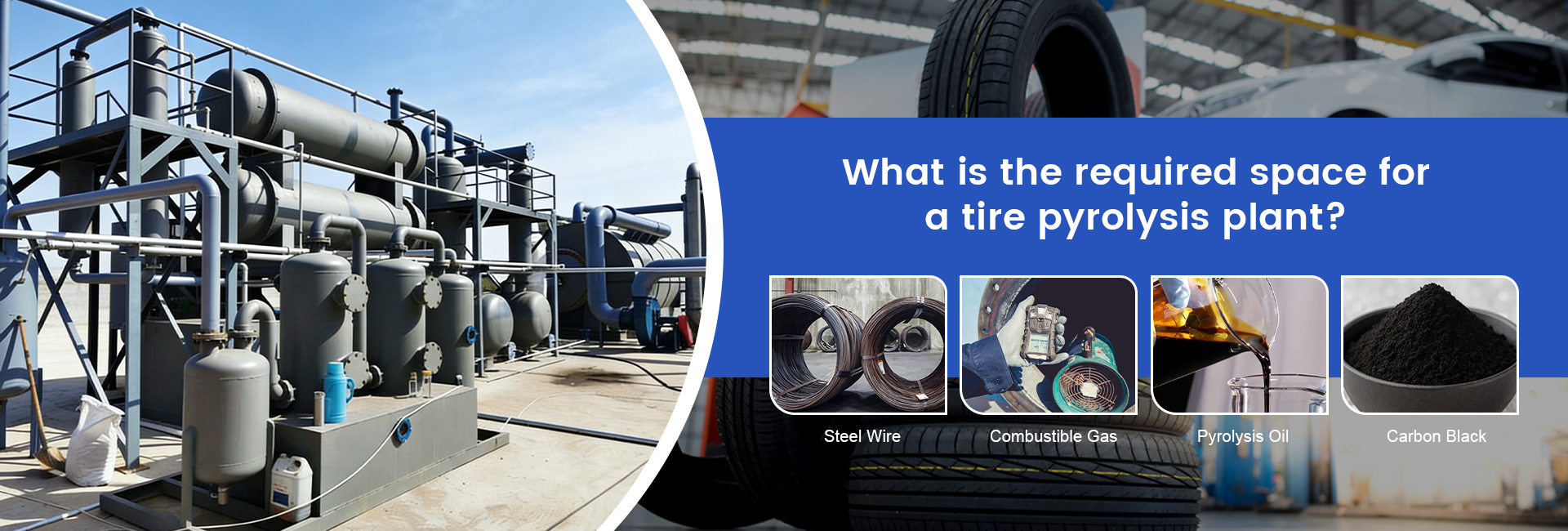
When consulting about tire pyrolysis plants, the first question from many clients isn’t about equipment pricing, but rather: “Can my existing site accommodate a tire pyrolysis unit?”Due to limited factory floor space, high land costs, and increasingly stringent environmental regulations, many projects face strict constraints from the very beginning. फलस्वरूप, inadequate preliminary spatial assessments often lead to downstream issues, such as installation conflicts, forced layout modifications, or even project delays. In fact, there is no fixed answer to how much space a tire pyrolysis production line requires. What truly determines the footprint is whether the equipment configuration is reasonable and whether the system design is professional.

How Space Requirements Differ: Batch vs. Continuous Tire Pyrolysis

Is the batch-type tire pyrolysis unit truly more space-efficient?

For many customers new to the tire pyrolysis industry, batch-type equipment is often the first solution they encounter. These systems feature simple structures, single-reactor operation, and high integration, so a complete line usually fits within 800–1500 m².

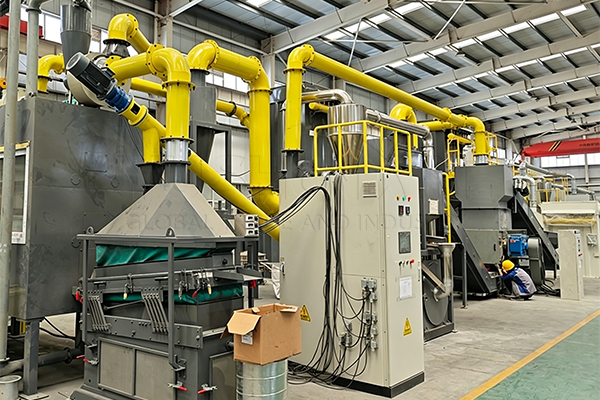
If your project is in early stages or you plan to incorporate tire pyrolysis as a module within इलेक्ट्रोनिक फोहोर व्यवस्थापन प्रणाली, the batch-type solution offers greater flexibility in terms of space adaptation.

Does a continuous tire pyrolysis plant necessarily take up a lot of space?

Continuous tire pyrolysis units are often considered suitable only for large-scale projects, but this is not necessarily the case. The space requirements for अपशिष्ट टायर pyrolysis प्रणाली primarily relate to equipment length, pipe height, and maintenance access corridors, typically requiring a total planning area exceeding 5,000 square meters.

If the factory layout is well-planned, even continuous systems can achieve an efficient and compact configuration.

Batch vs Continuous Tire Pyrolysis: Which Takes Less Space?

Many investors assume that tire batch pyrolysis systems always save space, because they use fewer core units. त्यसैले, initial footprint appears smaller. यद्यपि, auxiliary equipment and material handling often occupy additional space over time. Continuous systems require more equipment; meanwhile, they integrate feeding, reaction, condensation, and discharge into a streamlined process.

Type क्षमता
(per day)
Typical Area Main Equipment Automation Level Environmental Configuration Long-Term Economic Benefits
Batch Tire Pyrolysis Unit 10–15 tons 800–1500 m² Batch pyrolysis reactor, condenser, oil tank, basic flue gas system Low Basic Lower
Continuous Tire Pyrolysis System 15–30 tons 3000–5000 m² Continuous pyrolysis reactor, automatic feeding, multi-stage condenser, carbon discharge system, full environmental units High Comprehensive Higher

Although continuous tire pyrolysis plants require more planned space, they deliver significantly higher efficiency and stability.

  • Continuous operation (20–24h) increases annual output

  • Automated feeding reduces labor area and manual handling space

  • Integrated design improves overall space utilization

  • Environmental systems are built-in, avoiding later expansion

त्यसैले, for medium and large-scale projects, continuous tire pyrolysis systems offer better long-term land-use efficiency and return on investment.

Why Do Tire Pyrolysis Plants with the Same Capacity Require Different Space?

वास्तविक परियोजनाहरूमा, clients often observe a phenomenon: pyrolysis units for tires with similar processing capacities can vary significantly in footprint. The reason lies not in production capacity itself, but in the level of expertise in system design.

First, whether the equipment structure is compact and employs a modular design directly impacts space utilization. This is because solutions with dispersed structures and fragmented systems often require more connection areas and redundant space.

  • Secondly, whether environmental protection and safety systems undergo unified consideration during the design phase can also create a significant gap. If factories add environmental equipment later, they often squeeze it into leftover space, which increases the footprint and reduces overall efficiency.

Clear zoning of high-temperature areas, dismantling zones, and logistics routes ensures systems operate efficiently without interference. Without overall planning, a plant may house few machines yet occupy excessive floor space.

Case Study: How We Helped a Malaysian Customer Save Space?

In a waste tire pyrolysis plant in Malaysia, the customer had limited site space but required a daily processing capacity of 20 टन.

YUSHUNXIN customized a continuous tire pyrolysis production line for them, featuring the following key equipment:

  • Automatic Feeding System: Reduces labor and improves feeding efficiency;

  • Multi-Stage Condensation System: Enhances oil recovery rate;

  • Tail Gas Treatment System: Ensures emissions comply with environmental standards;

  • Automatic Slag Discharge System: Enables continuous operation and reduces downtime;

  • Modular Control System: Centralized monitoring for easy operation.

Waste Tire Pyrolysis Production line in Malaysia

Space-Saving Design Strategies

Strategy Implementation Implementation Result
Modular Layout Integrated pyrolysis, condensation, and environmental treatment units into a cohesive system Reduced connection space by 30%
Vertical Design Utilized vertical space for material handling and storage Minimized horizontal footprint
Precise Path Planning Optimized material flow and personnel movement Eliminated redundant pathways
Future-Ready Interfaces Reserved connections for future expansion Original layout supports seamless upgrades

How YUSHUNXIN’s Design Philosophy Ensures Space Efficiency?

In YUSHUNXIN’s tire pyrolysis solutions, spatial planning forms a core part of system design from the outset. We go beyond supplying single machines and instead help customers achieve stable operation within limited space.

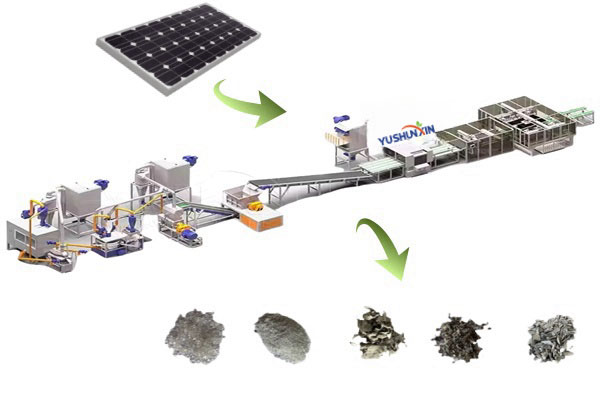
Through modular design, YUSHUNXIN integrates pyrolysis, oil-gas condensation, कार्बन कालो डिस्चार्ज, and environmental treatment, thereby eliminating unnecessary duplication. At the same time, we integrate environmental protection systems and safety distances into the project design phase to avoid passive modifications later.

Safety distances and environmental equipment are incorporated during the initial design phase, avoiding the space-consuming retrofits that plague many projects.

अर्को, we clearly zone high-temperature areas, ambient dismantling areas, and logistics routes, so systems operate efficiently without interference.

More importantly, YUSHUNXIN always reserves space for future growth in its layouts. Whether customers expand capacity or add carbon black processing and energy recovery, the original layout supports seamless expansion.

YSX Factory in Henan

Eco-friendly ways to turn tires into fuel depend not on fixed dimensions, but on the chosen technology route, system integration capability, and site-specific planning. If you are evaluating a tire pyrolysis project, early professional matching of space and equipment is a critical step toward smooth implementation. Contact YUSHUNXIN for targeted technical solutions and layout recommendations tailored to your site conditions.

युशुन्क्सिन