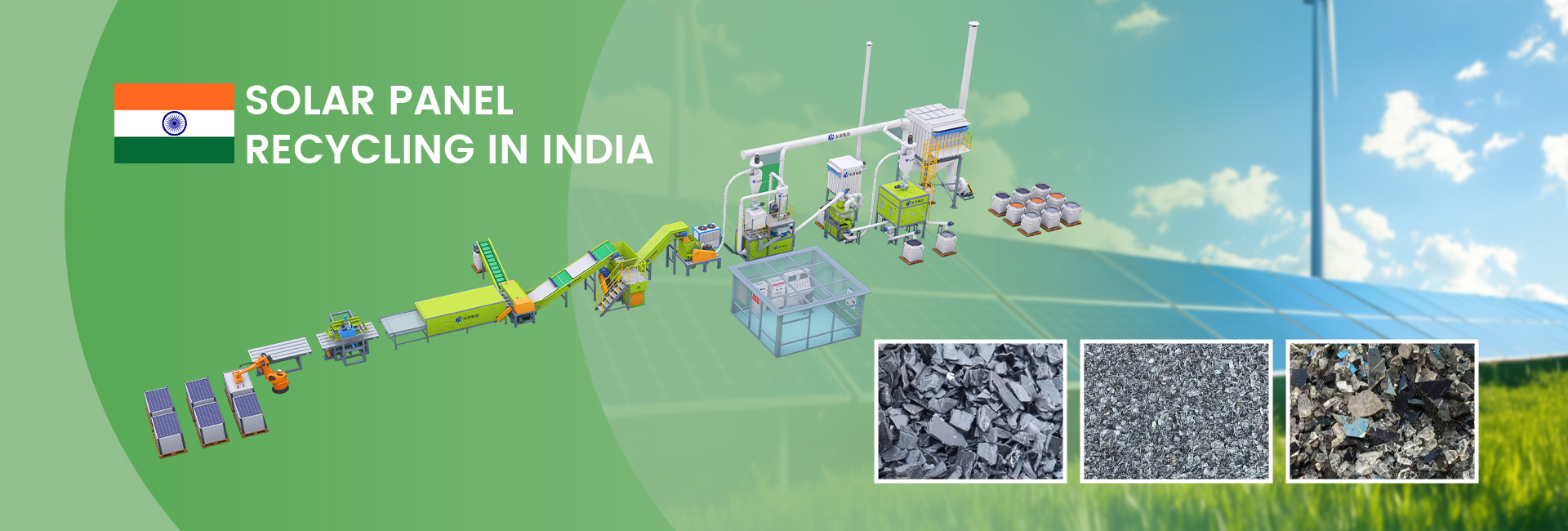
As the global clean energy transition accelerates, India has become one of the world’s fastest growing countries for solar panel installations. The large-scale operation of solar power plants also means that the first batch of solar panels will retire in the coming years. We will introduce our solar panel recycling in India, in order to provide reference for companies focusing on the Indian market.
What is the current state of India’s solar energy industry?

Over the past decade, India’s solar power generation industry is growing at a rapid speed. According to data from the Indian Ministry of New and Renewable Energy (MNRE), India’s solar power capacity has surpassed 70 GW by 2024, which ranks among the top five globally. Meanwhile, the Indian government’s Jawaharlal Nehru National Solar Mission aims to achieve over 280GW of solar power capacity by 2030 to support its long-term goal of Net Zero 2070.
What Were the Customer Requirements for Solar Panel Recycling in India?
By the end of 2024, a new energy development company in Gujarat, India, contacted us. The company plans to establish a solar panel recycling production line to process end-of-life photovoltaic modules and recover high-value materials. The main project requirements included:

Solar Panel Recycling Plant Cost in India: Investment Breakdown
The investment for a solar panel recycling plant in India is relatively clear when based on real project data. For a standard 1 ton per hour solar panel recycling system, the total cost typically ranges between $900,000 et $1,500,000, depending on technology configuration and automation level.
Which Solar Panel Recycling Solutions Did We Propose?
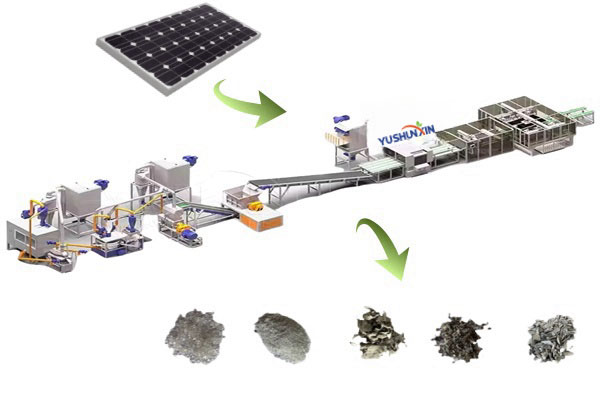
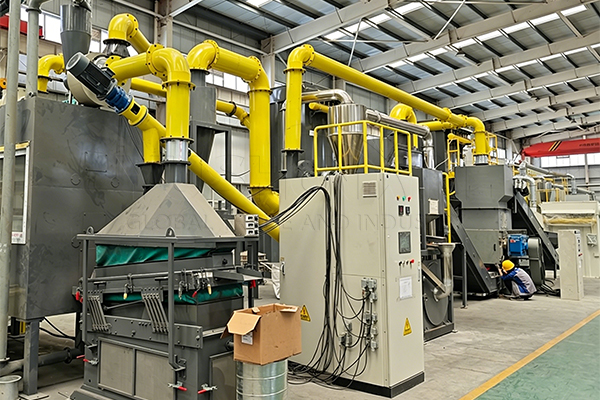
Based on the characteristics of the Indian market and customer requirements, we have designed two tabula solaris redivivus procuratio with a daily processing capacity of 1 ton each.


What Is the Market Value of Recovered Materials in India?
Recovered materials from solar panel recycling have stable market demand in India. Typical recycled metal market prices include the following aspects.
| Materia | Price in India |
|---|---|
| Recycled aluminum frame | $1,800–$2,300 / ton |
| Solar glass cullet | $30–$60 / ton |
| Silicon powder | $700–$1,200 / ton |
| Copper from junction boxes | $7,000–$9,000 / ton |
How are the project results and client feedback?
The solar panel recycling in India began equipment transportation in February 2025. Then, it completed on-site foundation construction in March and finished installation and commissioning in April. After production startup, the system operated stably with an average processing capacity of 1.03 t/h and a comprehensive recovery rate of 88.6%. All exhaust gases and wastewater meet the discharge standards from the CPCB of India.

The system operates stably and easily. With high product recovery purity, it provides reliable assurance for the production process. We are highly satisfied with the overall performance and plan to expand production capacity in the future. We look forward to the opportunity to collaborate!
Related Case: 1000 kg/h Solar Panel Recycling Plant in Germany
If you prefer a pure mechanical solar panel recycling solution, you can also refer to our 1000kg/h photovoltaic panel recycling project in Germany.
This project processes 1000 kg of photovoltaic panels per hour, which is similar to the capacity of the Indian photovoltaic panel recycling plant. tamen, the German project adopts a fully mechanical recycling process without thermal treatment.
Compared with the Indian solar panel recycling project, the German system focuses on physical dismantling and material separation. Meanwhile, the Indian project uses mechanical plus solar panel pyrolysis technology to improve silicon recovery purity. ergo, these two projects demonstrate different photovoltaic recycling approaches under the same processing capacity.
You can compare both solutions and select the most suitable process according to panel structure, investment budget, and recovery targets.