A medida que se acelera la transición mundial a la energía limpia, India se ha convertido en uno de los países de más rápido crecimiento del mundo en instalaciones de paneles solares.. La operación a gran escala de plantas de energía solar también significa que el primer lote de paneles solares se retirará en los próximos años.. Introduciremos nuestro reciclaje de paneles solares en India, con el fin de proporcionar referencia para las empresas centradas en el mercado indio.
¿Cuál es el estado actual de la industria de la energía solar de la India??

Durante la última década, La industria de generación de energía solar de la India está creciendo a gran velocidad. According to data from the Indian Ministry of New and Renewable Energy (SEÑOR), La capacidad de energía solar de la India ha superado 70 GW por 2024, que se ubica entre los cinco primeros a nivel mundial. Mientras tanto, the Indian government’s Jawaharlal Nehru National Solar Mission aims to achieve over 280GW of solar power capacity by 2030 para apoyar su objetivo a largo plazo de Net Zero 2070.
What Were the Customer Requirements for Solar Panel Recycling in India?
Al final de 2024, una nueva empresa de desarrollo energético en Gujarat, India, nos contactó. The company plans to establish a solar panel recycling production line to process end-of-life photovoltaic modules and recover high-value materials. The main project requirements included:

Solar Panel Recycling Plant Cost in India: Investment Breakdown
The investment for a solar panel recycling plant in India is relatively clear when based on real project data. For a standard 1 ton per hour solar panel recycling system, the total cost typically ranges between $900,000 y $1,500,000, depending on technology configuration and automation level.
Which Solar Panel Recycling Solutions Did We Propose?
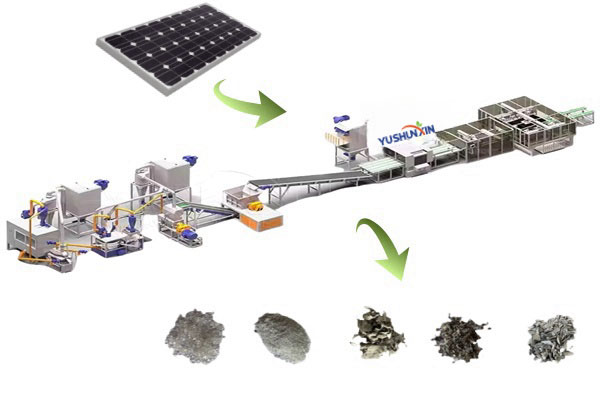
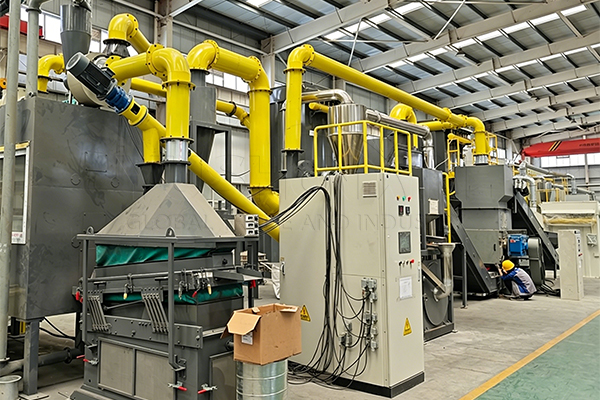
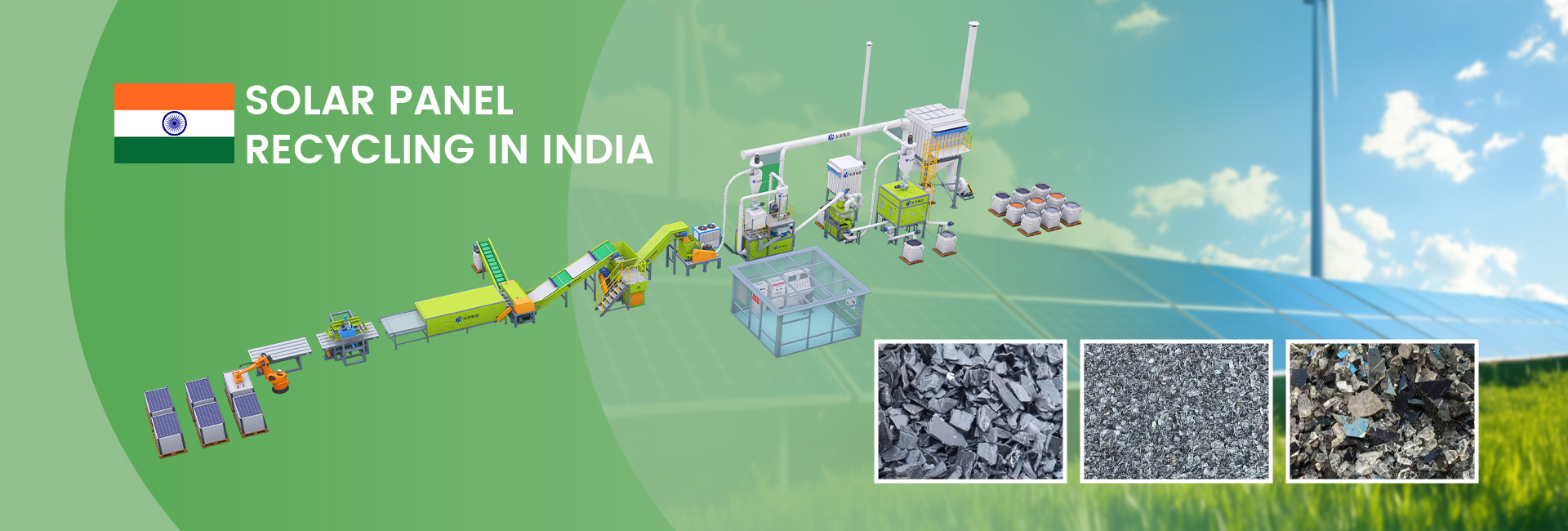
Based on the characteristics of the Indian market and customer requirements, we have designed two Gestión del reciclaje de paneles solares. with a daily processing capacity of 1 ton each.


What Is the Market Value of Recovered Materials in India?
Recovered materials from solar panel recycling have stable market demand in India. Typical recycled metal market prices include the following aspects.
| Material | Price in India |
|---|---|
| Recycled aluminum frame | $1,800–$2,300 / tonelada |
| Solar glass cullet | $30–$60 / tonelada |
| polvo de silicio | $700–$1,200 / tonelada |
| Copper from junction boxes | $7,000–$9,000 / tonelada |
¿Cómo son los resultados del proyecto y los comentarios de los clientes??
El reciclaje de paneles solares en India inició el transporte de equipos en febrero 2025. Entonces, completó la construcción de los cimientos en el sitio en marzo y terminó la instalación y puesta en servicio en abril. Después del inicio de la producción, el sistema operó de manera estable con una capacidad de procesamiento promedio de 1.03 t/h y una tasa de recuperación integral de 88.6%. Todos los gases de escape y aguas residuales cumplen con los estándares de descarga del CPCB de la India..

El sistema funciona de forma estable y sencilla.. Con alta pureza de recuperación del producto., Proporciona garantía confiable para el proceso de producción.. Estamos muy satisfechos con el rendimiento general y planeamos ampliar la capacidad de producción en el futuro.. We look forward to the opportunity to collaborate!
Related Case: 1000 kg/h Solar Panel Recycling Plant in Germany
If you prefer a pure mechanical solar panel recycling solution, También puedes consultar nuestro 1000Proyecto de reciclaje de paneles fotovoltaicos kg/h en Alemania.
This project processes 1000 kg of photovoltaic panels per hour, which is similar to the capacity of the Indian photovoltaic panel recycling plant. Sin embargo, the German project adopts a fully mechanical recycling process without thermal treatment.
Compared with the Indian solar panel recycling project, the German system focuses on physical dismantling and material separation. Mientras tanto, the Indian project uses mechanical plus solar panel pyrolysis technology to improve silicon recovery purity. Por lo tanto, these two projects demonstrate different photovoltaic recycling approaches under the same processing capacity.
You can compare both solutions and select the most suitable process according to panel structure, investment budget, and recovery targets.