
Connect recovered-liquid characterization, conditioning, generator selection and electrical integration in one project scope.
Match pyrolysis-oil conditioning to the generator and operating duty.
Tire-derived and plastic-derived liquids differ in sulfur, solids, viscosity, light fractions and wax behavior. The generator package must be selected after fuel sampling and an agreed conditioning route.
Do not connect raw recovered liquid directly to a standard genset by assumption
The conditioning train should be based on representative fuel analysis and the engine supplier's written limits.
- 01Settling and bulk separation
- 02Filtration and solids control
- 03Water separation
- 04Temperature and viscosity conditioning
- 05Day-tank and fuel-supply control
- 06Compatible engine and exhaust system
Make the fuel and electrical boundaries explicit
A practical proposal connects fuel variability, generator duty and site infrastructure.
Fuel characterization
Analyze density, viscosity, woda, sediment, sulfur, flash point, distillation behavior and any wax or halogen concern.
Engine compatibility
Confirm whether the application requires a heavy-fuel, dual-fuel or other approved engine configuration.
Duty profile
Separate continuous base-load, variable-load, standby and islanded-power applications; they impose different controls and redundancy.
Electrical integration
Define voltage, frequency, synchronization, transformer, switchgear, protection and any grid-connection requirements.
Plan storage, fire protection and emissions with the generator package
Commercial evaluation remains conditional on the local fuel classification and permitting route.
Storage and transfer
Use compatible tanks, bunding, ventilation, temperature control, filtration bypass management and spill response.
Quality release
Set a fuel release test and reject route so off-spec batches do not reach the engine.
Maintenance model
Budget for injectors, filters, lubricant monitoring, deposits and exhaust after-treatment based on actual fuel quality.
Bilans energetyczny
Compare recoverable fuel, internal thermal demand, generator consumption, auxiliary loads and usable net electricity.
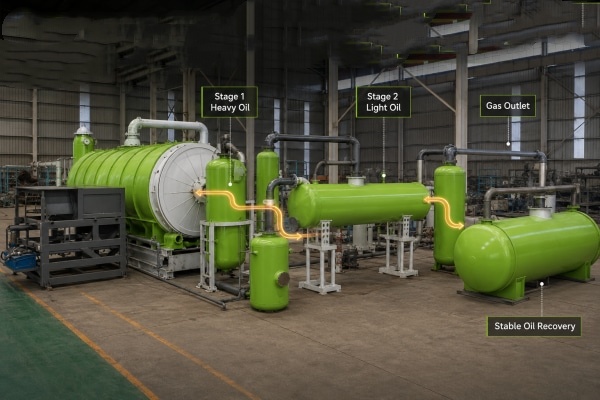
See the connected equipment boundary.
Reference visuals support early layout discussion. Final equipment, arrangement and interfaces are confirmed from the project material and site.
Przełóż fakty dotyczące projektu na listę wyposażenia.
Ta macierz referencyjna przedstawia logikę decyzyjną. Ostateczne ilości, modele i interfejsy należą do zatwierdzonej propozycji projektu.
| Blok systemowy | Typowy zakres | Podstawa konfiguracji |
|---|---|---|
| Bulk fuel handling | Settling, storage, bunding and controlled transfer | Fuel classification and representative analysis |
| Conditioning skid | Filtration, water separation and temperature or viscosity control | Written engine fuel limits |
| Fuel supply | Day tank, circulation, dozowanie, isolation and reject route | Duty cycle and off-spec management |
| Generator package | Compatible engine, controls, exhaust and safety systems | Approved fuel, load profile and maintenance basis |
| Electrical and heat recovery | Switchgear, protection, synchronization and optional heat interface | Site electrical boundary and usable energy demand |
Kontynuuj projekt tylko wtedy, gdy dostępne są wymagane dowody.
Każda bramka przekształca informacje o kliencie w określony wynik techniczny lub handlowy umożliwiający podjęcie kolejnej decyzji.
Fuel evidence
Sample the recovered liquid and define batch variability.
WyjścieFuel-analysis and classification recordCompatibility review
Compare the analysis with written engine and conditioning limits.
WyjścieApproved fuel-conditioning boundarySite integration
Define duty, electrical protection, storage, fire and exhaust interfaces.
WyjścieSingle-line and interface basisCommercial proposal
Quote only against the approved fuel, duty and delivery boundary.
WyjścieTraceable configuration and exclusionsPytania do rozwiązania przed konfiguracją.
Odpowiedzi definiują granice inżynieryjne; nie zastępują reprezentatywnych testów materiałów ani lokalnego przeglądu zgodności.
Can untreated pyrolysis oil be used in any diesel generator?
NIE. Analiza paliwa, conditioning and written engine compatibility limits are required. Standard high-speed diesel engines should not be assumed compatible.
What fuel tests should be prepared?
Typical evaluation includes density, viscosity, woda, sediment, sulfur, flash point, distillation behavior and any wax or halogen concern.
What is included beyond the generator?
The project may require settling, filtration, water separation, temperature control, storage, day tanks, fire protection, switchgear, synchronization and exhaust treatment.
How should net electrical output be evaluated?
Compare usable conditioned fuel, internal thermal demand, generator consumption, auxiliary loads, operating duty and electrical losses under the agreed project basis.
Przed wyborem sprzętu zdefiniuj materiał.
Udostępnij reprezentatywny opis materiału, dostępna objętość, stan obiektu i docelowe wyniki. YUSHUNXIN wykorzysta te fakty do przygotowania odpowiednich dyskusji na temat granic procesu i konfiguracji.


