
Connect recovered-liquid characterization, conditioning, generator selection and electrical integration in one project scope.
Match pyrolysis-oil conditioning to the generator and operating duty.
Tire-derived and plastic-derived liquids differ in sulfur, solids, viscosity, light fractions and wax behavior. The generator package must be selected after fuel sampling and an agreed conditioning route.
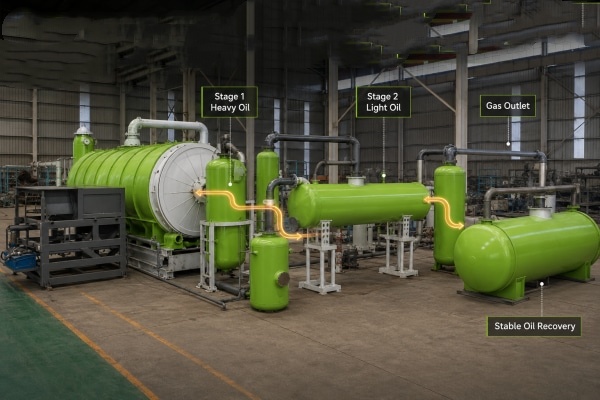
Do not connect raw recovered liquid directly to a standard genset by assumption
The conditioning train should be based on representative fuel analysis and the engine supplier's written limits.
- 01Settling and bulk separation
- 02Filtration and solids control
- 03Water separation
- 04Temperature and viscosity conditioning
- 05Day-tank and fuel-supply control
- 06Compatible engine and exhaust system
Make the fuel and electrical boundaries explicit
A practical proposal connects fuel variability, generator duty and site infrastructure.
Fuel characterization
Analyze density, viscosity, agua, sediment, azufre, flash point, distillation behavior and any wax or halogen concern.
Engine compatibility
Confirm whether the application requires a heavy-fuel, dual-fuel or other approved engine configuration.
Duty profile
Separate continuous base-load, variable-load, standby and islanded-power applications; they impose different controls and redundancy.
Electrical integration
Define voltage, frequency, synchronization, transformer, switchgear, protection and any grid-connection requirements.
Plan storage, fire protection and emissions with the generator package
Commercial evaluation remains conditional on the local fuel classification and permitting route.
Storage and transfer
Use compatible tanks, bunding, ventilation, temperature control, filtration bypass management and spill response.
Quality release
Set a fuel release test and reject route so off-spec batches do not reach the engine.
Maintenance model
Budget for injectors, filters, lubricant monitoring, deposits and exhaust after-treatment based on actual fuel quality.
Energy balance
Compare recoverable fuel, internal thermal demand, generator consumption, auxiliary loads and usable net electricity.
Ver el límite del equipo conectado.
Las imágenes de referencia apoyan la discusión inicial sobre el diseño.. Equipo final, La disposición y las interfaces se confirman a partir del material y el sitio del proyecto..
Traducir los datos del proyecto en una lista de equipos..
Esta matriz de referencia muestra la lógica de decisión.. Cantidades finales, Los modelos e interfaces pertenecen a la propuesta de proyecto aprobada..
| Bloque del sistema | Alcance típico | Base de configuración |
|---|---|---|
| Bulk fuel handling | Settling, almacenamiento, bunding and controlled transfer | Fuel classification and representative analysis |
| Conditioning skid | Filtration, water separation and temperature or viscosity control | Written engine fuel limits |
| Fuel supply | Day tank, circulation, metering, isolation and reject route | Duty cycle and off-spec management |
| Generator package | Compatible engine, controls, exhaust and safety systems | Approved fuel, load profile and maintenance basis |
| Electrical and heat recovery | Switchgear, protection, synchronization and optional heat interface | Site electrical boundary and usable energy demand |
Avanzar en el proyecto sólo cuando la evidencia requerida esté disponible..
Cada puerta convierte la información del cliente en un resultado técnico o comercial definido para la siguiente decisión..
Fuel evidence
Sample the recovered liquid and define batch variability.
ProducciónFuel-analysis and classification recordCompatibility review
Compare the analysis with written engine and conditioning limits.
ProducciónApproved fuel-conditioning boundarySite integration
Define duty, electrical protection, almacenamiento, fire and exhaust interfaces.
ProducciónSingle-line and interface basisCommercial proposal
Quote only against the approved fuel, duty and delivery boundary.
ProducciónTraceable configuration and exclusionsPreguntas a resolver antes de la configuración.
Las respuestas definen los límites de la ingeniería; No reemplazan las pruebas de materiales representativas ni la revisión de cumplimiento local..
Can untreated pyrolysis oil be used in any diesel generator?
No. Análisis de combustible, conditioning and written engine compatibility limits are required. Standard high-speed diesel engines should not be assumed compatible.
What fuel tests should be prepared?
Typical evaluation includes density, viscosity, agua, sediment, azufre, flash point, distillation behavior and any wax or halogen concern.
What is included beyond the generator?
The project may require settling, filtration, water separation, temperature control, almacenamiento, day tanks, fire protection, switchgear, synchronization and exhaust treatment.
How should net electrical output be evaluated?
Compare usable conditioned fuel, internal thermal demand, generator consumption, auxiliary loads, operating duty and electrical losses under the agreed project basis.
Definir el material antes de seleccionar el equipo..
Compartir una descripción de material representativa, volumen disponible, estado del sitio y resultados objetivo. YUSHUNXIN utilizará esos hechos para preparar la discusión de configuración y límites del proceso relevante..


