
Connect recovered-liquid characterization, conditioning, generator selection and electrical integration in one project scope.
Match pyrolysis-oil conditioning to the generator and operating duty.
Tire-derived and plastic-derived liquids differ in sulfur, solids, viscosity, light fractions and wax behavior. The generator package must be selected after fuel sampling and an agreed conditioning route.
Do not connect raw recovered liquid directly to a standard genset by assumption
The conditioning train should be based on representative fuel analysis and the engine supplier's written limits.
- 01Settling and bulk separation
- 02Filtration and solids control
- 03Water separation
- 04Temperature and viscosity conditioning
- 05Day-tank and fuel-supply control
- 06Compatible engine and exhaust system
Make the fuel and electrical boundaries explicit
A practical proposal connects fuel variability, generator duty and site infrastructure.
Fuel characterization
Analyze density, viscosity, wai, sediment, sulfur, flash point, distillation behavior and any wax or halogen concern.
Engine compatibility
Confirm whether the application requires a heavy-fuel, dual-fuel or other approved engine configuration.
Duty profile
Separate continuous base-load, variable-load, standby and islanded-power applications; they impose different controls and redundancy.
Electrical integration
Define voltage, frequency, synchronization, transformer, switchgear, protection and any grid-connection requirements.
Plan storage, fire protection and emissions with the generator package
Commercial evaluation remains conditional on the local fuel classification and permitting route.
Storage and transfer
Use compatible tanks, bunding, ventilation, temperature control, filtration bypass management and spill response.
Quality release
Set a fuel release test and reject route so off-spec batches do not reach the engine.
Maintenance model
Budget for injectors, filters, lubricant monitoring, deposits and exhaust after-treatment based on actual fuel quality.
Veiraurau ni kaukauwa
Compare recoverable fuel, internal thermal demand, generator consumption, auxiliary loads and usable net electricity.
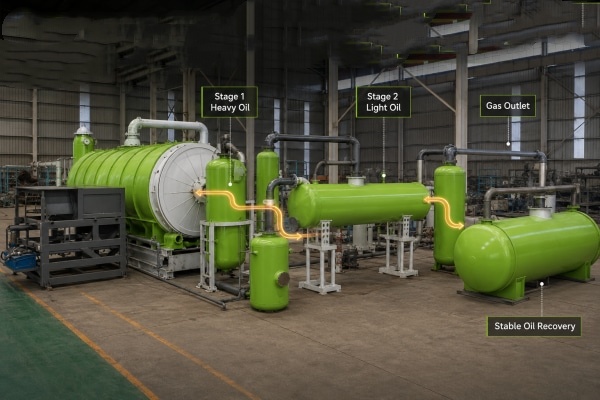
See the connected equipment boundary.
Reference visuals support early layout discussion. Final equipment, arrangement and interfaces are confirmed from the project material and site.
Vakadewataka na dina ni cakacaka ki na dua na lisi ni iyaya.
Na matrix ni veidusimaki oqo e vakaraitaka na vakasama ni vakatulewa .. iOtioti ni levu, ivakaraitaki kei na veitaratara e tiko ena vakatutu ni cakacaka sa vakadonui.
| Buloko ni ivakarau | Vakatautauvatataki ni rabailevu | Yavu ni veivakarautaki |
|---|---|---|
| Bulk fuel handling | Settling, maroroi, bunding and controlled transfer | Fuel classification and representative analysis |
| Conditioning skid | Filtration, water separation and temperature or viscosity control | Written engine fuel limits |
| Fuel supply | Day tank, circulation, mita, isolation and reject route | Duty cycle and off-spec management |
| Generator package | Compatible engine, controls, exhaust and safety systems | Approved fuel, load profile and maintenance basis |
| Electrical and heat recovery | Switchgear, protection, synchronization and optional heat interface | Site electrical boundary and usable energy demand |
Toso ki liu na cakacaka ena gauna ga e tiko kina na ivakadinadina e gadrevi ..
Na matamata yadua e vukica na itukutuku ni kasitama ki na dua na output vakatekinoloji se vakabisinisi vakamacalataki me baleta na vakatulewa e tarava ..
Fuel evidence
Sample the recovered liquid and define batch variability.
LakoFuel-analysis and classification recordCompatibility review
Compare the analysis with written engine and conditioning limits.
LakoApproved fuel-conditioning boundarySite integration
Define duty, electrical protection, maroroi, fire and exhaust interfaces.
LakoSingle-line and interface basisCommercial proposal
Quote only against the approved fuel, duty and delivery boundary.
LakoTraceable configuration and exclusionsNa taro me wali ni bera na kena vakarautaki ..
Na isau e vakamacalataka na iyalayala ni idinia .; era sega ni sosomitaka na mata ni iyaya ni veivakatovolei se na railesuva na kena muri na lawa ni vanua ..
Can untreated pyrolysis oil be used in any diesel generator?
Sega. Vakadikevi ni waiwai, conditioning and written engine compatibility limits are required. Standard high-speed diesel engines should not be assumed compatible.
What fuel tests should be prepared?
Typical evaluation includes density, viscosity, wai, sediment, sulfur, flash point, distillation behavior and any wax or halogen concern.
What is included beyond the generator?
The project may require settling, filtration, water separation, temperature control, maroroi, day tanks, fire protection, switchgear, synchronization and exhaust treatment.
How should net electrical output be evaluated?
Compare usable conditioned fuel, internal thermal demand, generator consumption, auxiliary loads, operating duty and electrical losses under the agreed project basis.
Vakamacalataka na iyaya ni bera ni o digitaka na iyaya ..
Wasea e dua na ivakamacala ni iyaya mata, Voliumu e tiko, ituvaki ni vanua kei na takete ni outputs. YUSHUNXIN ena vakayagataka na veika dina oqori me vakarautaka na iyalayala ni iwalewale veiganiti kei na veivosaki ni veivakatorocaketaki ..


