
A comparable project budget starts with panel construction, incoming condition, throughput, separation route, output specification, environmental controls and the agreed delivery boundary—not a standalone machine price.

Compare the complete scope before comparing cost.
Published descriptions support early planning. Công suất cuối cùng, cấu hình, performance and commercial terms require written confirmation against the submitted project facts.
Material basis
Panel type, dimensions, frame and junction-box condition
Connected system
Tháo gỡ, size reduction, sự chia ly, dust control and handling
Customer confirmation
Throughput, outputs, site utilities and delivery responsibility
Complete solution route
Review the connected process page before fixing the equipment boundary.
When investing in a solar panel recycling plant, most customers are not simply looking for a single equipment price. What they really need is a clear solution with a realistic price range, based on their raw materials, capacity, and target output purity. Trong thực tế, the solar panel recycling machine cost typically ranges from $150,000 to over $1,500,000, depending on the configuration and technical route. Dưới, we break down the most common solutions and their corresponding price ranges to help you make an informed decision.
What Solar Panel Recycling Solution Can You Get Within Your Budget?
When planning a quản lý tái chế tấm pin mặt trời, budget is often the starting point. Different investment levels correspond to different technical routes, processing capacities, and output values. Below are three mainstream solutions based on real customer budgets, helping you quickly identify the most suitable option for your project.
$150,000–$400,000: Cost-Effective Entry Solution for Small-Scale Projects
This type of solar panel recycling system price is suitable for investors seeking a cost-effective entry point. The solar panel recycling solution is based on a mechanical processing system, including frame removal, nghiền nát, and basic separation. It is especially suitable for processing single-glass solar panels, ensuring stable and efficient material recovery.
With a typical capacity of 300kg/h to 500kg/h, this configuration allows for quick project setup and flexible operation. This solution offers a fast return on investment and provides a solid foundation for future system upgrades as your business expands.
$400,000-$900,000: Balanced Solution for Stable Output & Better Material Value
For customers seeking a balance between investment and performance, this is the most popular choice. The solar panel recycling system combines mechanical processing with thermal treatment, enabling more efficient recovery of glass, silic, and metals. It is suitable for handling both single-glass and certain double-glass panels.
With a capacity of 500kg/h to 1000kg/h, this solution supports continuous operation and improved production efficiency. At this level, customers can achieve higher material recovery rates and improved product quality, making it suitable for long-term, stable recycling operations.
$900,000-$1,500,000+: High-Purity Solution for Maximum Recycling Value
This PV panel recycling solution is designed for investors aiming to maximize the value of recycled materials and build a high-standard industrial recycling plant. It adopts a pyrolysis-based process, which uses thermal decomposition to remove EVA layers and achieve clean separation of glass and solar cells. This significantly enhances the recovery of high-purity silicon powder and valuable metals such as silver and copper.
The system is capable of processing single-glass, double-glass, and mixed solar panels, with capacities of 1000kg/h or higher, ensuring strong production capability. With advanced automation and environmental protection systems, this solution delivers high efficiency, stable output, and premium material quality, making it the preferred choice for large-scale and high-profit projects.
How to Customize the Most Cost-Effective Solar Panel Recycling Solution?
Choosing the right solar panel recycling solution is not just about equipment selection. It directly determines your total investment, operating efficiency, and final profit. Below are the key factors that influence both the technical route and the overall project cost.


Mechanical vs Pyrolysis Process: How Much Does Each Option Cost?
- The choice between PV mechanical recycling and Công nghệ nhiệt phân PV is the first step in determining your budget.
- A mechanical solar panel recycling solution typically costs between $150,000 Và $500,000, depending on capacity and automation level. This process focuses on crushing, sàng lọc, and basic separation. It is suitable for projects targeting low initial investment and fast deployment.
- A giải pháp dự án nhiệt phân tấm pin mặt trời usually ranges from $600,000 ĐẾN $1,500,000+. By using thermal decomposition to remove EVA layers, this process allows for clean separation of glass and solar cells, significantly improving the purity of recovered silicon and metals. Although the solar panel pyrolysis plant cost is higher, it offers greater long-term profitability.
Pyrolysis Furnace vs Tunnel Kiln: Which One Fits Your Budget?
Within PV panel pyrolysis systems, the choice of core equipment also affects both cost and production efficiency.
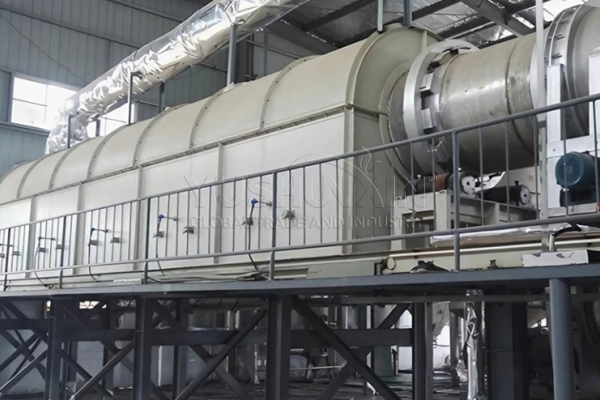
A pyrolysis furnace system generally costs between $200,000 Và $600,000. It operates in batch mode, making it more flexible and suitable for medium-scale projects or customers with limited budgets.
A tunnel kiln system, designed for continuous operation, typically requires $500,000 ĐẾN $1,000,000+ for the thermal section alone. It is ideal for large-scale recycling plants (1000kg/h or above), offering higher automation and stable output, but requires a larger initial investment.


Raw Material Type: How It Impacts Your Equipment Cost?
The structure of your raw materials directly influences both process complexity and equipment configuration.
Processing single-glass solar panels is relatively straightforward and can be handled by most standard systems, keeping costs on the lower end of the investment range. For double-glass panels, additional crushing strength and separation precision are required. This typically increases the total project cost by 10% ĐẾN 30%, depending on the system design.
If you plan to process mixed materials, a more advanced sorting and separation system is needed, which may further increase the investment.
Production Capacity: How Much Does a 500kg/h vs 1000kg/h Solar Panel Recycling Line Cost?
Production capacity is one of the most direct factors affecting total solar panel recycling machine cost.
A 500kg/h solar panel recycling line price usually ranges from $200,000 ĐẾN $600,000, depending on the process route. A 1000kg/h solar panel recycling plant cost generally ranges from $600,000 ĐẾN $1,200,000+, as it requires larger equipment, higher automation, and more robust supporting systems.
Higher capacities not only increase equipment costs but also improve processing efficiency and long-term revenue potential.


Output Purity: How to Achieve Higher Purity in Solar Panel Recycling?
- If your goal is to maximize the value of recovered materials, especially silic and metals, you will need to invest in advanced separation technologies.
- Adding an electrostatic separator typically costs between $150,000 Và $500,000, significantly improving the separation of metals and non-metals.
- An optical sorting machine ranges from $50,000 ĐẾN $200,000, helping to further refine material classification.
- An airflow separation system usually costs between $50,000 Và $200,000, enhancing the separation of light and heavy materials.
- These upgrades can increase your total investment by 20% ĐẾN 50%, but they enable high-purity recovery, which greatly improves the market value of your final products.
Solar Panel Recycling Equipment Cost Breakdown
The following price ranges are for reference. Actual solar panel recycling machine cost depends on your customized solution.
| Equipment Category | Main Equipment | Typical Configuration | Price Range |
|---|---|---|---|
| Thiết bị tháo gỡ bảng điều khiển năng lượng mặt trời | Frame removal machine, glass removal machine | Used for dismantling aluminum frames and separating glass layers before further processing | $40,000 – $200,000 |
| Core Processing System | Pyrolysis furnace, máy hủy rác thải điện tử | Pyrolysis for EVA removal + crushing system for size reduction | $150,000 – $600,000 |
| Separation Machine | Vibrating screen, máy tách tĩnh điện, airflow separator, optical sorter | Multi-stage separation to improve silicon, glass, and metal recovery purity | $80,000 – $400,000 |
| Auxiliary Equipment | Exhaust gas treatment, dust collection, central control system | Ensures environmental compliance, dust control, and automated operation | $80,000 – $300,000 |
Frame Removal Machine
For automatic removal of aluminum frames. Cost approximately $40,000 – $100,000.
Glass Removal Machine
It separates the top glass cover plate from the cell layer as a single unit. Due to its technical complexity and high degree of customization, the cost ranges from approximately $80,000 ĐẾN $200,000.
Máy hủy chất thải điện tử
It mechanically crushes entire components or materials after pyrolysis into small pieces. Cost ranges from approximately $50,000 ĐẾN $200,000.
Máy tách màn hình rung
It classifies materials based on particle size after crushing. Cost ranges from approximately $30,000 ĐẾN $100,000.
Máy tách tĩnh điện
For separating metals from non-metals, specifically silicon powder and glass. Costs range from $150,000 ĐẾN $500,000, depending on separation precision and production capacity.
Thiết bị tách trọng lực
It separates light and heavy materials from broken materials by airflow. Cost ranges from approximately $50,000 ĐẾN $200,000.
Optical Sorting Machine
It utilizes near-infrared spectroscopy to identify and sort different materials. Cost ranges from approximately $50,000 ĐẾN $200,000.
Exhaust Gas Treatment System
It treats volatile organic compounds, acidic gases, and trace harmful fumes arising from pyrolysis and crushing. Cost ranges from approximately $100,000 ĐẾN $400,000.
Get Your Customized Solar Panel Recycling Solution
We understand that when selecting equipment suppliers, you are not only considering product pricing but also the reliability of long-term partnerships.
Commercial scope definition
Use the model register only after defining equipment, environmental, building, installation and local-supply boundaries.
Incoming material
Route, capacity, operating schedule, site country, delivery scope and acceptance requirements.
Expected outputs
Written configuration, equipment list, exclusions and budgetary quotation.
Project interfaces
Civil works, tiện ích, installation, permits, hậu cần, spares, commissioning and working capital.
Use only the row matching the selected process boundary.
| Catalogue reference | Dung tích | Quyền lực | Physical envelope | Included boundary |
|---|---|---|---|---|
| YSX-M1000Single-glass mechanical | 1 th | 277.6 kW | 36 × 6 × 6 m | Integrated mechanical line |
| YSX-TK500Tunnel thermal | 500 kg/giờ | 116.65 kW | 65 × 13 × 7.5 m | Continuous tunnel thermal line |
| YSX-TK1000Tunnel thermal | 1,000 kg/giờ | 126.65 kW | 72 × 13 × 7.5 m | Continuous tunnel thermal line |
| YSX-TK2000Tunnel thermal | 2,000 kg/giờ | 136.65 kW | 80 × 13 × 7.5 m | Continuous tunnel thermal line |
| YSX-PF5Batch thermal | 5 t/ngày | 140.45 kW | 46 × 33 × 7.5 m | Mixed-module batch thermal line |
| YSX-PF16Batch thermal | 16 t/ngày | 142.45 kW | 40 × 26 × 7.5 m | Mixed-module batch thermal line |
| YSX-8000Earlier integrated thermal | 8 t/ngày | Configuration controlled | 50 × 30 × 8 m | Earlier thermal project reference; reactor Φ2200 × 6000 × 20 mm |
| YSX-16000Earlier integrated thermal | 16 t/ngày | Configuration controlled | 60 × 30 × 8 m | Earlier thermal project reference; reactor Φ2800 × 6600 × 18 mm |
Configuration rule: catalogue capacity is a planning reference. Stable throughput, installed/operating power, footprint, sự hồi phục, purity, emissions and utility demand require the approved equipment list, representative material and written acceptance conditions.
Information required before configuration and quotation
- Representative material photos, specifications and available sample.
- Required capacity plus hours per shift, shifts per day and operating days.
- Đầu ra mục tiêu, sampling method and downstream receiver requirements.
- Site country, available power, fuel, Nước, compressed air and building limits.
- Local environmental, fire, storage and occupational-safety requirements.
- Requested delivery boundary: thiết bị, cách trình bày, installation, commissioning and training.


