
With the rapid development of the photovoltaic industry, a large number of photovoltaic modules will reach the end of their service life within the next twenty to thirty years. As the mainstream product in current photovoltaic applications, single-glass modules occupy a significant proportion. For the structural characteristics of single-glass modules, YUSHUNXIN provides a single-glass photovoltaic panels disposal project that balances environmental safety, resource recovery rates and economic viability.
What is the structure of a single-glass photovoltaic panel?


The typical structure of a single-glass photovoltaic module consists of: tempered glass, EVA, pin mặt trời, EVA, backsheet, aluminum frame, and junction box. Common dimensions for single-glass PV panels are 1650mm × 992mm × 40mm, which are suitable for most photovoltaic systems.
Recycling Targets for Single-Glass Photovoltaic Panel Disposal Project
The recycling targets for single-glass photovoltaic panel disposal project primarily include:
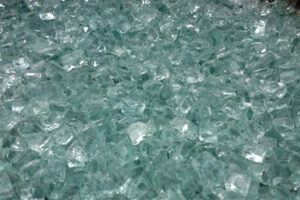
Accounting for approximately 70% of the total module weight, recycled glass is available in architectural glass, road construction materials, or glass fiber production.
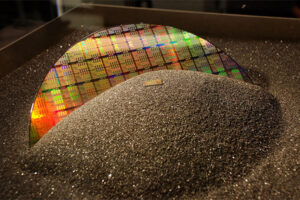
After recycling, the process purifies and reprocesses them into reclaimed silicon material. Following purification, you can reuse this material in solar cell production or the semiconductor industry.

You can directly re-melt and reuse nhôm frames, copper wires, silver paste, and other metals, which provides high circular economy value.
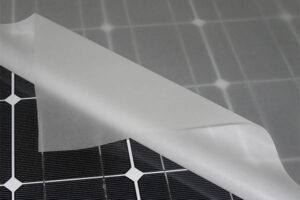
EVA and backsheet plastics can serve as fuel or chemical raw materials, thereby enhancing overall resource utilization efficiency.
What is the process for recycling single-glass photovoltaic panels?
For the structural characteristics of single-glass photovoltaic modules, the single-glass photovoltaic panel disposal project employs automatic equipment to achieve an efficient, environmentally friendly, and cost-effective PV panel recycling process.
What are the primary equipment configurations for single-glass photovoltaic panel disposal project?
The single-glass photovoltaic panel recycling production line we designed has a capacity of 500-1000 kg/giờ. We can also customize the production line according to customer requirements. Below are the main equipment in the single-glass solar recycling process. You can also click to learn more about the chi phí máy tái chế tấm pin mặt trời.

Frame Removal Machine
The photovoltaic panel frame removal machine is specifically designed for the recycling and reuse of waste photovoltaic panels. This equipment efficiently separates the frames from the modules, which enables the recycling of photovoltaic panel materials.

Gravity separation equipment
The airflow density separator screens ground materials through density-based sieving, which separates copper, silicon powder, and plastic. The equipment features stable performance, high efficiency, and low energy consumption.

Glass Removal Machine
This equipment employs advanced mechanical separation technology to rapidly and safely separate glass from photovoltaic panels, creating separated fractions for testing and a defined downstream route.

Máy hủy chất thải điện tử
This shredder mainly serves the preliminary crushing and recycling of photovoltaic panels, featuring stable crushing performance and high efficiency.

Máy tách tĩnh điện
The electrostatic separator is suitable for sorting mixed materials of varying densities that are difficult to separate by flotation methods. It efficiently separates plastics, silicon powder, and metal mixtures.
What are the advantages of the single-glass photovoltaic panel disposal project?
In comparison to traditional processes, the giải pháp dự án nhiệt phân tấm pin mặt trời achieves comprehensive improvements in recovery rate, energy consumption, economic efficiency, and automation levels. The following are the specific advantages.
If you would like to learn more about the double-glass photovoltaic panels recycling solution, xin vui lòng liên hệ với chúng tôi.
Single-glass mechanical
Use where frame and front-glass removal can be engineered before dry liberation and classification.
Vật liệu đến
Single-glass crystalline-silicon module mix, dimensions, intact/broken share, frame and junction-box condition.
Kết quả đầu ra dự kiến
Separated frame and glass plus classified copper-, silic- and polymer-bearing fractions.
Giao diện dự án
Safe receiving, glass handling, dust collection, power, compressed air, wear-parts access and product packing.
Chỉ sử dụng hàng khớp với ranh giới quy trình đã chọn.
| Tham khảo danh mục | Dung tích | Quyền lực | Phong bì vật lý | Bao gồm ranh giới |
|---|---|---|---|---|
| YSX-M1000Single-glass mechanical | 1 th | 277.6 kW | 36 × 6 × 6 m | Integrated mechanical line |
Quy tắc cấu hình: năng lực danh mục là một tài liệu tham khảo quy hoạch. Thông lượng ổn định, công suất lắp đặt/vận hành, dấu chân, sự hồi phục, sự tinh khiết, nhu cầu phát thải và tiện ích yêu cầu danh sách thiết bị được phê duyệt, tài liệu đại diện và điều kiện chấp nhận bằng văn bản.
Thông tin cần thiết trước khi cấu hình và báo giá
- Hình ảnh tư liệu đại diện, thông số kỹ thuật và mẫu có sẵn.
- Công suất yêu cầu cộng với số giờ mỗi ca, ca mỗi ngày và ngày hoạt động.
- Đầu ra mục tiêu, phương pháp lấy mẫu và yêu cầu của máy thu xuôi dòng.
- Quốc gia của trang web, nguồn điện sẵn có, nhiên liệu, Nước, giới hạn khí nén và xây dựng.
- Môi trường địa phương, ngọn lửa, yêu cầu về bảo quản và an toàn lao động.
- Ranh giới giao hàng được yêu cầu: thiết bị, cách trình bày, cài đặt, vận hành và đào tạo.


