
A comparable project budget starts with panel construction, incoming condition, throughput, separation route, 出力仕様, environmental controls and the agreed delivery boundary—not a standalone machine price.

コストを比較する前に、範囲全体を比較してください.
公開された説明は初期計画をサポートします. 最終容量, 構成, パフォーマンスおよび商業条件では、提出されたプロジェクトの事実に対する書面による確認が必要です.
材料ベース
Panel type, dimensions, frame and junction-box condition
接続されたシステム
分解, size reduction, 分離, dust control and handling
お客様の確認
Throughput, outputs, site utilities and delivery responsibility
完全な解決ルート
機器の境界を修正する前に、接続されているプロセスのページを確認してください。.
When investing in a solar panel recycling plant, most customers are not simply looking for a single equipment price. What they really need is a clear solution with a realistic price range, based on their raw materials, 容量, and target output purity. 実際に, the solar panel recycling machine cost typically ranges from $150,000 to over $1,500,000, depending on the configuration and technical route. Below, we break down the most common solutions and their corresponding price ranges to help you make an informed decision.
What Solar Panel Recycling Solution Can You Get Within Your Budget?
When planning a 太陽光パネルのリサイクル管理, budget is often the starting point. Different investment levels correspond to different technical routes, processing capacities, and output values. Below are three mainstream solutions based on real customer budgets, helping you quickly identify the most suitable option for your project.
$150,000–$400,000: Cost-Effective Entry Solution for Small-Scale Projects
This type of solar panel recycling system price is suitable for investors seeking a cost-effective entry point. The solar panel recycling solution is based on a mechanical processing system, including frame removal, 粉砕する, and basic separation. It is especially suitable for processing single-glass solar panels, ensuring stable and efficient material recovery.
With a typical capacity of 300kg/h to 500kg/h, this configuration allows for quick project setup and flexible operation. This solution offers a fast return on investment and provides a solid foundation for future system upgrades as your business expands.
$400,000-$900,000: Balanced Solution for Stable Output & Better Material Value
For customers seeking a balance between investment and performance, this is the most popular choice. The solar panel recycling system combines mechanical processing with thermal treatment, enabling more efficient recovery of glass, シリコン, と金属. It is suitable for handling both single-glass and certain double-glass panels.
With a capacity of 500kg/h to 1000kg/h, this solution supports continuous operation and improved production efficiency. At this level, customers can achieve higher material recovery rates and improved product quality, making it suitable for long-term, stable recycling operations.
$900,000-$1,500,000+: High-Purity Solution for Maximum Recycling Value
This PV panel recycling solution is designed for investors aiming to maximize the value of recycled materials and build a high-standard industrial recycling plant. It adopts a pyrolysis-based process, which uses thermal decomposition to remove EVA layers and achieve clean separation of glass and solar cells. This significantly enhances the recovery of high-purity silicon powder and valuable metals such as silver and copper.
The system is capable of processing single-glass, 二重ガラス, and mixed solar panels, with capacities of 1000kg/h or higher, ensuring strong production capability. With advanced automation and environmental protection systems, this solution delivers high efficiency, stable output, and premium material quality, making it the preferred choice for large-scale and high-profit projects.
How to Customize the Most Cost-Effective Solar Panel Recycling Solution?
Choosing the right solar panel recycling solution is not just about equipment selection. It directly determines your total investment, operating efficiency, and final profit. Below are the key factors that influence both the technical route and the overall project cost.


Mechanical vs Pyrolysis Process: How Much Does Each Option Cost?
- The choice between PV mechanical recycling and PV熱分解技術 is the first step in determining your budget.
- A mechanical solar panel recycling solution typically costs between $150,000 そして $500,000, depending on capacity and automation level. This process focuses on crushing, スクリーニング, and basic separation. It is suitable for projects targeting low initial investment and fast deployment.
- あ ソーラーパネル熱分解プロジェクトソリューション usually ranges from $600,000 に $1,500,000+. By using thermal decomposition to remove EVA layers, this process allows for clean separation of glass and solar cells, significantly improving the purity of recovered silicon and metals. Although the solar panel pyrolysis plant cost is higher, it offers greater long-term profitability.
Pyrolysis Furnace vs Tunnel Kiln: Which One Fits Your Budget?
Within PV panel pyrolysis systems, the choice of core equipment also affects both cost and production efficiency.
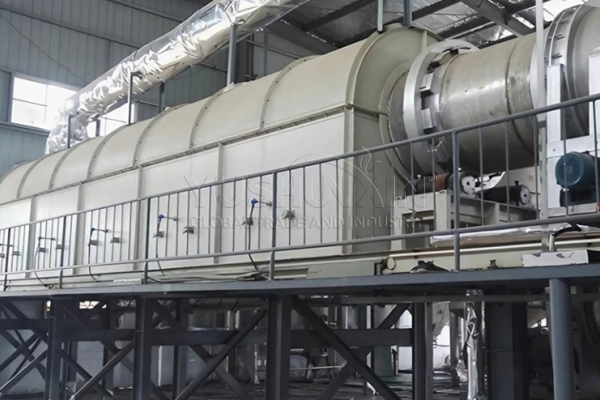
A pyrolysis furnace system generally costs between $200,000 そして $600,000. It operates in batch mode, making it more flexible and suitable for medium-scale projects or customers with limited budgets.
A tunnel kiln system, designed for continuous operation, typically requires $500,000 に $1,000,000+ for the thermal section alone. It is ideal for large-scale recycling plants (1000kg/h or above), offering higher automation and stable output, but requires a larger initial investment.


Raw Material Type: How It Impacts Your Equipment Cost?
The structure of your raw materials directly influences both process complexity and equipment configuration.
Processing single-glass solar panels is relatively straightforward and can be handled by most standard systems, keeping costs on the lower end of the investment range. For double-glass panels, additional crushing strength and separation precision are required. This typically increases the total project cost by 10% に 30%, depending on the system design.
If you plan to process mixed materials, a more advanced sorting and separation system is needed, which may further increase the investment.
Production Capacity: How Much Does a 500kg/h vs 1000kg/h Solar Panel Recycling Line Cost?
Production capacity is one of the most direct factors affecting total solar panel recycling machine cost.
A 500kg/h solar panel recycling line price usually ranges from $200,000 に $600,000, depending on the process route. A 1000kg/h solar panel recycling plant cost generally ranges from $600,000 に $1,200,000+, as it requires larger equipment, higher automation, and more robust supporting systems.
Higher capacities not only increase equipment costs but also improve processing efficiency and long-term revenue potential.


Output Purity: How to Achieve Higher Purity in Solar Panel Recycling?
- If your goal is to maximize the value of recovered materials, especially シリコン と金属, you will need to invest in advanced separation technologies.
- Adding an electrostatic separator typically costs between $150,000 そして $500,000, significantly improving the separation of metals and non-metals.
- An optical sorting machine ranges from $50,000 に $200,000, helping to further refine material classification.
- An airflow separation system usually costs between $50,000 そして $200,000, enhancing the separation of light and heavy materials.
- These upgrades can increase your total investment by 20% に 50%, but they enable high-purity recovery, which greatly improves the market value of your final products.
Solar Panel Recycling Equipment Cost Breakdown
The following price ranges are for reference. Actual solar panel recycling machine cost depends on your customized solution.
| Equipment Category | Main Equipment | Typical Configuration | Price Range |
|---|---|---|---|
| 太陽光パネル解体装置 | フレーム除去機, glass removal machine | Used for dismantling aluminum frames and separating glass layers before further processing | $40,000 – $200,000 |
| Core Processing System | 熱分解炉, 電子廃棄物シュレッダー | Pyrolysis for EVA removal + crushing system for size reduction | $150,000 – $600,000 |
| Separation Machine | Vibrating screen, 静電分離器, airflow separator, optical sorter | Multi-stage separation to improve silicon, ガラス, and metal recovery purity | $80,000 – $400,000 |
| 補助装置 | Exhaust gas treatment, 集塵, central control system | Ensures environmental compliance, 防塵, and automated operation | $80,000 – $300,000 |
フレーム除去機
For automatic removal of aluminum frames. Cost approximately $40,000 – $100,000.
ガラス除去機
It separates the top glass cover plate from the cell layer as a single unit. Due to its technical complexity and high degree of customization, the cost ranges from approximately $80,000 に $200,000.
電子廃棄物シュレッダー
It mechanically crushes entire components or materials after pyrolysis into small pieces. Cost ranges from approximately $50,000 に $200,000.
振動ふるい選別機
It classifies materials based on particle size after crushing. Cost ranges from approximately $30,000 に $100,000.
静電分離器
For separating metals from non-metals, specifically silicon powder and glass. Costs range from $150,000 に $500,000, depending on separation precision and production capacity.
重力分離装置
It separates light and heavy materials from broken materials by airflow. Cost ranges from approximately $50,000 に $200,000.
光学選別機
It utilizes near-infrared spectroscopy to identify and sort different materials. Cost ranges from approximately $50,000 に $200,000.
排ガス処理システム
It treats volatile organic compounds, acidic gases, and trace harmful fumes arising from pyrolysis and crushing. Cost ranges from approximately $100,000 に $400,000.
Get Your Customized Solar Panel Recycling Solution
We understand that when selecting equipment suppliers, you are not only considering product pricing but also the reliability of long-term partnerships.
Commercial scope definition
Use the model register only after defining equipment, environmental, building, installation and local-supply boundaries.
入荷素材
ルート, 容量, operating schedule, site country, delivery scope and acceptance requirements.
期待される出力
Written configuration, equipment list, exclusions and budgetary quotation.
プロジェクトインターフェース
Civil works, 公共事業, インストール, permits, ロジスティクス, spares, commissioning and working capital.
選択したプロセス境界に一致する行のみを使用します.
| カタログ参照 | 容量 | 力 | 物理的エンベロープ | 含まれる境界 |
|---|---|---|---|---|
| YSX-M1000単層ガラスメカニカル | 1 t/h | 277.6 kW | 36 × 6 × 6 メートル | 統合された機械ライン |
| YSX-TK500Tunnel thermal | 500 kg/h | 116.65 kW | 65 × 13 × 7.5 メートル | Continuous tunnel thermal line |
| YSX-TK1000Tunnel thermal | 1,000 kg/h | 126.65 kW | 72 × 13 × 7.5 メートル | Continuous tunnel thermal line |
| YSX-TK2000Tunnel thermal | 2,000 kg/h | 136.65 kW | 80 × 13 × 7.5 メートル | Continuous tunnel thermal line |
| YSX-PF5Batch thermal | 5 トン/日 | 140.45 kW | 46 × 33 × 7.5 メートル | Mixed-module batch thermal line |
| YSX-PF16Batch thermal | 16 トン/日 | 142.45 kW | 40 × 26 × 7.5 メートル | Mixed-module batch thermal line |
| YSX-8000Earlier integrated thermal | 8 トン/日 | Configuration controlled | 50 × 30 × 8 メートル | Earlier thermal project reference; reactor Φ2200 × 6000 × 20 mm |
| YSX-16000Earlier integrated thermal | 16 トン/日 | Configuration controlled | 60 × 30 × 8 メートル | Earlier thermal project reference; reactor Φ2800 × 6600 × 18 mm |
設定ルール: カタログ容量は計画の参考値です. 安定したスループット, 設置/動作電力, フットプリント, 回復, 純度, 排出量と公共需要には承認された機器リストが必要です, 代表的な資料と書面による受入条件.
設定やお見積りの前に必要な情報
- 代表的な資料写真, 仕様と入手可能なサンプル.
- 必要なキャパシティにシフトごとの時間数を加えたもの, 1日のシフトと稼働日.
- 目標出力, サンプリング方法と下流の受信機の要件.
- 拠点の国, 利用可能な電力, 燃料, 水, 圧縮空気と建物の制限.
- 地域環境, 火, 保管および労働安全要件.
- 要求された配送境界: 装置, レイアウト, インストール, 試運転とトレーニング.


