
S1: Ƙarfe na Masana'antu & Haɗin Kan Narkewar Makamashi
UBC mu (Canjin Abin Sha Mai Amfani) tsarin ado yana haɗa kai tsaye tare da murhun narkewar aluminum, ƙirƙirar tsarin rufaffiyar madauki mara kyau. Ta hanyar cire sutura da gurɓatattun abubuwa kafin narkewa, tsarin yana haɓaka ƙimar dawo da ƙarfe yayin rage yawan kuzari ta hanyar 15-30%. Haɗin yin ado-narkewa yana kawar da sarrafa sau biyu, yana rage asarar iskar shaka, kuma yana tabbatar da mafi girman ingancin aluminum don aikace-aikacen ƙasa.
Haɗe-haɗe Haɓakawa na thermal
UBC delacquering da ke da alaƙa da tanderun narkewa yana rage yawan amfani da gas ta hanyar 15-30%. The decoating tsarin integrates kai tsaye tare da narkewa tanderu shaye zafi dawo da tsarin, haifar da rufaffiyar zagayowar thermal. Gas mai zafi da ke fitowa daga tanderun da ke narkewa suna dumama ɗakin ɗaki, yayin da mai tsabta, UBC da aka ƙawata tana shiga cikin tanderun a yanayin zafi mai ƙarfi - rage ƙarfin da ake buƙata don narkewa. Wannan haɗin gwiwar thermal yana kawar da buƙatar masu ƙona wuta a cikin matakin yankewa kuma yana rage yawan amfani da iskar gas a cikin sarkar tsari..
Build the decoating line around the incoming aluminum scrap.
A connected project can combine size reduction, ferrous and non-ferrous separation, controlled thermal decoating, off-gas management, melting and ingot handling. The final scope depends on the coating system, scrap density, contamination and downstream metal specification.
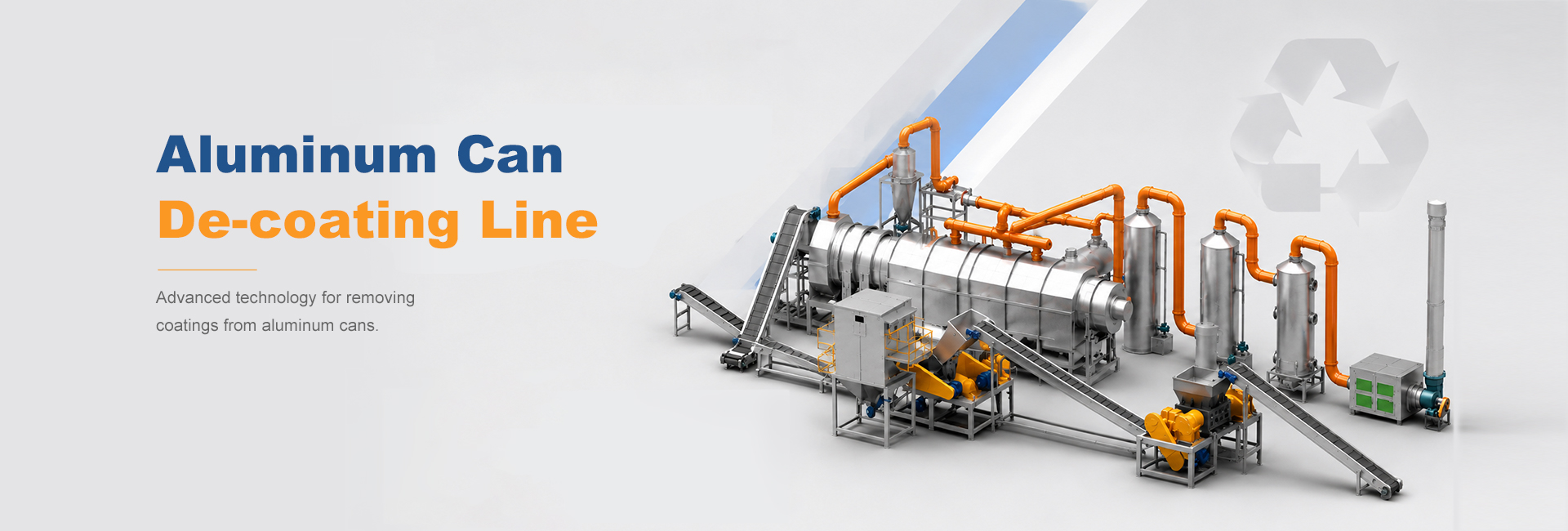
From incoming UBC bales to a controlled furnace feed
The line should be configured as a material-to-output system rather than a standalone furnace.
- 01Receiving and bale opening
- 02Shredding and size control
- 03Magnetic and eddy-current separation
- 04Controlled thermal decoating
- 05Gas treatment and heat integration
- 06Optional melting, casting and palletizing
What changes the equipment list
A reliable proposal starts with the actual scrap profile and the agreed delivery boundary.
Feedstock form
Loose cans, compacted bales, mixed packaging scrap, painted profiles and oily turnings require different opening, feeding and separation arrangements.
Coating and contamination
Paint, ink, lacquer, polymer film, mai, danshi, iron and non-metallic contamination influence residence time, gas handling and downstream metal cleaning.
Downstream route
Decoated scrap may be sold, remelted on site or integrated with refining, casting and automatic stacking. Each route changes utilities and layout.
Environmental boundary
The off-gas train must be selected against the coating chemistry, local permit basis, fuel system and required monitoring points.
Design decisions that protect metal value and operating stability
Published figures are planning references and require project confirmation. Representative feedstock testing and a documented acceptance basis are required.
Atmosphere control
Limit uncontrolled air ingress and monitor the thermal environment to reduce oxidation risk and maintain repeatable coating removal.
Material balance
Record incoming scrap, separated contaminants, decoated aluminum, residues and optional molten-metal output.
Heat integration
Evaluate recovered process gas and hot exhaust as project energy streams only after their composition and stability are understood.
Acceptance plan
Agree sampling, test method, run duration, product cleanliness, emissions boundary and utility conditions before commercial acceptance.
See the connected equipment boundary.
Reference visuals support early layout discussion. Final equipment, arrangement and interfaces are confirmed from the project material and site.
Fassara gaskiyar aikin cikin jerin kayan aiki.
Wannan matrix na nuni yana nuna dabarar yanke shawara. Ƙarshe masu yawa, samfura da musaya suna cikin tsarin da aka amince da aikin.
| Tsarin toshe | Matsakaicin iyaka | Tushen tsari |
|---|---|---|
| Material preparation | Bale opening, shredding, sizing and controlled transfer | Scrap form, density and required furnace feed |
| Separation | Magnetic, eddy-current and manual or sensor-based quality control | Iron, non-ferrous attachments and non-metallic contamination |
| Thermal section | Controlled decoating reactor, seals, heating and discharge | Coating load, residence basis and oxidation control |
| Environmental section | Gas combustion or oxidation, particulate and polishing stages | Coating chemistry and local emissions boundary |
| Downstream metal | Cooling, ajiya, optional melting, casting and palletizing | Target product and agreed delivery scope |
Ci gaba da aikin kawai idan akwai shaidar da ake buƙata.
Kowace kofa tana juya bayanan abokin ciniki zuwa ƙayyadaddun kayan aikin fasaha ko kasuwanci don yanke shawara na gaba.
Scrap profile
Confirm scrap category, coating, oils, attachments and incoming form.
FitowaRepresentative scrap and contamination recordRoute definition
Define preparation, rabuwa, decoating and downstream metal boundary.
FitowaAgreed material-to-product flowEnvironmental basis
Identify coating chemistry, off-gas, residue and local test requirements.
FitowaControl and monitoring registerAcceptance plan
Agree tested feed, sampling, stable run and downstream quality checks.
FitowaMeasurable project acceptance sheetTambayoyin da za a warware kafin daidaitawa.
Amsoshi suna bayyana iyakar aikin injiniya; ba sa maye gurbin gwajin kayan wakilci ko bita na yarda na gida.
What information is required to configure an aluminum decoating line?
Provide the scrap category, coating or oil condition, bale or particle dimensions, gurbacewa, girma mai samuwa, downstream metal route, site utilities and local environmental basis.
Can one standard line process every type of aluminum scrap?
A'a. UBC bale, painted profiles, automotive scrap and oily turnings can require different opening, rabuwa, feeding, thermal and gas-treatment arrangements.
Is melting and ingot casting always included?
A'a. The project can stop at cleaned scrap or include melting, refining, casting and palletizing when those interfaces are part of the agreed scope.
How should project acceptance be defined?
Acceptance should state the tested feedstock, sampling method, stable operating period, material balance, product-cleanliness basis, utility conditions and environmental measurement boundary.
Ƙayyade kayan kafin zabar kayan aiki.
Raba bayanin abin wakilci, girma mai samuwa, matsayin rukunin yanar gizo da abubuwan da aka yi niyya. YUSHUNXIN zai yi amfani da waɗancan hujjojin don shirya iyakar tsari da tattaunawa mai dacewa.


