
S1: Décapage industriel des métaux & Intégration de fusion économe en énergie
Notre UBC (Canette de boisson usagée) le système de décapage s'intègre directement aux fours de fusion d'aluminium, créer un processus transparent en boucle fermée. En éliminant les revêtements et les contaminants avant de fondre, le système maximise les taux de récupération des métaux tout en réduisant la consommation d'énergie de 15–30%. La liaison décolmatage-fusion élimine les doubles manipulations, minimise les pertes par oxydation, et garantit une production d'aluminium de meilleure qualité pour les applications en aval.
Efficacité thermique intégrée
Le délaquage UBC associé au four de fusion réduit la consommation de gaz de 15-30%. Le système de décapage s'intègre directement au système de récupération de chaleur d'échappement du four de fusion, créer un cycle thermique en boucle fermée. Les fumées chaudes du four de fusion préchauffent la chambre de délaquage, tandis que le nettoyage, l'UBC décollé entre dans le four à température élevée, réduisant ainsi l'énergie nécessaire à la fusion. Ce couplage thermique élimine le besoin de brûleurs auxiliaires lors de l'étape de délaquage et réduit la consommation globale de gaz naturel tout au long de la chaîne de traitement..
Build the decoating line around the incoming aluminum scrap.
A connected project can combine size reduction, ferrous and non-ferrous separation, controlled thermal decoating, off-gas management, melting and ingot handling. The final scope depends on the coating system, scrap density, contamination and downstream metal specification.
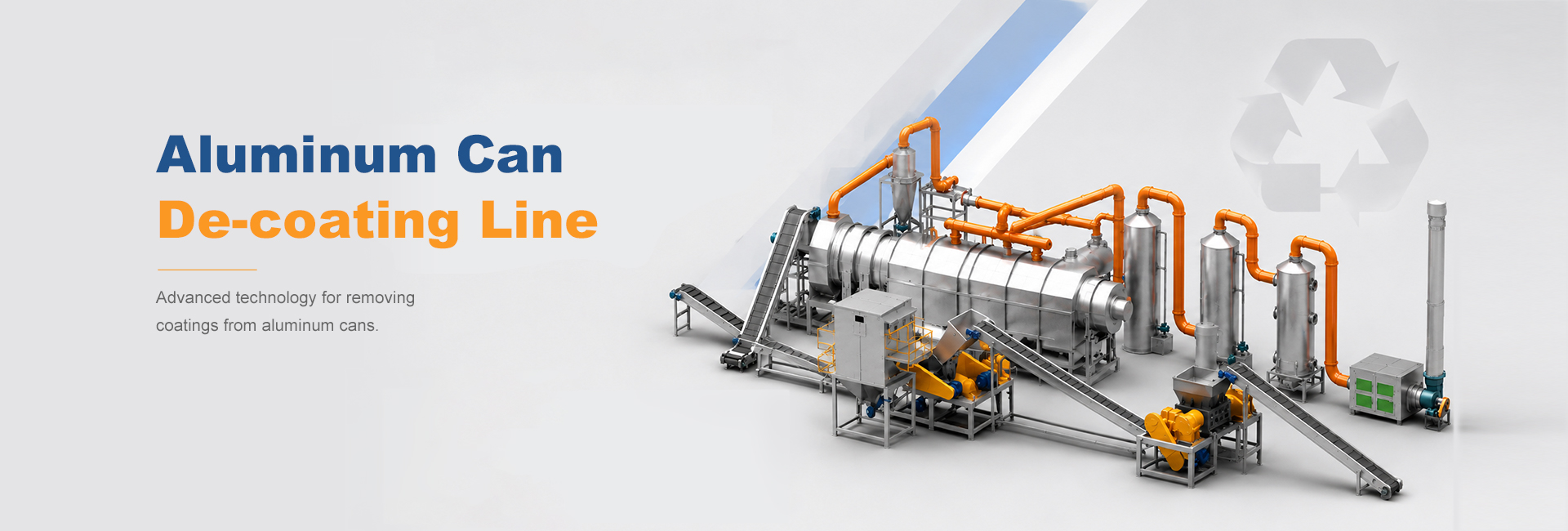
From incoming UBC bales to a controlled furnace feed
The line should be configured as a material-to-output system rather than a standalone furnace.
- 01Receiving and bale opening
- 02Shredding and size control
- 03Magnetic and eddy-current separation
- 04Controlled thermal decoating
- 05Gas treatment and heat integration
- 06Optional melting, casting and palletizing
What changes the equipment list
A reliable proposal starts with the actual scrap profile and the agreed delivery boundary.
Forme de matière première
Loose cans, compacted bales, mixed packaging scrap, painted profiles and oily turnings require different opening, feeding and separation arrangements.
Coating and contamination
Paint, ink, lacquer, polymer film, huile, humidité, iron and non-metallic contamination influence residence time, gas handling and downstream metal cleaning.
Downstream route
Decoated scrap may be sold, remelted on site or integrated with refining, casting and automatic stacking. Each route changes utilities and layout.
Environmental boundary
The off-gas train must be selected against the coating chemistry, local permit basis, fuel system and required monitoring points.
Design decisions that protect metal value and operating stability
Published figures are planning references and require project confirmation. Representative feedstock testing and a documented acceptance basis are required.
Atmosphere control
Limit uncontrolled air ingress and monitor the thermal environment to reduce oxidation risk and maintain repeatable coating removal.
Material balance
Record incoming scrap, separated contaminants, decoated aluminum, residues and optional molten-metal output.
Heat integration
Evaluate recovered process gas and hot exhaust as project energy streams only after their composition and stability are understood.
Acceptance plan
Agree sampling, test method, durée d'exécution, product cleanliness, emissions boundary and utility conditions before commercial acceptance.
Voir la limite des équipements connectés.
Les visuels de référence soutiennent les premières discussions sur la mise en page. Équipement final, la disposition et les interfaces sont confirmées à partir du matériel et du site du projet.
Traduire les faits du projet dans une liste d'équipements.
Cette matrice de référence montre la logique de décision. Quantités finales, les modèles et les interfaces appartiennent à la proposition de projet approuvée.
| Blocage système | Portée typique | Base de configuration |
|---|---|---|
| Material preparation | Bale opening, shredding, sizing and controlled transfer | Scrap form, density and required furnace feed |
| Séparation | Magnetic, eddy-current and manual or sensor-based quality control | Iron, non-ferrous attachments and non-metallic contamination |
| Thermal section | Controlled decoating reactor, seals, heating and discharge | Coating load, residence basis and oxidation control |
| Environmental section | Gas combustion or oxidation, particulate and polishing stages | Coating chemistry and local emissions boundary |
| Downstream metal | Cooling, stockage, optional melting, casting and palletizing | Target product and agreed delivery scope |
Faire avancer le projet uniquement lorsque les preuves requises sont disponibles.
Chaque porte transforme les informations client en un résultat technique ou commercial défini pour la prochaine décision.
Scrap profile
Confirm scrap category, coating, oils, attachments and incoming form.
SortirRepresentative scrap and contamination recordRoute definition
Define preparation, séparation, decoating and downstream metal boundary.
SortirAgreed material-to-product flowEnvironmental basis
Identify coating chemistry, off-gas, residue and local test requirements.
SortirControl and monitoring registerAcceptance plan
Agree tested feed, sampling, stable run and downstream quality checks.
SortirMeasurable project acceptance sheetQuestions à résoudre avant la configuration.
Les réponses définissent les limites de l'ingénierie; ils ne remplacent pas les tests de matériaux représentatifs ou l'examen de conformité local.
What information is required to configure an aluminum decoating line?
Provide the scrap category, coating or oil condition, bale or particle dimensions, contamination, volume disponible, downstream metal route, site utilities and local environmental basis.
Can one standard line process every type of aluminum scrap?
Non. Balles UBC, painted profiles, automotive scrap and oily turnings can require different opening, séparation, alimentation, thermal and gas-treatment arrangements.
Is melting and ingot casting always included?
Non. The project can stop at cleaned scrap or include melting, refining, casting and palletizing when those interfaces are part of the agreed scope.
How should project acceptance be defined?
Acceptance should state the tested feedstock, sampling method, stable operating period, material balance, product-cleanliness basis, utility conditions and environmental measurement boundary.
Définir le matériel avant de sélectionner l'équipement.
Partager une description matérielle représentative, volume disponible, état du site et résultats cibles. YUSHUNXIN utilisera ces faits pour préparer la discussion sur les limites du processus et la configuration pertinentes..


