
S1: Industriel metaldecoating & Energibesparende smeltningsintegration
Vores UBC (Brugt drikkedunk) afbelægningssystem integreres direkte med aluminiumssmelteovne, skabe en problemfri lukket kredsløbsproces. Ved at fjerne belægninger og forurenende stoffer før smeltning, systemet maksimerer metalgenvindingshastigheden og reducerer energiforbruget med 15–30 %. Decoating-smelteforbindelsen eliminerer dobbelthåndtering, minimerer oxidationstab, og sikrer højkvalitets aluminium output til downstream applikationer.
Integreret termisk effektivitet
UBC-aflakering forbundet med smelteovn reducerer gasforbruget med 15-30%. Decoating-systemet integreres direkte med smelteovnens udstødningsvarmegenvindingssystem, skabe en lukket kredsløbs termisk cyklus. Varme røggasser fra smelteovnen forvarmer aflakeringskammeret, mens det er rent, decoated UBC kommer ind i ovnen ved forhøjet temperatur - hvilket reducerer den energi, der kræves til smeltning. Denne termiske kobling eliminerer behovet for hjælpebrændere i aflakeringsfasen og sænker det samlede naturgasforbrug på tværs af proceskæden.
Build the decoating line around the incoming aluminum scrap.
A connected project can combine size reduction, ferrous and non-ferrous separation, controlled thermal decoating, off-gas management, melting and ingot handling. The final scope depends on the coating system, scrap density, contamination and downstream metal specification.
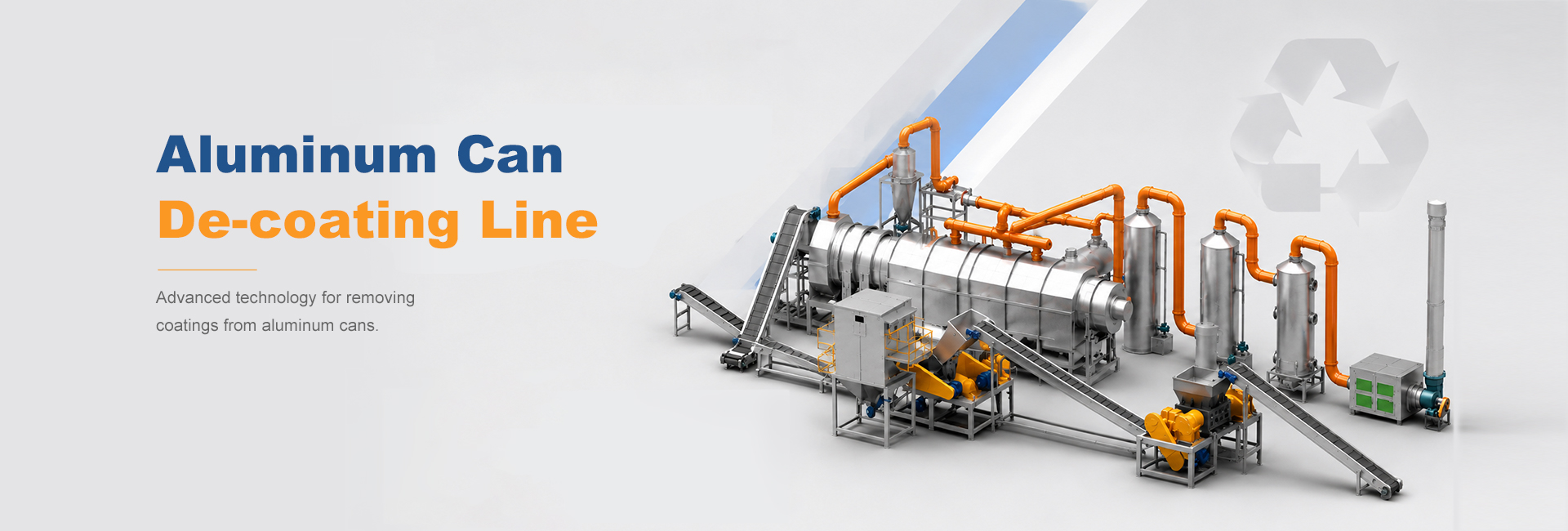
From incoming UBC bales to a controlled furnace feed
The line should be configured as a material-to-output system rather than a standalone furnace.
- 01Receiving and bale opening
- 02Shredding and size control
- 03Magnetic and eddy-current separation
- 04Controlled thermal decoating
- 05Gas treatment and heat integration
- 06Optional melting, casting and palletizing
What changes the equipment list
A reliable proposal starts with the actual scrap profile and the agreed delivery boundary.
Råmaterialeform
Loose cans, compacted bales, mixed packaging scrap, painted profiles and oily turnings require different opening, feeding and separation arrangements.
Coating and contamination
Paint, ink, lacquer, polymer film, olie, fugtighed, iron and non-metallic contamination influence residence time, gas handling and downstream metal cleaning.
Downstream route
Decoated scrap may be sold, remelted on site or integrated with refining, casting and automatic stacking. Each route changes utilities and layout.
Environmental boundary
The off-gas train must be selected against the coating chemistry, local permit basis, fuel system and required monitoring points.
Design decisions that protect metal value and operating stability
Published figures are planning references and require project confirmation. Representative feedstock testing and a documented acceptance basis are required.
Atmosphere control
Limit uncontrolled air ingress and monitor the thermal environment to reduce oxidation risk and maintain repeatable coating removal.
Materiale balance
Record incoming scrap, separated contaminants, decoated aluminum, residues and optional molten-metal output.
Heat integration
Evaluate recovered process gas and hot exhaust as project energy streams only after their composition and stability are understood.
Acceptance plan
Agree sampling, test method, løbs varighed, product cleanliness, emissions boundary and utility conditions before commercial acceptance.
Se grænsen for det tilsluttede udstyr.
Visuelle referencer understøtter diskussion af tidlig layout. Slutudstyr, arrangement og grænseflader bekræftes fra projektmaterialet og sitet.
Oversæt projektfakta til en udstyrsliste.
Denne referencematrix viser beslutningslogikken. Endelige mængder, modeller og grænseflader hører hjemme i det godkendte projektforslag.
| System blok | Typisk omfang | Konfigurationsgrundlag |
|---|---|---|
| Material preparation | Bale opening, makulering, sizing and controlled transfer | Scrap form, density and required furnace feed |
| Separation | Magnetic, eddy-current and manual or sensor-based quality control | Iron, non-ferrous attachments and non-metallic contamination |
| Thermal section | Controlled decoating reactor, seals, heating and discharge | Coating load, residence basis and oxidation control |
| Environmental section | Gas combustion or oxidation, particulate and polishing stages | Coating chemistry and local emissions boundary |
| Downstream metal | Køling, storage, optional melting, casting and palletizing | Target product and agreed delivery scope |
Fremfør kun projektet, når den nødvendige dokumentation er tilgængelig.
Hver gate forvandler kundeinformation til et defineret teknisk eller kommercielt output til den næste beslutning.
Scrap profile
Confirm scrap category, coating, olier, attachments and incoming form.
ProduktionRepresentative scrap and contamination recordRoute definition
Define preparation, adskillelse, decoating and downstream metal boundary.
ProduktionAgreed material-to-product flowEnvironmental basis
Identify coating chemistry, off-gas, residue and local test requirements.
ProduktionControl and monitoring registerAcceptance plan
Agree tested feed, sampling, stable run and downstream quality checks.
ProduktionMeasurable project acceptance sheetSpørgsmål, der skal løses før konfiguration.
Svar definerer den tekniske grænse; de erstatter ikke repræsentativ materialetestning eller lokal overensstemmelsesgennemgang.
What information is required to configure an aluminum decoating line?
Provide the scrap category, coating or oil condition, bale or particle dimensions, forurening, tilgængelig volumen, downstream metal route, site utilities and local environmental basis.
Can one standard line process every type of aluminum scrap?
Ingen. UBC baller, malede profiler, automotive scrap and oily turnings can require different opening, adskillelse, fodring, thermal and gas-treatment arrangements.
Is melting and ingot casting always included?
Ingen. The project can stop at cleaned scrap or include melting, refining, casting and palletizing when those interfaces are part of the agreed scope.
How should project acceptance be defined?
Acceptance should state the tested feedstock, sampling method, stable operating period, material balance, product-cleanliness basis, utility conditions and environmental measurement boundary.
Definer materialet, før du vælger udstyret.
Del en repræsentativ materialebeskrivelse, tilgængelig volumen, webstedsstatus og måloutput. YUSHUNXIN vil bruge disse fakta til at forberede den relevante procesgrænse og konfigurationsdiskussion.


