
With the continuous growth in the number of new energy vehicles, the recycling and reuse of lithium batteries are becoming an indispensable part of the new energy industry chain. тому, more and more companies are beginning to focus on the recycling of lithium batteries from end-of-life electric vehicles. We will introduce ЮШУНЬСІНЬ екологічні рішення з переробки відпрацьованих акумуляторів електромобілів, and we hope this provides reference points for corporate investment or collaboration.
What methods are available for recycling lithium from end-of-life electric vehicles?
There are two primary methods for the green recycling of end-of-life EV batteries: механічна переробка та піролітична переробка. If you wish to enter the industry with a lower investment, you may initially adopt mechanical recycling. If you seek higher recovery rates, you may opt for a combined solution of pyrolytic recovery and chemical smelting. In actual projects, many companies also integrate the two processes.
Mechanical Recycling Method

Pyrolytic Recycling Method

What is the approximate cost of establishing an electric vehicle battery recycling plant?
The Проектні рішення з переробки акумуляторів електромобілів investment primarily includes equipment procurement, facility construction, environmental protection systems, монтаж і введення в експлуатацію, as well as labor costs. The specific cost will vary depending on production capacity, рівень автоматизації, маршрут процесу, and local policies. And the following two options can serve as a reference. The specific fees will depend on an assessment of your actual circumstances.
500kg/h Green Recycling Solution for End-of-Life EV Batteries
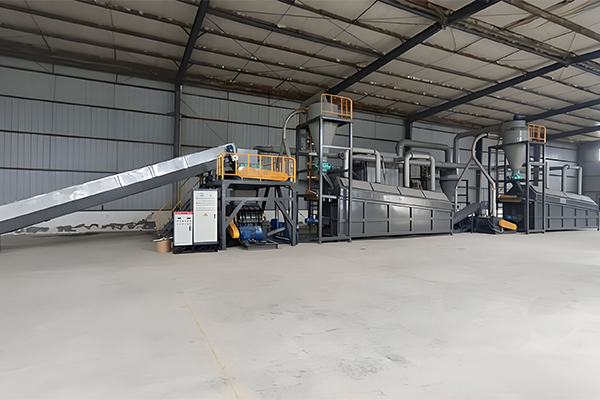
А 500 kg/h lithium-battery line is a planning capacity class. Discharge and dismantling responsibility, хімія, формат введення, safety controls, separation modules, вихідна специфікація, utilities and price must be confirmed in the approved project scope.
1000kg/h Green Recycling Solution for End-of-Life EV Batteries

А 1,000 kg/h lithium-battery line is a higher-throughput planning class. Final automation, safety architecture, маршрут процесу, якість виведення, комунальні послуги, operating schedule and commercial terms require representative material review and written confirmation.
How to Select an Appropriate Green Recycling Solution for End-of-Life EV Batteries?

When selecting an appropriate EV lithium battery recycling production line, in addition to matching your processing capacity, battery types, та інвестиційний бюджет, you should place greater emphasis on the supplier’s technical capabilities.We possess years of experience in developing lithium battery recycling equipment and offer clients comprehensive services from solution design and equipment manufacturing to installation, введення в експлуатацію, and personnel training.
End-of-life EV project planning
Connect regulatory, логістика, safety and material-processing responsibilities in one project boundary.
Вхідний матеріал
Країна, collection model, battery population, хімія, pack condition and treatment responsibility.
Очікувані результати
Traceable prepared and classified fractions for approved downstream receivers.
Інтерфейси проекту
Permitting, transport, quarantine, emergency response, комунальні послуги, emissions and receiver contracts.
Використовуйте лише рядок, який відповідає вибраній межі процесу.
| Посилання на каталог | Ємність | потужність | Фізична оболонка | Включений кордон |
|---|---|---|---|---|
| YSX public familyPublic equipment family | 500–1,000 kg/h | 102–238 kW | 20–35 m line; 7.5–19.5 t | Standard equipment-family envelope; no per-model allocation |
| YSX-LR500LR complete line | 500 кг/год | 320 кВт | 40 × 15 × 7.5 м | Conditioning, separation and gas-treatment line |
| YSX-LR1000LR complete line | 1,000 кг/год | 410 кВт | 45 × 17 × 7.5 м | Conditioning, separation and gas-treatment line |
| Project reference - 500Earlier integrated layout | 500 кг/год | 300 кВт | 60 × 7 × 7 м | Earlier layout without a published model label |
| Project reference - 1000Earlier integrated layout | 1,000 кг/год | 349 кВт | 80 × 7 × 7 м | Earlier layout without a published model label |
Правило конфігурації: ємність каталогу є орієнтиром планування. Стабільна пропускна здатність, встановлена/робоча потужність, слід, відновлення, чистота, викиди та попит на комунальні послуги вимагають затвердженого списку обладнання, репрезентативні матеріальні та письмові умови прийняття.
Необхідна інформація перед конфігурацією та пропозицією
- Репрезентативні матеріальні фотографії, специфікації та доступний зразок.
- Необхідна потужність плюс години на зміну, зміни за добу та операційні дні.
- Цільові результати, метод відбору проб і вимоги до приймача нижче за течією.
- Країна сайту, доступна потужність, пальне, води, стиснене повітря та будівельні межі.
- Місцеве екологічне, вогонь, вимоги до зберігання та охорони праці.
- Запитаний кордон доставки: обладнання, макет, установка, введення в експлуатацію та навчання.


