
With the continuous growth in the number of new energy vehicles, the recycling and reuse of lithium batteries are becoming an indispensable part of the new energy industry chain. Nitorina, more and more companies are beginning to focus on the recycling of lithium batteries from end-of-life electric vehicles. We will introduce YUSHUNXIN green recycling solutions for end-of-life EV batteries, and we hope this provides reference points for corporate investment or collaboration.
What methods are available for recycling lithium from end-of-life electric vehicles?
There are two primary methods for the green recycling of end-of-life EV batteries: mechanical recycling and pyrolytic recycling. If you wish to enter the industry with a lower investment, you may initially adopt mechanical recycling. If you seek higher recovery rates, you may opt for a combined solution of pyrolytic recovery and chemical smelting. Ni awọn iṣẹ akanṣe, many companies also integrate the two processes.
Mechanical Recycling Method

Pyrolytic Recycling Method

What is the approximate cost of establishing an electric vehicle battery recycling plant?
Awọn EV battery recycling project solutions investment primarily includes equipment procurement, facility construction, environmental protection systems, installation and commissioning, as well as labor costs. The specific cost will vary depending on production capacity, automation level, ọna ilana, and local policies. And the following two options can serve as a reference. The specific fees will depend on an assessment of your actual circumstances.
500kg/h Green Recycling Solution for End-of-Life EV Batteries
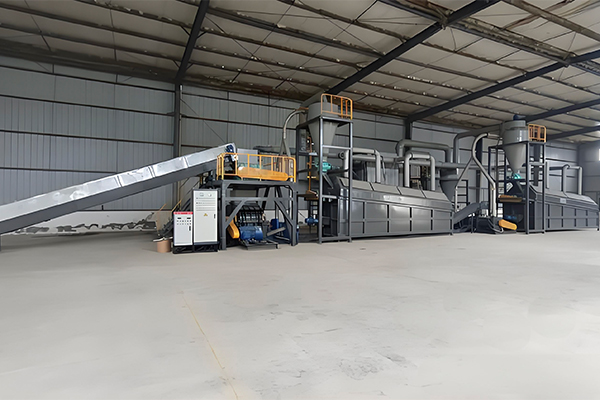
A 500 kg/h lithium-battery line is a planning capacity class. Discharge and dismantling responsibility, kemistri, ọna kika input, safety controls, separation modules, output specification, utilities and price must be confirmed in the approved project scope.
1000kg/h Green Recycling Solution for End-of-Life EV Batteries

A 1,000 kg/h lithium-battery line is a higher-throughput planning class. Final automation, safety architecture, ọna ilana, o wu didara, ohun elo, operating schedule and commercial terms require representative material review and written confirmation.
How to Select an Appropriate Green Recycling Solution for End-of-Life EV Batteries?

When selecting an appropriate EV lithium battery recycling production line, in addition to matching your processing capacity, battery types, and investment budget, you should place greater emphasis on the supplier’s technical capabilities.We possess years of experience in developing lithium battery recycling equipment and offer clients comprehensive services from solution design and equipment manufacturing to installation, commissioning, and personnel training.
End-of-life EV project planning
Connect regulatory, eekaderi, safety and material-processing responsibilities in one project boundary.
Ohun elo ti nwọle
Orilẹ-ede, collection model, battery population, kemistri, pack condition and treatment responsibility.
Awọn abajade ti a nireti
Traceable prepared and classified fractions for approved downstream receivers.
Awọn atọkun ise agbese
Permitting, transport, quarantine, emergency response, ohun elo, emissions and receiver contracts.
Lo nikan kana ibaamu ala ilana ti o yan.
| Itọkasi katalogi | Agbara | Agbara | apoowe ti ara | Aala to wa |
|---|---|---|---|---|
| YSX public familyPublic equipment family | 500–1,000 kg/h | 102–238 kW | 20–35 m line; 7.5–19.5 t | Standard equipment-family envelope; no per-model allocation |
| YSX-LR500LR complete line | 500 kg/h | 320 kW | 40 × 15 × 7.5 m | Conditioning, separation and gas-treatment line |
| YSX-LR1000LR complete line | 1,000 kg/h | 410 kW | 45 × 17 × 7.5 m | Conditioning, separation and gas-treatment line |
| Project reference - 500Earlier integrated layout | 500 kg/h | 300 kW | 60 × 7 × 7 m | Earlier layout without a published model label |
| Project reference - 1000Earlier integrated layout | 1,000 kg/h | 349 kW | 80 × 7 × 7 m | Earlier layout without a published model label |
Ofin iṣeto ni: katalogi agbara ni a itọkasi igbogun. Idurosinsin losi, fi sori ẹrọ / ṣiṣẹ agbara, ifẹsẹtẹ, imularada, mimọ, awọn itujade ati ibeere ohun elo nilo atokọ ohun elo ti a fọwọsi, ohun elo aṣoju ati awọn ipo gbigba kikọ.
Alaye ti o nilo ṣaaju iṣeto ati asọye
- Awọn fọto ohun elo aṣoju, ni pato ati ki o wa ayẹwo.
- Agbara ti a beere pẹlu awọn wakati fun ayipada kan, iṣinipo fun ọjọ kan ati ki o ṣiṣẹ ọjọ.
- Awọn abajade ibi-afẹde, ọna iṣapẹẹrẹ ati ibosile awọn ibeere olugba.
- Orilẹ-ede ojula, agbara to wa, idana, omi, fisinuirindigbindigbin air ati ile ifilelẹ.
- Ayika agbegbe, ina, ibi ipamọ ati iṣẹ-ailewu awọn ibeere.
- Ti beere aala ifijiṣẹ: ohun elo, ifilelẹ, fifi sori ẹrọ, Ifiranṣẹ ati ikẹkọ.


