
In recent years, with the rapid popularity of new energy vehicles, energy storage systems, and smart devices, the demand for lithium batteries has experienced explosive growth. I mellomtiden, a large number of retired batteries are entering the recycling process. The decade from 2020 til 2030 will be a key period for lithium battery recycling technology from the beginning to maturity.
What role will recycled materials play in the global supply chain by 2030?
By 2030, the cumulative volume of retired lithium batteries worldwide will exceed 12 millioner tonn, several times the amount in 2020.

Lithium Recycling Share
Nickel Recycling Rate

Cobalt Recovery Share
How Will Lithium Battery Recycling Technology Evolve from 2020 til 2030?
Lithium battery recycling technology primarily follows three approaches: mechanical recycling, pyrolytic treatment, and hydrometallurgy.
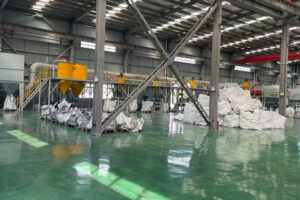
Prior to 2020, mechanical recycling primarily relied on manual dismantling and basic crushing. Traditional manual disassembly is not only inefficient but also carries risks of short circuits and leakage.
Since entering 2020, YUSHUNXIN has launched electronic waste shredder. YUSHUNXIN introduced an intelligent disassembly system that completes automatic shell removal, electrolyte extraction, and graded crushing processes. Electronic waste shredder incorporates a low-temperature crushing system and inert gas protection system to prevent thermal runaway and the volatilization of organic gases.

Manufacturers began widely adopting pyrolysis technology around 2020 to remove electrolyte and organic binders, but it requires high energy and complex emissions treatment.
Imidlertid, our low-temperature pyrolysis furnace employs an inert gas circulation system that enables efficient decomposition of organic matter below 500°C, with a 30% reduction in energy consumption from traditional equipment. Enda viktigere, this lithium battery recycling technology is equipped with exhaust gas purification and recovery modules, which provides assurance for enterprises to reduce carbon emissions and environmental risks.
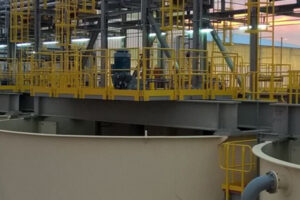
Hydrometallurgy represents the most efficient technological approach for metal recovery, and the key lies in precisely controlling the leaching, atskillelse, and purification processes.
YUSHUNXIN hydrometallurgical equipment employs a multi-stage reactor design. I tillegg, it combines acid addition with temperature control systems to automatically adjust leaching parameters according to different battery materials. Through selective extraction and electrowinning technologies, the recovery rates for lithium, nikkel, and cobalt can reach over 95%, 98%, og 96%, respectively.
Can different types of batteries have the same recycling process?
There are numerous types of lithium batteries, such as ternary (NCM/NCA), litiumjernfosfat (LFP), lithium manganese oxide, and lithium titanate. Different battery systems have distinct requirements for recycling processes.

Technology and interface planning
Compare pretreatment, conditioning and separation architectures using current material evidence, not universal performance claims.
Innkommende materiale
Battery evolution, chemistry share, cell-to-pack architecture and receiver requirements.
Forventede utganger
Route-specific fractions and evidence plan.
Prosjektgrensesnitt
Safety case, process control, emissions, residue, utilities and downstream qualification.
Bruk kun raden som samsvarer med den valgte prosessgrensen.
| Katalogreferanse | Kapasitet | Makt | Fysisk konvolutt | Inkludert grense |
|---|---|---|---|---|
| YSX offentlig familieOffentlig utstyrsfamilie | 500–1000 kg/t | 102–238 kW | 20–35 m linje; 7.5–19,5 t | Standard utstyr-familie konvolutt; ingen tildeling per modell |
| YSX-LR500LR komplett linje | 500 kg/t | 320 kW | 40 × 15 × 7.5 m | Conditioning, separasjons- og gassbehandlingslinje |
| YSX-LR1000LR komplett linje | 1,000 kg/t | 410 kW | 45 × 17 × 7.5 m | Conditioning, separasjons- og gassbehandlingslinje |
| Prosjektreferanse - 500Tidligere integrert layout | 500 kg/t | 300 kW | 60 × 7 × 7 m | Tidligere layout uten publisert modelletikett |
| Prosjektreferanse - 1000Tidligere integrert layout | 1,000 kg/t | 349 kW | 80 × 7 × 7 m | Tidligere layout uten publisert modelletikett |
Konfigurasjonsregel: katalogkapasitet er en planleggingsreferanse. Stabil gjennomstrømning, installert/driftskraft, fotspor, bedring, renhet, utslipp og bruksbehov krever godkjent utstyrsliste, representativt materiale og skriftlige akseptbetingelser.
Informasjon nødvendig før konfigurasjon og tilbud
- Representative materialbilder, spesifikasjoner og tilgjengelig prøve.
- Nødvendig kapasitet pluss timer per skift, skift per dag og driftsdager.
- Mål utganger, prøvetakingsmetode og nedstrøms mottakerkrav.
- Nettstedets land, tilgjengelig kraft, brensel, vann, trykkluft og bygningsgrenser.
- Lokalt miljø, ild, krav til oppbevaring og yrkessikkerhet.
- Forespurt leveringsgrense: utstyr, layout, installasjon, igangkjøring og opplæring.


