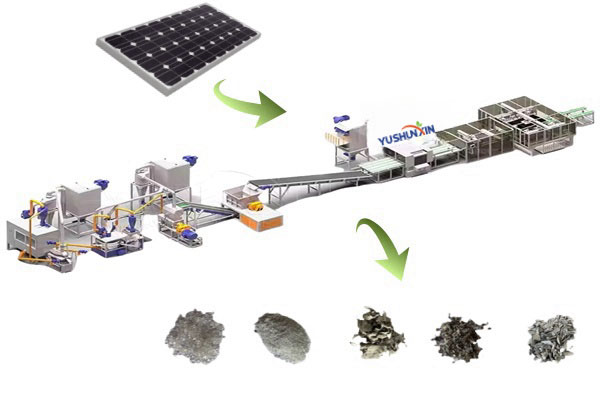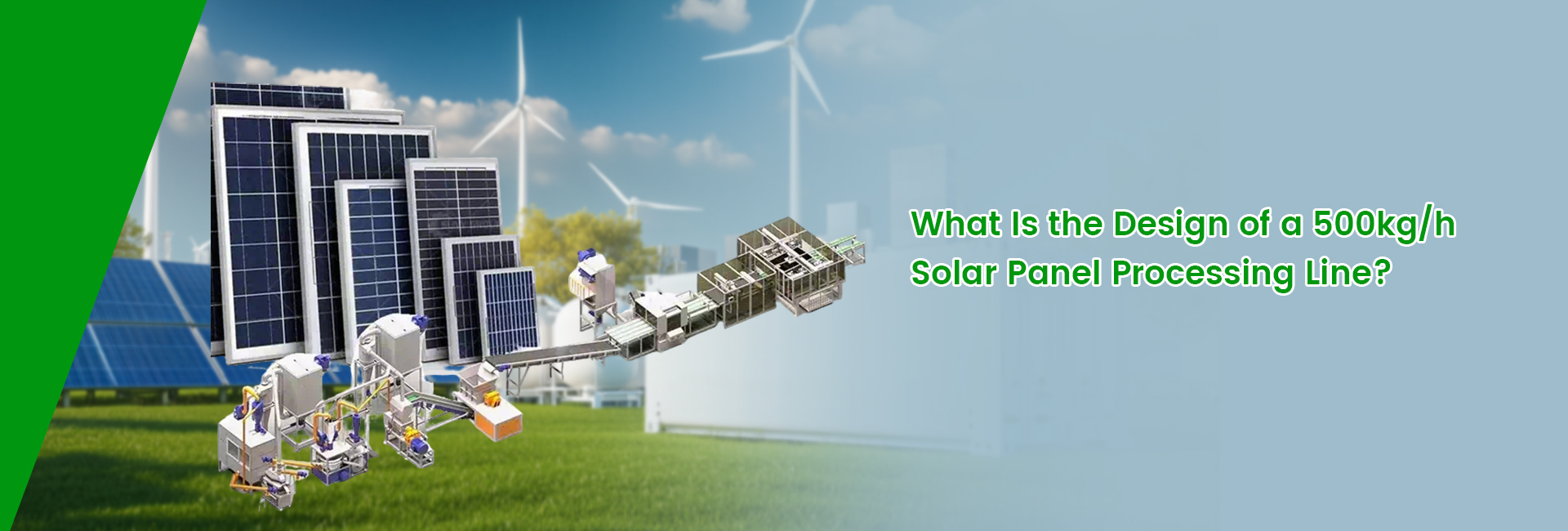
What is the design of 500kg/h solar panel processing line? How to achieve high-value recycling of materials? YUSHUNXIN Công nghệ nhiệt phân PV provides a solution for the core process of this production line. It not only boosts material recovery rates to over 98%, but also achieves zero pollution emissions throughout the production process.
What is the design concept for the entire line?
What are the core process steps?

Step 1: Intelligent Frame Removal and Junction Box Disassembly
The modules first enter the fully automatic frame removal machine. Robotic arms locate the aluminum frame positions, and the hydraulic cutting system completes separation of all four sides within 10 seconds. The aluminum frame recycling purity reaches 99%. Subsequently, infrared thermal imaging locates the junction box positions, and the robot performs non-destructive removal, ensuring a junction box reusability rate exceeding 90%.
Step 2: Laminate Crushing and Preliminary Sorting
Laminates removed from the frame enter the low-temperature crushing system. các máy hủy rác thải điện tử crushes the materials, which initially separates the glass, pin mặt trời, and backsheets. Sau khi nghiền nát, the material passes through a vibrating screen. Material larger than 5mm returns to the crusher for reprocessing, while the mixture smaller than 5mm proceeds to the next process.


Step 3: Tách nhiệt phân
The mixed material enters a sealed low-temperature pyrolysis furnace. At 450°C under an oxygen-free environment, EVA and backsheet polymers decompose into condensable oil, gas and carbon black. After pyrolysis, silicon wafers, metals, and glass in the material are thoroughly loosened, which creates ideal conditions for subsequent sorting.
Step 4: Multi-stage Sorting
After pyrolysis, the material enters an bộ tách dòng điện xoáy to extract copper-welded strips and nhôm particles, achieving a purity of 98%. Kế tiếp, the high-voltage electrostatic separator separates silicon particles from glass powder, achieving a 95% separation efficiency based on differences in electrical conductivity. Sau đó, the air separator further purifies the silicon material, and removes residual plastic fragments.


Step 5: Dust Control and Exhaust Gas Treatment
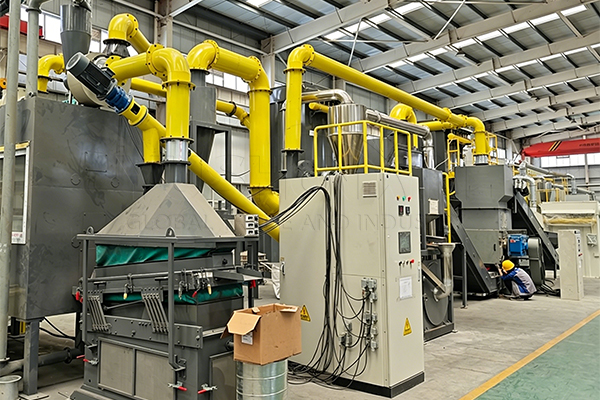
các quản lý tái chế tấm pin mặt trời features a centralized dust collection system with negative pressure collection. Exhaust gases undergo secondary combustion, rapid cooling, and activated carbon adsorption treatment throughout the process, which reduces the risk of dioxin emissions exceeding standards by 99%.