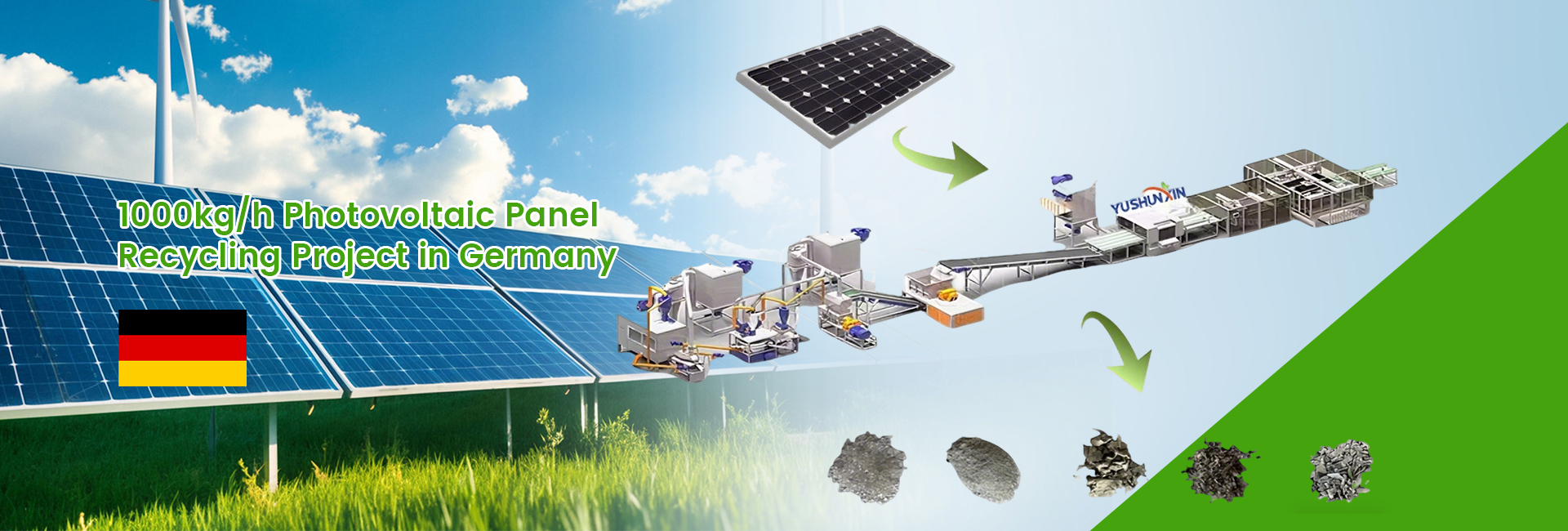
As Germany’s photovoltaic capacity continues to grow, a large number of early-installed PV modules are gradually reaching the end of their operational lifespans. In early 2024, a client from Germany contacted us with a clear objective. They aim to establish a photovoltaic panel recycling production line with a capacity of 1,000 kg/h, in order to provide professional recycling services in the local area and surrounding regions.
The client originally engaged in the recycling of scrap cables and possessed some experience in recycling, but was unfamiliar with the structure of photovoltaic modules, disassembly methods, and environmental standards. They are concerned about the lengthy return on investment cycle for equipment and also hope to achieve efficient processing with limited factory space and power supply conditions. Based on the client’s specific circumstances, we have designed a 1000 kg/h photovoltaic panel recycling project in Germany.

What is the current status of Germany’s photovoltaic recycling market conditions?
Which Recycling Solution Maximizes Value for This PV Recycling Project?
During the technical discussion with the client, For the 1000kg/h Photovoltaic Panel Recycling Project in Germany, nagdisenyo kami og mekanikal nga sistema ug a solusyon sa proyekto sa pyrolysis sa solar panel aron makab-ot ang lainlaing mga katuyoan sa pagkaayo.
Kini PV pyrolysis nga teknolohiya naggamit sa taas nga temperatura nga pyrolysis aron madugta ang EVA adhesive layer, kamahinungdanon sa pagpalambo sa pagbulag kaputli sa silicon wafers ug bildo. Gipakita sa panukiduki nga ang pyrolysis mas epektibo kaysa yano nga pagdugmok sa pagtangtang sa organikong butang ug pagbulag sa dagkong partikulo nga bildo, nga miresulta sa mas taas nga kaputli sa nabawi nga mga materyales .
Ang gasto sa pamuhunan mas ubos kaysa sa mga linya sa pyrolysis, walay risgo sa makadaot nga gas emissions gikan sa pagkasunog, hinog na ang proseso, ug mas sayon ang pagkuha og environmental permit sa Germany.
Human sa pagtimbang sa budget ug sa kapaspas sa pagkuha og permit, gipili sa kliyente ang among PV mechanical recycling solution. Nagreserba kami ug interface sa pagpalapad alang sa umaabot nga koneksyon sa linya sa pag-recycle sa solar panel pyrolysis, pagtugot alang sa umaabot nga pag-upgrade kung ang mga kinahanglanon sa kaputli sa materyal mahimong labi ka taas.
Unsa ang nag-unang dagan sa proseso alang sa 1000 kg/h photovoltaic panel recycling project in Germany?
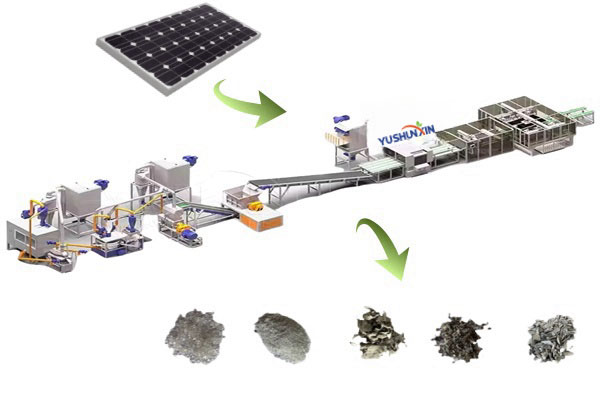
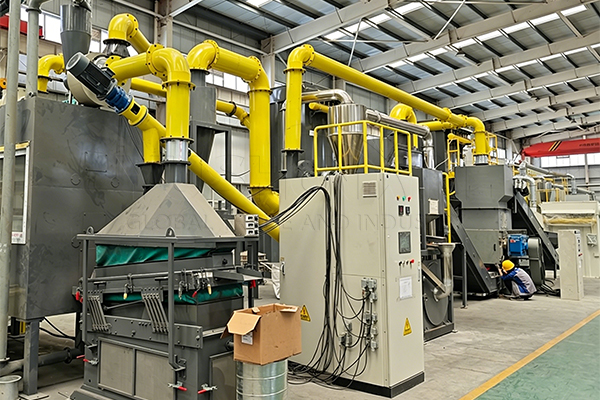
Aron matubag ang mga kinahanglanon sa among mga kliyente nga Aleman, among gidesinyo a proyekto sa paglabay sa single-glass photovoltaic panels nga adunay mga modular nga proseso ug usa ka hingpit nga gilakip nga eco-friendly nga sistema. Ang tibuok photovoltaic panel recycling production line adunay usa ka compact structure, ubos nga konsumo sa enerhiya, ug taas nga kahusayan sa pagproseso. Busa, kini angay alang sa higpit nga mga regulasyon sa kalikopan sa Germany ug mga sumbanan sa kaluwasan sa industriya.
Pre-pagproseso
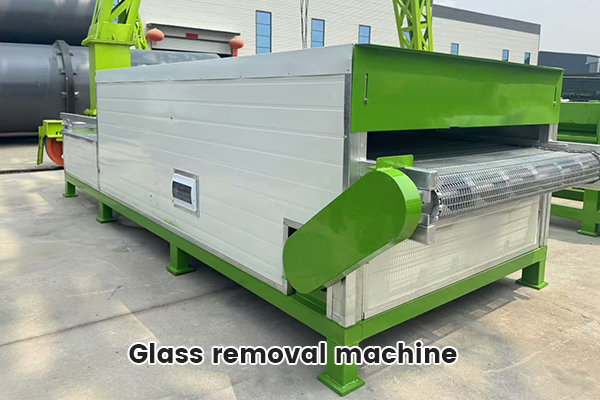
Ang photovoltaic modules mosulod sa sistema pinaagi sa belt conveyor. Una, ang semi-awtomatikong frame remover nagbulag sa aluminum frame. Pagkahuman, ang glass remover naggamit sa mekanikal nga puwersa aron mabuak ang tempered glass, nga nagtugot alang sa pasiuna nga pagbawi sa dako nga partikulo nga bildo ug pagkunhod sa load sa sunod nga pagdugmok.

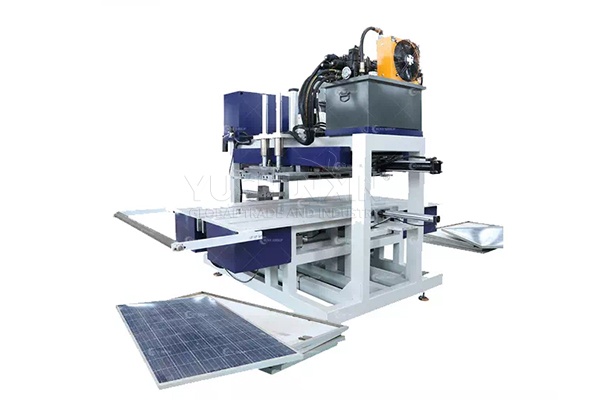

Multi-stage nga Pagdugmok
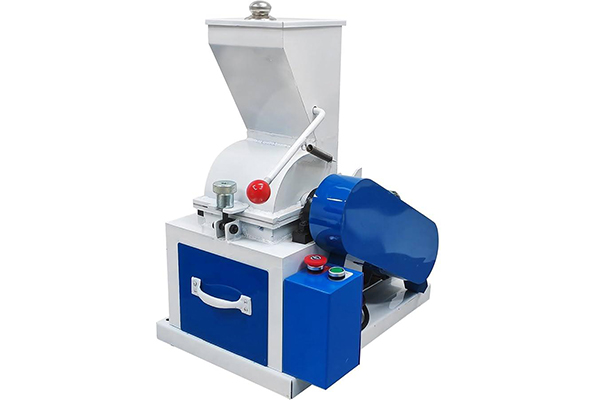
Ang materyal mosulod sa double-shaft shredder para sa primary shredding, gisundan sa ikaduhang pagdugmok gamit ang martilyo nga crusher aron mabungkag ang materyal ngadto sa 6-8mm. Kini nga proseso nagsiguro sa inisyal nga dissociation sa bildo, mga wafer sa silikon, ug backsheet.
Maayong Paggaling & Paghan-ay
Ang nahugno nga materyal ipadala sa usa ka vortex mill para sa dugang nga paggaling, pagkontrol sa gidak-on sa partikulo sulod sa range sa 30-40 mesh aron makab-ot ang monomer separation sa mga metal ug non-metal . The fine powder then enters a vibrating screen for classification.

Multi-stage Sorting
Magnetic separation machine
Magnetic separation machine: Removes iron filings and ferrous metal debris from the frame.
Eddy current separator
Eddy current separator: Separates non-ferrous metals, mainly aluminum and copper.
Gravity separation equipment
Gravity separation equipment: Separates light materials (crushed plastic from backsheets) from heavy materials (glass and metal mixture).
Electrostatic Separator
Electrostatic Separator: Extracts copper and silver from mixed metal powders, delivering >99% recovery of precious metals for maximum profitability.
Environmental Protection System
The project is equipped with a baghouse dust collector (capturing fine dust with an efficiency of >99.9%) to ensure that exhaust emissions meet German TA Luft (Technical Instructions on Air Quality Control) standards. The process is entirely dry and physical, achieving zero wastewater discharge.


How Profitable Is Copper Recovery in the German Market?
During the equipment selection phase, the client specifically focused on the recovery of tumbaga. Because copper has a high unit price and is a key factor in shortening the ROI cycle.
Hinuon, if the copper is sold directly to smelters in Belgium (e.g., Umicore) or specialized metal refineries, they offer higher purchase prices for high-purity copper because they can directly process it . Our electrostatic separation system increases copper purity to over 99%, enabling the client to bypass local intermediate dealers and sell directly to large smelters for better prices.
Customer Benefit: Recovering only copper can generate €264 to €360 in daily revenue. Combined with aluminum (accounting for approx. 10%-15% of total weight) and glass revenue, the payback period for the equipment can be significantly shortened.
Why Did Our German Client Ultimately Choose Our Solution?
After evaluating multiple equipment manufacturers, the client ultimately decided to partner with us. The core reasons are as follows: