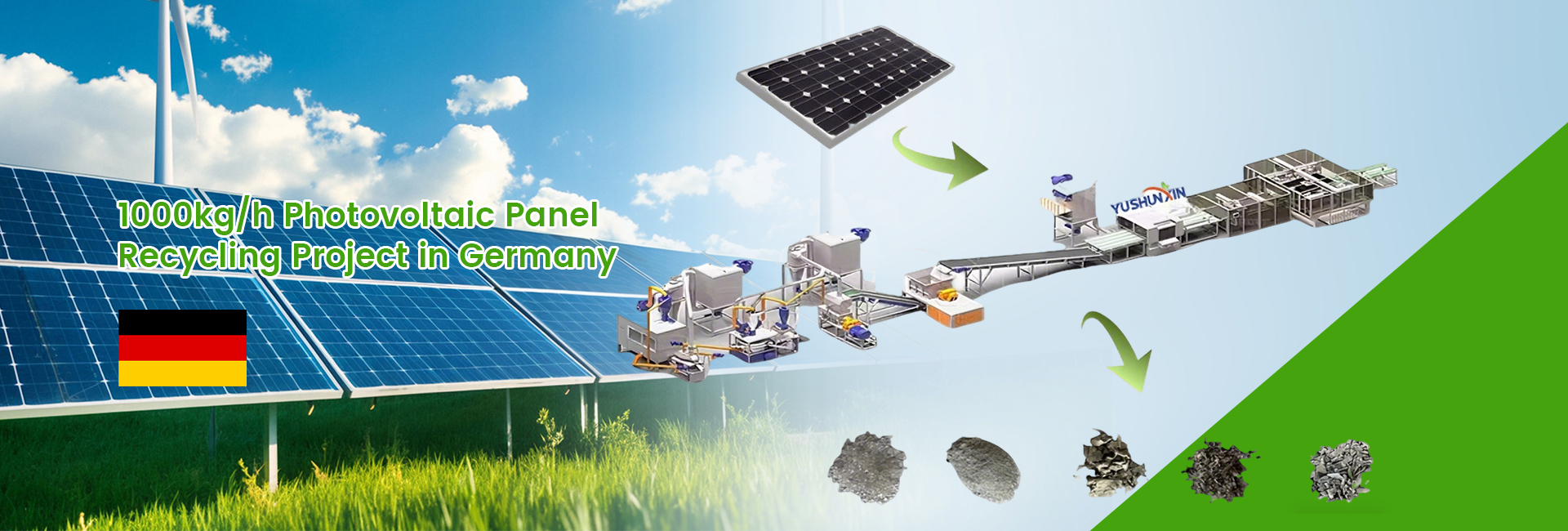
Salaku kapasitas photovoltaic Jerman urang terus tumuwuh, sajumlah ageung modul PV dipasang awal laun-laun ngahontal tungtung umur operasionalna. Dina awal 2024, klien ti Jerman ngahubungan kami kalawan tujuan jelas. Tujuanana pikeun ngadegkeun jalur produksi daur ulang panel photovoltaic kalayan kapasitas 1,000 kg/h, pikeun nyayogikeun jasa daur ulang profésional di daérah lokal sareng daérah sakurilingna.
Klién asalna kalibet dina daur ulang kabel besi tua sareng gaduh sababaraha pangalaman dina daur ulang, tapi teu wawuh jeung struktur modul photovoltaic, métode disassembly, jeung standar lingkungan. Aranjeunna prihatin ngeunaan balikna panjang dina siklus investasi pikeun alat-alat sareng ogé ngaharepkeun pikeun ngolah éfisién kalayan rohangan pabrik kawates sareng kaayaan catu daya.. Dumasar kaayaan spésifik klien, kami geus dirancang a 1000 kg / h proyék daur ulang panel photovoltaic di Jerman.

What is the current status of Germany’s photovoltaic recycling market conditions?
Which Recycling Solution Maximizes Value for This PV Recycling Project?
During the technical discussion with the client, For the 1000kg/h Photovoltaic Panel Recycling Project in Germany, we designed both a mechanical system and a solusi proyék pyrolysis panel surya to meet different recovery goals.
Ieu Téknologi pyrolysis PV uses high-temperature pyrolysis to decompose the EVA adhesive layer, significantly improving the separation purity of silicon wafers and glass. Research shows that pyrolysis is more effective than simple crushing in removing organic matter and separating large-particle glass, resulting in higher purity of recovered materials .
The investment cost is lower than that of pyrolysis lines, there is no risk of harmful gas emissions from combustion, the process is mature, and it is easier to obtain environmental permits in Germany.
After weighing the budget and the speed of obtaining permits, the client chose our PV mechanical recycling solution. We reserved an expansion interface for future connection to a solar panel pyrolysis recycling line, allowing for future upgrades if material purity requirements become higher.
Naon aliran prosés primér pikeun 1000 kg / h proyék daur ulang panel photovoltaic di Jerman?
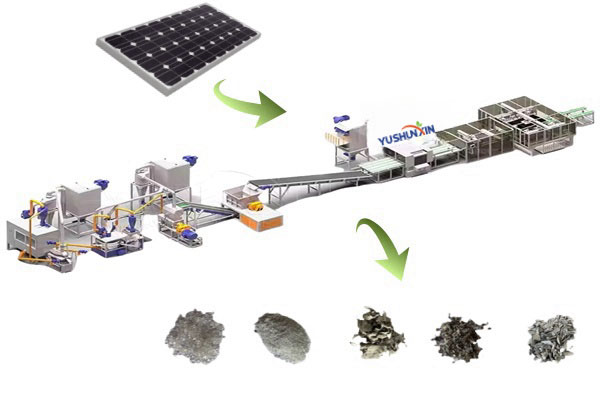
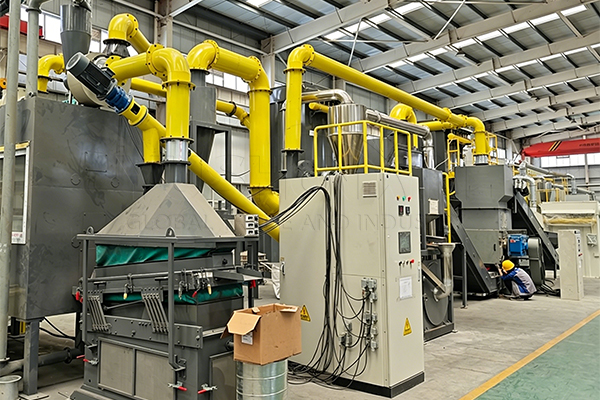
Pikeun minuhan sarat tina klien Jerman urang, urang dirancang a proyék pembuangan panels photovoltaic single-kaca nampilkeun prosés modular sareng sistem ramah lingkungan anu lengkep. Sakabéh garis produksi daur ulang panel photovoltaic gaduh struktur anu kompak, konsumsi énergi low, jeung efisiensi processing tinggi. Ku kituna, it is suitable for Germany’s stringent environmental regulations and industrial safety standards.
Pra-prosés
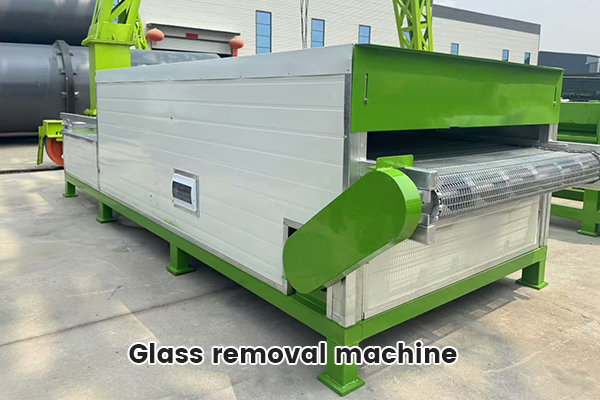
modul photovoltaic asupkeun sistem via conveyor sabuk. First, the semi-automatic frame remover separates the aluminum frame. Saterasna, the glass remover uses mechanical force to break the tempered glass, allowing for the preliminary recovery of large-particle glass and reducing the load on subsequent crushing.

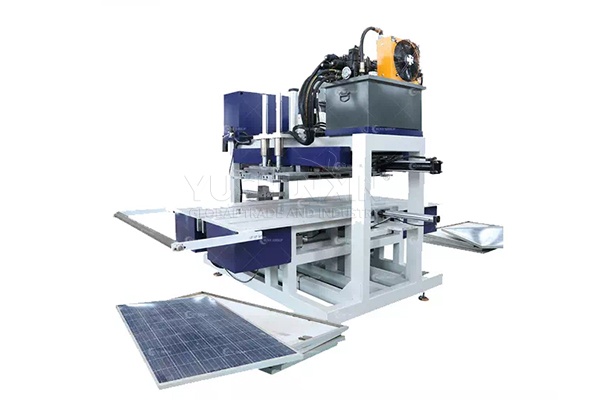

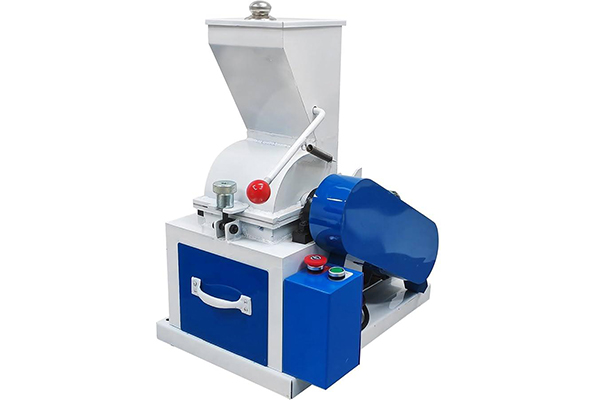

Multi-tahap asihan
Magnetic separation machine
Magnetic separation machine: Removes iron filings and ferrous metal debris from the frame.
Eddy current separator
Eddy current separator: Separates non-ferrous metals, mainly aluminum and copper.
Gravity separation equipment
Gravity separation equipment: Separates light materials (crushed plastic from backsheets) from heavy materials (glass and metal mixture).
Separator éléktrostatik
Separator éléktrostatik: Extracts copper and silver from mixed metal powders, delivering >99% recovery of precious metals for maximum profitability.
System Protection Lingkungan
The project is equipped with a baghouse dust collector (capturing fine dust with an efficiency of >99.9%) to ensure that exhaust emissions meet German TA Luft (Technical Instructions on Air Quality Control) standards. The process is entirely dry and physical, achieving zero wastewater discharge.


How Profitable Is Copper Recovery in the German Market?
During the equipment selection phase, the client specifically focused on the recovery of tambaga. Because copper has a high unit price and is a key factor in shortening the ROI cycle.
Sanajan kitu, if the copper is sold directly to smelters in Belgium (misalna., Umicore) or specialized metal refineries, they offer higher purchase prices for high-purity copper because they can directly process it . Our electrostatic separation system increases copper purity to over 99%, enabling the client to bypass local intermediate dealers and sell directly to large smelters for better prices.
Customer Benefit: Recovering only copper can generate €264 to €360 in daily revenue. Combined with aluminum (accounting for approx. 10%-15% of total weight) and glass revenue, the payback period for the equipment can be significantly shortened.
Why Did Our German Client Ultimately Choose Our Solution?
After evaluating multiple equipment manufacturers, the client ultimately decided to partner with us. The core reasons are as follows: