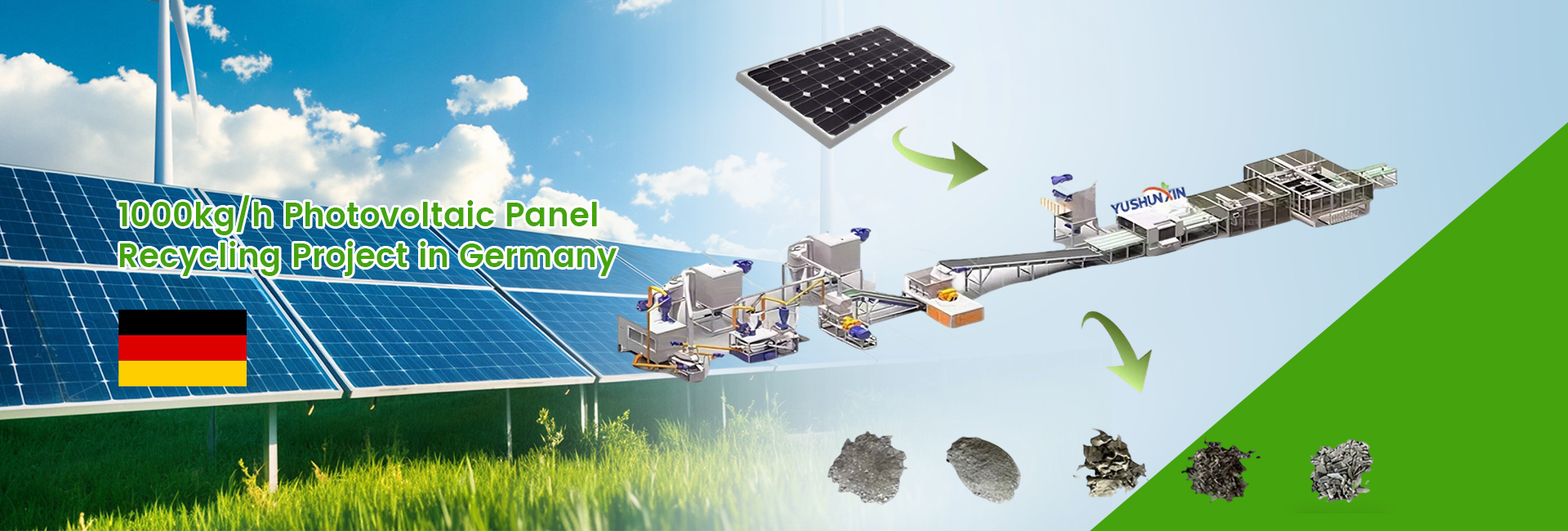
Како немачки фотонапонски капацитет наставља да расте, велики број рано инсталираних ПВ модула постепено достиже крај свог радног века. У рано 2024, клијент из Немачке нас је контактирао са јасним циљем. Њихов циљ је да успоставе производну линију за рециклажу фотонапонских панела капацитета од 1,000 кг/х, у циљу пружања професионалних услуга рециклаже у локалном окружењу и околним регионима.
Клијент се првобитно бавио рециклажом отпадних каблова и имао је одређено искуство у рециклажи, али није био упознат са структуром фотонапонских модула, методе демонтаже, и еколошки стандарди. Они су забринути због дуготрајног поврата инвестиционог циклуса за опрему и такође се надају да ће постићи ефикасну обраду са ограниченим фабричким простором и условима напајања. На основу специфичних околности клијента, дизајнирали смо а 1000 кг/х пројекат рециклаже фотонапонских панела у Немачкој.

What is the current status of Germany’s photovoltaic recycling market conditions?
Which Recycling Solution Maximizes Value for This PV Recycling Project?
During the technical discussion with the client, For the 1000kg/h Photovoltaic Panel Recycling Project in Germany, we designed both a mechanical system and a решење пројекта пиролизе соларних панела to meet different recovery goals.
Ово ПВ технологија пиролизе uses high-temperature pyrolysis to decompose the EVA adhesive layer, significantly improving the separation purity of silicon wafers and glass. Research shows that pyrolysis is more effective than simple crushing in removing organic matter and separating large-particle glass, resulting in higher purity of recovered materials .
The investment cost is lower than that of pyrolysis lines, there is no risk of harmful gas emissions from combustion, the process is mature, and it is easier to obtain environmental permits in Germany.
After weighing the budget and the speed of obtaining permits, the client chose our PV mechanical recycling solution. We reserved an expansion interface for future connection to a solar panel pyrolysis recycling line, allowing for future upgrades if material purity requirements become higher.
Шта је примарни ток процеса за 1000 кг/х пројекат рециклаже фотонапонских панела у Немачкој?
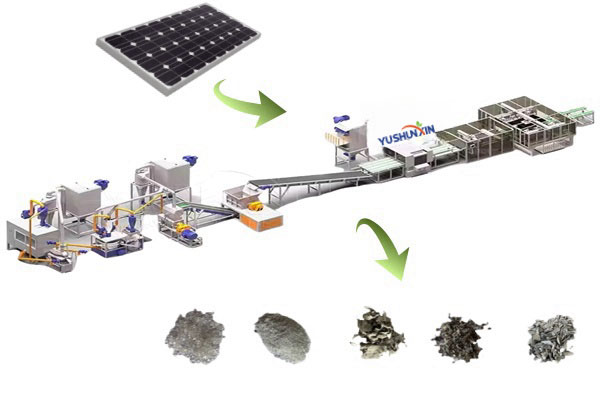
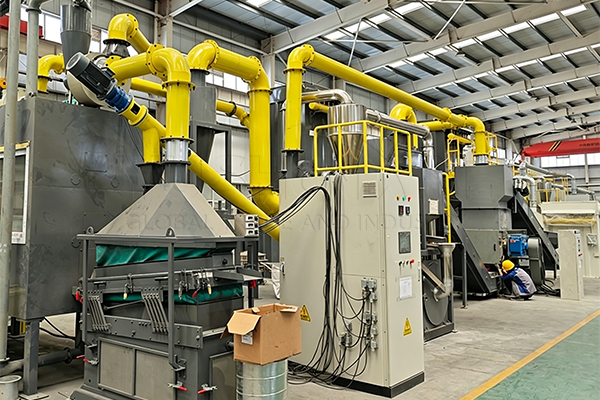
Да испунимо захтеве наших немачких клијената, дизајнирали смо а пројекат одлагања фотонапонских панела од једног стакла са модуларним процесима и потпуно затвореним еколошким системом. Цела производна линија за рециклажу фотонапонских панела има компактну структуру, ниска потрошња енергије, и висока ефикасност обраде. Стога, it is suitable for Germany’s stringent environmental regulations and industrial safety standards.
Претходна обрада
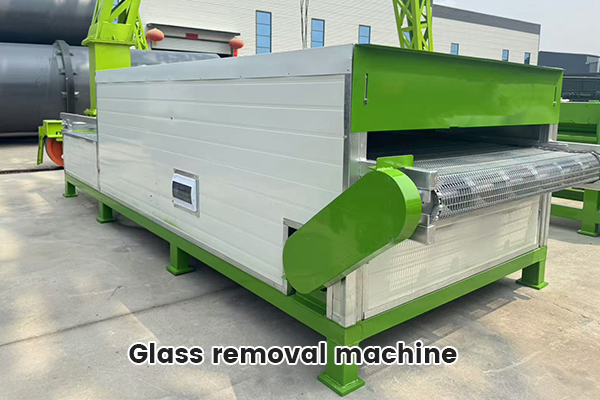
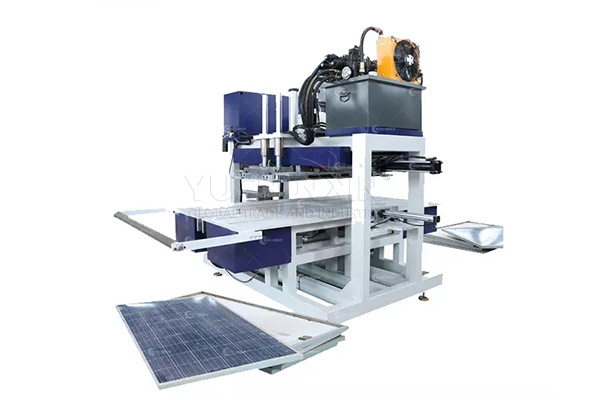
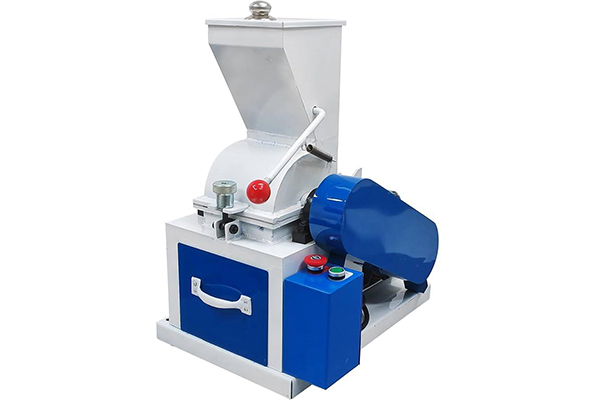
Фотонапонски модули улазе у систем преко транспортне траке. Прво, the semi-automatic frame remover separates the aluminum frame. Након тога, the glass remover uses mechanical force to break the tempered glass, allowing for the preliminary recovery of large-particle glass and reducing the load on subsequent crushing.



Вишестепено сортирање
Машина за магнетно одвајање
Машина за магнетно одвајање: Removes iron filings and ferrous metal debris from the frame.
Eddy current separator
Eddy current separator: Separates non-ferrous metals, mainly aluminum and copper.
Gravity separation equipment
Gravity separation equipment: Separates light materials (crushed plastic from backsheets) from heavy materials (glass and metal mixture).
Електростатички сепаратор
Електростатички сепаратор: Extracts copper and silver from mixed metal powders, delivering >99% recovery of precious metals for maximum profitability.
Систем заштите животне средине
The project is equipped with a baghouse dust collector (capturing fine dust with an efficiency of >99.9%) to ensure that exhaust emissions meet German TA Luft (Technical Instructions on Air Quality Control) standards. The process is entirely dry and physical, achieving zero wastewater discharge.


How Profitable Is Copper Recovery in the German Market?
During the equipment selection phase, the client specifically focused on the recovery of бакар. Because copper has a high unit price and is a key factor in shortening the ROI cycle.
However, if the copper is sold directly to smelters in Belgium (e.g., Umicore) or specialized metal refineries, they offer higher purchase prices for high-purity copper because they can directly process it . Our electrostatic separation system increases copper purity to over 99%, enabling the client to bypass local intermediate dealers and sell directly to large smelters for better prices.
Customer Benefit: Recovering only copper can generate €264 to €360 in daily revenue. Combined with aluminum (accounting for approx. 10%-15% of total weight) and glass revenue, the payback period for the equipment can be significantly shortened.
Why Did Our German Client Ultimately Choose Our Solution?
After evaluating multiple equipment manufacturers, the client ultimately decided to partner with us. The core reasons are as follows: