
With the rapid development of the photovoltaic industry, a large number of photovoltaic modules will reach the end of their service life within the next twenty to thirty years. As the mainstream product in current photovoltaic applications, single-glass modules occupy a significant proportion. For the structural characteristics of single-glass modules, YUSHUNXIN provides a single-glass photovoltaic panels disposal project that balances environmental safety, resource recovery rates and economic viability.
What is the structure of a single-glass photovoltaic panel?


The typical structure of a single-glass photovoltaic module consists of: tempered glass, EVA, cellules solaires, EVA, backsheet, aluminum frame, and junction box. Common dimensions for single-glass PV panels are 1650mm × 992mm × 40mm, which are suitable for most photovoltaic systems.
Recycling Targets for Single-Glass Photovoltaic Panel Disposal Project
The recycling targets for single-glass photovoltaic panel disposal project primarily include:
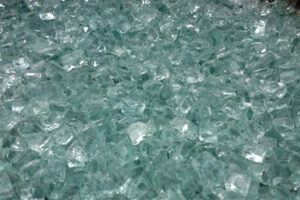
Comptabilisant environ 70% of the total module weight, recycled glass is available in architectural glass, road construction materials, or glass fiber production.
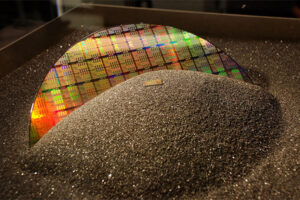
After recycling, the process purifies and reprocesses them into reclaimed silicon material. Following purification, you can reuse this material in solar cell production or the semiconductor industry.

You can directly re-melt and reuse aluminium frames, fils de cuivre, silver paste, and other metals, which provides high circular economy value.
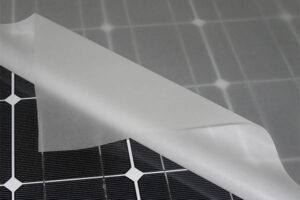
EVA and backsheet plastics can serve as fuel or chemical raw materials, thereby enhancing overall resource utilization efficiency.
What is the process for recycling single-glass photovoltaic panels?
For the structural characteristics of single-glass photovoltaic modules, the single-glass photovoltaic panel disposal project employs automatic equipment to achieve an efficient, environmentally friendly, and cost-effective PV panel recycling process.
What are the primary equipment configurations for single-glass photovoltaic panel disposal project?
The single-glass photovoltaic panel recycling production line we designed has a capacity of 500-1000 kg/heure. Nous pouvons également personnaliser la ligne de production selon les exigences du client. Below are the main equipment in the single-glass solar recycling process. Vous pouvez également cliquer pour en savoir plus sur le coût de la machine de recyclage de panneaux solaires.

Machine de retrait de cadre
La machine de dépose des cadres de panneaux photovoltaïques est spécialement conçue pour le recyclage et la réutilisation des déchets de panneaux photovoltaïques.. Cet équipement sépare efficacement les cadres des modules, qui permet le recyclage des matériaux des panneaux photovoltaïques.

Gravity separation equipment
The airflow density separator screens ground materials through density-based sieving, which separates copper, poudre de silicium, and plastic. The equipment features stable performance, high efficiency, and low energy consumption.

Machine d'enlèvement de verre
Cet équipement utilise une technologie avancée de séparation mécanique pour séparer rapidement et en toute sécurité le verre des panneaux photovoltaïques., création de fractions séparées pour les tests et d'un itinéraire en aval défini.

Broyeur de déchets électroniques
This shredder mainly serves the preliminary crushing and recycling of photovoltaic panels, featuring stable crushing performance and high efficiency.

Séparateur électrostatique
The electrostatic separator is suitable for sorting mixed materials of varying densities that are difficult to separate by flotation methods. It efficiently separates plastics, poudre de silicium, and metal mixtures.
What are the advantages of the single-glass photovoltaic panel disposal project?
In comparison to traditional processes, the solution de projet de pyrolyse de panneaux solaires achieves comprehensive improvements in recovery rate, consommation d'énergie, economic efficiency, and automation levels. The following are the specific advantages.
Si vous souhaitez en savoir plus sur le double-glass photovoltaic panels recycling solution, n'hésitez pas à nous contacter.
Mécanique mono-verre
Use where frame and front-glass removal can be engineered before dry liberation and classification.
Matériel entrant
Single-glass crystalline-silicon module mix, dimensions, intact/broken share, frame and junction-box condition.
Résultats attendus
Separated frame and glass plus classified copper-, silicium- and polymer-bearing fractions.
Interfaces du projet
Safe receiving, glass handling, dust collection, pouvoir, compressed air, wear-parts access and product packing.
Utiliser uniquement la ligne correspondant à la limite du processus sélectionné.
| Référence catalogue | Capacité | Pouvoir | Enveloppe physique | Limite incluse |
|---|---|---|---|---|
| YSX-M1000Mécanique mono-verre | 1 ème | 277.6 kW | 36 × 6 × 6 m | Ligne mécanique intégrée |
Règle de configuration: la capacité du catalogue est une référence de planification. Débit stable, puissance installée/fonctionnelle, empreinte, récupération, pureté, les émissions et la demande des services publics nécessitent la liste des équipements approuvés, matériel représentatif et conditions d’acceptation écrites.
Informations requises avant configuration et devis
- Photos matérielles représentatives, spécifications et échantillon disponible.
- Capacité requise plus heures par équipe, équipes par jour et jours ouvrables.
- Résultats visés, méthode d'échantillonnage et exigences du récepteur en aval.
- Pays du site, puissance disponible, carburant, eau, air comprimé et limites du bâtiment.
- Environnement local, feu, exigences en matière de stockage et de sécurité au travail.
- Limite de livraison demandée: équipement, mise en page, installation, mise en service et formation.


